Veg Tan Club

Best Italian Leather Belts

This is the only belt category on the site where a published thickness is the norm rather than the exception. Six Italian-hide straps ranked on millimeters first, buckle metal second and what the word Italian actually claims third.

By Stephen V.Last updated How we pick

The verdict: the wolksprong classic jeans beltis the one to buy — 4 mm of stated full-grain hide from Italy, and the only belt here whose listing names the metal in its buckle (solid brass or stainless steel, stitched to the strap rather than glued). If you need the widest fit range, the HOLMANSE seven-hole beltpublishes 4 mm, six inches of adjustment, a nickel-free buckle and a one-year free replacement — and then contradicts itself about the grade, which is why it is not first. For dress trousers, the OZNDAS click ratchet drops holes entirely and lands fit in roughly quarter-inch steps. The budget pick is the KEECOW seven-hole belt: the cheapest strap on this page that still publishes a thickness figure, at 3.5 mm.

Start with what the word on the label actually means. “Italian leather” is a claim about where a hide was tanned, not about how good it is and not about where the belt was made. Italy has a genuine concentration of vegetable tanneries, mostly in Tuscany, and hide from them is a real input worth paying for. But the phrase carries no grade, no thickness and no tannage on its own, and not one listing on this page states where the belt itself was cut, punched and stitched. Three of the six say the hide was imported from Italy; the rest simply print the word in the title. We treat it as a hide-origin claim throughout, which is the same rule we apply on what Italian leather actually means.

What makes this category worth a page anyway is the thickness column. Four of the six publish a figure in millimeters — 4, 4, 3.8 and 3.5 — and no other group of leather goods on this site comes close to that disclosure rate. On a belt, thickness is the specification that decides whether the strap stretches, folds over at the buckle and starts to crack at the holes, so this is the rare case where the listings publish the number that actually matters. We have not worn any of these belts. Every figure below is read from a live listing on the date printed on its card, prices render from the live price layer rather than being typed into this page, and where a listing publishes nothing the card says “Not published.”

How this is funded: we earn a commission if you buy through our links, at no extra cost to you. It never changes which product we recommend, and we’ll tell you when we’d skip one. Full disclosure.

Quick picks

Ranked on leather grade, construction and buyer fit. Select a row to jump to the full write-up. We have not handled these items ourselves — here is exactly what we do instead.

#ProductBest forPrice
1
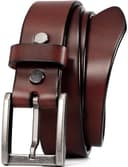
wolksprong Classic Jeans Belt, Italian Hide (1.5")

wolksprong Classic Jeans Belt, Italian Hide (1.5")

The only belt in this group that names the metal in its buckle. It states 4 mm of full-grain hide from Italy and a buckle cast from solid brass or stainless steel depending on the style - which is a real answer where every competitor says "alloy" or says nothing. Buckle and strap are stitched together rather than glued. What it will not tell you is which style gets which metal.

Best overall
$29.59 · View on Amazon

$45.9936% off

Price as of November 23, 2026. #ad How we’re funded

2
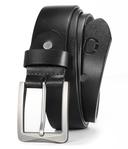
HOLMANSE Italian-Hide Casual Belt, 7 Holes (1.5")

HOLMANSE Italian-Hide Casual Belt, 7 Holes (1.5")

The most generous disclosure in this group on everything except the one specification that matters most. It publishes 4 mm thickness, a 1.5 in width, a nickel-free zinc alloy buckle, seven adjustment holes with six inches of range, a bundled hole punch and a one-year free replacement - and then its first bullet says full-grain and its second says top-grain, about the same strap. We record no grade for that reason.

Best fit range
$31.99 · View on Amazon

$39.9920% off

Price as of November 23, 2026. #ad How we’re funded

3
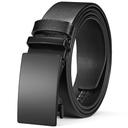
OZNDAS Italian-Hide Click Ratchet Dress Belt (1 3/8")

OZNDAS Italian-Hide Click Ratchet Dress Belt (1 3/8")

The ratchet in the group, and the only belt here with a finishing process in its spec list: hand-stitched double seams along the edges and an equine-oil finish over full-grain Italian hide. A ratchet track replaces holes entirely, so fit lands in roughly quarter-inch steps instead of inch-and-a-half jumps. The buckle is coated alloy, and at 1 3/8 in this is the dressiest width here.

Best dress belt
$26.57 · View on Amazon

$45.9942% off

Price as of November 23, 2026. #ad How we’re funded

4
WOLFANT Italian Solid Full-Grain Leather Belt (1.5")

WOLFANT Italian Solid Full-Grain Leather Belt (1.5")

Stated full-grain from Italian leather in a 1.5" width — the dressier-but-tough option. A single solid strap (not glued plies) is exactly what you want in a belt that should outlast the buckle.

Best one-piece strap
$39.98 · View on Amazon

Price as of November 23, 2026. #ad How we’re funded

5
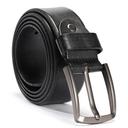
CHAOREN Italian-Hide Full-Grain Belt, Oval Holes (1.5")

CHAOREN Italian-Hide Full-Grain Belt, Oval Holes (1.5")

The value pick: a stated full-grain strap cut from the top layer of the cowhide, 3.8 mm thick and 1.5 in wide, with a zinc alloy buckle under three protective coats. It is also the only belt in the group that explains a design detail rather than asserting quality - the adjustment holes are oval, which the listing says resists the cracking that starts at a round hole's edge.

Best value
$14.24 · View on Amazon

$29.9953% off

Price as of November 23, 2026. #ad How we’re funded

6
KEECOW Italian-Leather Casual Belt, 7 Holes (1.5")

KEECOW Italian-Leather Casual Belt, 7 Holes (1.5")

The budget pick, and an honest one on the numbers: 1.5 in wide, 3.5 mm thick, seven holes, a punch in the box. It is the cheapest way into a stated-thickness Italian-hide belt, and the thinnest strap in the group by half a millimeter. What you give up is the buckle - the listing calls it anti-scratch and never says what it is made of - and a clean grade claim, because the title stacks "full grain" and "genuine" in one line.

Budget pick
$12.23 · View on Amazon

$16.9928% off

Price as of November 23, 2026. #ad How we’re funded

The picks in full

#1Best overall

wolksprong Classic Jeans Belt, Italian Hide (1.5")

The only belt in this group that names the metal in its buckle. It states 4 mm of full-grain hide from Italy and a buckle cast from solid brass or stainless steel depending on the style - which is a real answer where every competitor says "alloy" or says nothing. Buckle and strap are stitched together rather than glued. What it will not tell you is which style gets which metal.

Strengths

  • States 4 mm thickness - joint-thickest in this group
  • The only listing here that names the buckle metal: solid brass or stainless steel
  • States integrated stitching between strap and buckle rather than glue
  • Explicitly refuses cheap alloys in its own copy

Trade-offs

  • Does not say which style gets brass and which gets stainless - you cannot choose the metal
  • Calls the hide "Italian genuine leather" in the same sentence that calls it full grain
  • No warranty term stated
  • 4 mm is stiff for the first few weeks of wear
Leather gradeFull-grain
TannageNot published
Thickness4 mm
HardwareSolid brass or stainless steel buckle (varies by style)
Made inNot published
WarrantyNot published

Spec note. Names the buckle metal - solid brass or stainless steel - which no other belt in this group does. It also pairs "full grain" and "Italian genuine leather" inside one sentence, so the grade claim is weaker than the thickness claim.

Specs read from the product listing, on November 22, 2026. “Not published” means the listing does not state that spec.

#2Best fit range

HOLMANSE Italian-Hide Casual Belt, 7 Holes (1.5")

The most generous disclosure in this group on everything except the one specification that matters most. It publishes 4 mm thickness, a 1.5 in width, a nickel-free zinc alloy buckle, seven adjustment holes with six inches of range, a bundled hole punch and a one-year free replacement - and then its first bullet says full-grain and its second says top-grain, about the same strap. We record no grade for that reason.

Strengths

  • Seven adjustment holes and a bundled punch - stated six inches of waist range
  • States 4 mm thickness and a 1.5 in width
  • Nickel-free zinc alloy buckle, which is a genuine answer for a nickel allergy
  • One-year free replacement, with no return of the damaged belt required

Trade-offs

  • Grade not recorded: bullet one says full-grain, bullet two says top-grain cowhide
  • Hide is "imported from Italy" - an origin claim, not a country of manufacture
  • Zinc alloy is a cast buckle, not a forged brass one
  • Dual-loop construction and contrast stitching read casual, not formal
Leather gradeNot published
TannageNot published
Thickness4 mm
HardwareNickel-free zinc alloy single-prong buckle
Made inNot published
Warranty1 year, free replacement

Spec note. Two bullets on one listing name two different grades for the same belt: "built with premium full-grain leather" and "constructed from premium top-grain cowhide." Those are different layers of hide. A contradiction is not a disclosure, so the grade stays empty.

Specs read from the product listing, on November 22, 2026. “Not published” means the listing does not state that spec.

#3Best dress belt

OZNDAS Italian-Hide Click Ratchet Dress Belt (1 3/8")

The ratchet in the group, and the only belt here with a finishing process in its spec list: hand-stitched double seams along the edges and an equine-oil finish over full-grain Italian hide. A ratchet track replaces holes entirely, so fit lands in roughly quarter-inch steps instead of inch-and-a-half jumps. The buckle is coated alloy, and at 1 3/8 in this is the dressiest width here.

Strengths

  • Ratchet track gives far finer adjustment than a seven-hole strap
  • States full-grain Italian hide with no fillers or glue
  • Hand-stitched double seams along the edges, which is where a belt splits first
  • 1 3/8 in width suits dress trouser loops better than a 1.5 in strap

Trade-offs

  • The title also calls it "top genuine leather," a weaker claim than the bullet's full-grain
  • Coated alloy automatic buckle - no metal named, and a ratchet buckle has moving parts
  • No thickness figure published
  • Cut-to-size means a mis-cut is permanent
Leather gradeFull-grain
TannageNot published
ThicknessNot published
HardwareCoated alloy automatic ratchet buckle
Made inNot published
WarrantyNot published

Spec note. The only belt in this group that publishes a finishing step - hand-stitched double seams and an equine-oil finish. Its title and its bullets disagree in tone, calling the same strap "top genuine leather" and "premium full-grain Italian leather."

Specs read from the product listing, on November 22, 2026. “Not published” means the listing does not state that spec.

#4Best one-piece strap

WOLFANT Italian Solid Full-Grain Leather Belt (1.5")

Stated full-grain from Italian leather in a 1.5" width — the dressier-but-tough option. A single solid strap (not glued plies) is exactly what you want in a belt that should outlast the buckle.

Strengths

  • Listing states full-grain Italian leather
  • 1.5" solid single-strap width
  • Thickened for durability

Trade-offs

  • Solid full-grain is stiff at first
  • Costs more than a bonded belt
Leather gradeFull-grain
TannageNot published
ThicknessNot published
HardwareNot published
Made inNot published
WarrantyNot published

Specs read from the product listing, on July 18, 2026. “Not published” means the listing does not state that spec.

#5Best value

CHAOREN Italian-Hide Full-Grain Belt, Oval Holes (1.5")

The value pick: a stated full-grain strap cut from the top layer of the cowhide, 3.8 mm thick and 1.5 in wide, with a zinc alloy buckle under three protective coats. It is also the only belt in the group that explains a design detail rather than asserting quality - the adjustment holes are oval, which the listing says resists the cracking that starts at a round hole's edge.

Strengths

  • States full-grain from the top layer of the cowhide
  • Publishes 3.8 mm thickness and 1.5 in width
  • Oval holes, stated to resist cracking where a round hole tears
  • Triple-coated buckle aimed at scratch and rust resistance

Trade-offs

  • "Italian Solid Leather" appears only in the title, with no tannery or region named
  • Zinc alloy buckle - coated, but still alloy rather than brass or steel
  • No warranty term stated; the listing offers service rather than a term
  • No country of manufacture stated
Leather gradeFull-grain
TannageNot published
Thickness3.8 mm
HardwareTriple-coated zinc alloy prong buckle
Made inNot published
WarrantyNot published

Spec note. The only listing in this group that gives a reason for a construction choice: oval adjustment holes, to stop the cracking that begins at the edge of a punched round hole. That is a maintenance claim, and it is checkable against your own old belts.

Specs read from the product listing, on November 22, 2026. “Not published” means the listing does not state that spec.

#6Budget pick

KEECOW Italian-Leather Casual Belt, 7 Holes (1.5")

The budget pick, and an honest one on the numbers: 1.5 in wide, 3.5 mm thick, seven holes, a punch in the box. It is the cheapest way into a stated-thickness Italian-hide belt, and the thinnest strap in the group by half a millimeter. What you give up is the buckle - the listing calls it anti-scratch and never says what it is made of - and a clean grade claim, because the title stacks "full grain" and "genuine" in one line.

Strengths

  • Publishes 3.5 mm thickness and a 1.5 in / 3.8 cm width
  • Seven holes plus a hole punch in the box
  • States the belt length is the strap only, excluding the buckle - a rare sizing clarification
  • 30-day exchange or return stated

Trade-offs

  • Title stacks "100% Italian Leather" and "Full Grain Genuine Cow Leather" - two different claims
  • Buckle described only as anti-scratch; no metal named
  • Thinnest strap in this group at 3.5 mm
  • No tannage, country of manufacture or warranty term
Leather gradeFull-grain
TannageNot published
Thickness3.5 mm
HardwareAnti-scratch buckle (metal not stated)
Made inNot published
WarrantyNot published

Spec note. States that the published belt length measures the strap alone and excludes the buckle. That single sentence prevents the most common belt sizing mistake, and no other listing in this group says it.

Specs read from the product listing, on November 22, 2026. “Not published” means the listing does not state that spec.

Why thickness is the first column on this page

A belt is a single strip of leather under constant tension, pulled through a buckle and folded back on itself at the same point every day. Nothing else you own is loaded like that. Thickness is what resists it: a thin strap stretches along its length, curls at the edges and splits at whichever hole you use most. A thicker strap resists all three, at the cost of being stiff for the first few weeks and slightly awkward in a dress trouser loop.

The practical ranges, from the figures published here: 3.5 mm is a light casual strap, fine for jeans and chinos and the thinnest thing we would call a buy-once belt. 3.8 mm is the sweet spot for everyday wear. 4 mm is a heavy strap that will outlast its buckle and needs breaking in. Our belt width guide takes the other dimension, and leather weight and thickness converts millimeters into the ounce figures leatherworkers use.

The three things we ranked on

1. A published thickness.Four of six give a figure: 4 mm on the wolksprong and the HOLMANSE, 3.8 mm on the CHAOREN, 3.5 mm on the KEECOW. The OZNDAS ratchet and the WOLFANT one-piece strap publish none, and both are ranked below where their other specifications would otherwise have put them. On a belt, a missing thickness is not a small gap.

2. A named buckle metal.Exactly one listing names it: the wolksprong says solid brass or stainless steel, cast rather than stamped, and says so in its own copy while explicitly refusing cheap alloys. The HOLMANSE and CHAOREN say zinc alloy, which is at least an answer — a cast alloy buckle, coated, that will do the job and will not be the part you keep. The OZNDAS says coated alloy, and the KEECOW says only “anti-scratch,” which names a property and not a material. Buckles outlive straps when they are brass and die with them when they are not.

3. A grade claim that does not contradict itself.Four of six state full-grain cleanly enough to record. The HOLMANSE does not: its first bullet says “premium full-grain leather” and its second says “premium top-grain cowhide,” about the same belt. Those are different layers of the same hide, and a contradiction is not a disclosure, so we leave its grade column empty. Full-grain vs. genuine leather on a belt is the piece that makes those phrases readable.

The finding on this page: the Italian claim and the thickness claim come from different places

Three of these listings tell you the hide was imported from Italy and then publish a thickness; the other three print “Italian” in the title and leave the tannery, the region and in two cases the millimeters unstated. That split is the single most useful thing on this page, because it separates a sourcing claim you can partly check from one you cannot.

A thickness figure is a measurement. “Italian” in a title is a word. The first can be verified against the belt in your hand with a caliper or a ruler and a steady eye; if a listing says 4 mm and the strap is 3, you know. The second cannot be verified by you at all, and nothing in the US market requires it to be substantiated the way a grade claim is — the grade vocabulary at least has agreed meanings behind it. So where a listing gives you both, read the number first and treat the country as a reason the hide might be good rather than as proof that it is.

Notice also what the Italian claim is notpaired with on this page: not one of the six states a tannage. Italy's tanning reputation is built largely on slow vegetable tanning, and a belt is exactly where that tannage shows — it is the reason a bridle or harness strap darkens and stiffens into shape rather than going limp. If a listing is going to lean on the word Italian, the tannage is the disclosure that would earn it, and six out of six skip it. Vegetable-tanned vs. chrome-tanned sets out what the silence costs you. For contrast, the one Italian-hide product we track whose listing does state a vegetable tannage is not a belt at all - it is the top pick on best leather money clip wallets, published the same week as this page.

What none of these six will tell you

A tannage, on all six. Covered above, and it is the biggest single gap in the category.

Country of manufacture, on all six.Three name Italy as the hide's origin. None says where the belt was assembled. Those are two different disclosures and we record only the one each listing makes — a strap can be cut from Italian hide anywhere in the world.

Whether the strap is one piece or laminated, on three of six. The WOLFANT and the OZNDAS both state a single solid piece with no fillers or bonding, and the wolksprong states integrated stitching between strap and buckle. The other three say nothing, and a glued two-ply strap is the most common way a cheap belt is built. Our best full-grain belts page ranks the wider field on exactly that construction question.

The six, side by side

Every cell is read from the listing or marked “Not published.” The first two columns are the trade this page is about.

BeltStated thicknessBuckleStated grade
wolksprong jeans belt4 mmSolid brass or stainless steelFull-grain
HOLMANSE 7-hole4 mmNickel-free zinc alloyNot published (bullets disagree)
OZNDAS click ratchetNot publishedCoated alloy, automaticFull-grain
WOLFANT solid strapNot publishedNot publishedFull-grain
CHAOREN oval-hole3.8 mmTriple-coated zinc alloyFull-grain
KEECOW 7-hole3.5 mmNot published (“anti-scratch”)Full-grain

Four of six publish a thickness, one names a buckle metal, four state a grade cleanly, and none states a tannage or a country of manufacture. Two publish a warranty term: a year of free replacement on the HOLMANSE and a thirty-day exchange on the KEECOW, which is a returns window rather than a warranty and we label it as such on the card.

How to buy one, in order

Measure before you read a single size chart.Belt sizing is the most common returnable mistake in this category, and the KEECOW listing is the only one here that spells out the convention — the published length is the strap alone and excludes the buckle. Our how to measure belt size page gives the two-minute method; measure through the loops of trousers that fit, not your waist.

Then pick the thickness for the job, not the highest number. 4 mm is right for jeans, workwear and anything that hangs weight off the belt; 3.5 to 3.8 mm is right for chinos and dress trousers, where a heavy strap bunches the loops. If the belt is for a holster or a tool bag, neither is enough and you want the gun-belt construction instead, which we cover on best gun belts.

Then decide between holes and a ratchet. Seven punched holes give you roughly six inches of range in one-inch steps. A ratchet track gives roughly quarter-inch steps across its length, which is genuinely better fit at the cost of a mechanism and a buckle you cannot swap. We take that decision in full on ratchet vs. traditional belt.

Then look at the buckle, because it decides what you keep. A solid brass buckle outlives several straps and can be moved to a new one; a cast, coated alloy buckle chips at the prong and the belt becomes disposable with it. Only one listing here names brass, and that is most of the reason it is first. Leather belt buckle types covers how the buckle is fixed, which matters as much as what it is made of.

Then break it in and leave it alone.A 4 mm strap wants two or three weeks of wear before it takes the shape of your waist, and almost no conditioner — over-oiling a new belt softens the fibers you are paying for. How to break in a leather belt and how to care for a leather belt cover both. One closing note on method: we do not own any of these belts and we have not worn them. Every specification above is read from a live listing on the date shown on each card, every price renders from the live price layer, and no grade, tannage, warranty or country is asserted that a listing does not state. The full rules are on our methodology page.
Frequently asked questions

What is the best Italian leather belt?

On published specification, the wolksprong classic jeans belt. It states 4 mm of full-grain hide from Italy and is the only belt on this page whose listing names the metal in its buckle - solid brass or stainless steel depending on the style, cast rather than stamped - and it states that strap and buckle are stitched together rather than glued. The caveats are that it does not say which style gets brass and which gets stainless, it calls the hide Italian genuine leather in the same sentence that calls it full grain, and it publishes no warranty term.

Is Italian leather actually better?

Italian leather is a sourcing claim, not a quality grade. Italy has a real concentration of tanneries, mostly in Tuscany, with a long tradition of slow vegetable tanning, so hide tanned there is a genuine input worth paying for. But the phrase on its own tells you nothing about which layer of the hide you are buying, how thick the strap is, how it was tanned, or where the belt was assembled - and on this page not one of the six listings states a tannage at all. Read the thickness and the grade first and treat the country as a reason the hide might be good rather than proof that it is.

How thick should a leather belt be?

Between about 3.5 mm and 4 mm for everyday wear, and the figures published on this page cover exactly that range. Around 3.5 mm is a light casual strap that suits chinos and dress trousers, where a heavy belt bunches the loops. Around 3.8 mm is the everyday sweet spot. A full 4 mm is a heavy strap that resists stretching and will outlast its buckle, at the cost of needing two or three weeks of wear to take the shape of your waist. Anything meant to carry weight - a holster, a tool bag - needs purpose-built gun-belt construction rather than a thicker casual strap.

Does Italian leather mean the belt was made in Italy?

No, and none of the six listings on this page claims it. Three say the hide was imported from Italy, which is a statement about the tannery, not the workshop. The other three simply print the word Italian in the title. Where a belt was cut, punched and stitched is a separate disclosure that no listing here makes, so we record the hide origin and leave the country of manufacture column empty. A strap cut from Italian hide can be assembled anywhere in the world.

Why do some Italian leather belts cost under $15?

Because a belt is a small amount of hide and the word Italian costs nothing to print. The two cheapest picks on this page both publish a thickness - 3.8 mm and 3.5 mm - which is the specification you should actually judge them on, and both state full-grain. What the low price buys you instead is a cast, coated zinc alloy buckle or, on the cheapest, a buckle described only as anti-scratch with no metal named at all. That is a reasonable trade if you understand it: the strap is the part that gets worn and the buckle is the part that gets disposable.

Is a ratchet belt better than a belt with holes?

A ratchet fits better and a hole-punched belt lasts longer in the simplest sense. A ratchet track adjusts in roughly quarter-inch increments along its whole length, so you get a fit no seven-hole strap can match and a flat front with no tail flapping. The cost is a mechanism: an automatic buckle has moving parts, it is usually coated alloy rather than brass, and you cannot move it onto a different strap. Seven holes plus the bundled punch most of these belts include gives you about six inches of range in coarse steps and nothing to break.

Will a cheap belt buckle last as long as the strap?

Usually not, and that is the honest reason to look at the buckle before the price. A solid brass or stainless-steel buckle is cast metal all the way through: the prong does not wear through a coating, and the buckle can be moved to a replacement strap when the first one finally goes. A coated zinc alloy buckle - which is what four of the six belts here use, two of them saying so plainly - chips at the prong and at the fold where the strap passes through, and once the coating lifts the belt is cosmetically finished even though the leather is fine. Only one listing on this page names brass.

Sources

Keep reading