How we chose
The criteria came first and the bags second. A travel day bag is judged on different things from an office bag, so these are the four filters every pick had to pass or, where it fell short, had to be honest about.
- Built to be worn, not held. A day bag you have to carry in your hand is a day bag you put down, and a bag you put down is the one that goes missing. Three of the five are worn across the body and one on the shoulder. The fifth is a tote for the day you fly, when a laptop has to come too.
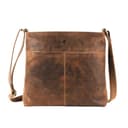
- A stated grade wherever possible. Four of the five listings state full-grain in their own words. The fifth, a named-brand crossbody, states no grade at all, and it is on the list because that silence is worth knowing about before you pay for the name.
- Sized for a day, not a trip. Nothing here is luggage. The only pick whose listing states a laptop fit is the tote, and it is there for one specific day of the trip rather than for the whole of it.
- Honesty about the gaps. Closure, strap length, lining and empty weight are the specs a traveler wants most, and they are exactly the ones these listings least often commit to. We print what is stated and tell you what to check for the rest.
Crossbody or shoulder: settle the carry first
For a day of walking in a city, the carry decides more than the leather does. A crossbody or sling runs its strap diagonally across your body, from one shoulder toward the opposite hip, which does two useful things. The bag cannot slide off when you lean over a map or a menu, and it can be worn in front of you, where your hand naturally rests on it. A shoulder bag hangs from one shoulder and has to be kept there — by a hiked shoulder when it is loaded, by your arm when it is crowded.
That second point is the one that matters on a trip. The U.S. Embassy in France’s safety advice for Paris notes that pickpockets work tourist areas, museums, subways and stations, and that a handbag with a zipper or clasp is no protection if it dangles out of sight or sits on the floor. Its advice for crowds is to hold a purse or shoulder bag under your arm. A crossbody worn at the front does most of that for you; a shoulder bag asks you to remember. That is why a sling tops this list, and why three of the five picks are body-worn.
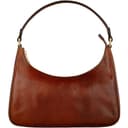
A shoulder bag still has a place. It is quicker to open, it holds more, and it dresses up for dinner in a way a sling never quite does. If you are undecided, our crossbody vs. shoulder bag comparison sets out weight, access, formality and security side by side, and the crossbody roundup covers the everyday version of this category.
Closure: the spec you have to check yourself
A zip top is the obvious travel feature, and it is the one this shortlist can tell you least about. None of the records we keep for these five bags, each read from its listing, includes a stated closure. We are not going to guess from a product photo, and you shouldn’t either. Open the listing, read the bullets, look for the words “zipper” or “zip top”, and check whether it is the main compartment that closes or only an inside pocket.
Two things to keep in mind while you look. A flap with a magnetic snap is a closure, but it opens with one finger; that is fine on a bag worn in front of you and weak on one hanging behind your hip. And the embassy’s point cuts both ways: a zip is necessary, not sufficient. A zipped bag that swings out of sight in a packed subway car is exactly the bag its advice describes.
Size: pack for the day, not the trip
The commonest mistake with a travel handbag is buying for everything you might need rather than what you will actually carry. A day of sightseeing realistically means a phone, a card or two and some cash, a small charger, sunglasses, lip balm or medication, and perhaps a compact umbrella. Your passport, on the embassy’s advice, should be carried separately from your wallet or handbag — its own pocket or pouch, not the compartment your cards live in.
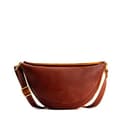
That list fits in a medium sling. It does not need a tote. Every extra inch of bag is leather you carry all day and space you will fill with things you don’t use. The Koala sling is sold in a medium size only, and at that size it is not a bag for a laptop or a full work load — which, for a sightseeing bag, is a feature rather than a flaw.
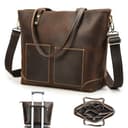
The exception is the flight day, when a laptop, a book, headphones, a scarf and snacks all have to travel together. That is the job for a tote with a stated laptop fit, which is why the CONTACTS tote is here: its listing states a 14.2-inch laptop fit rather than leaving you to measure. It does not state a padded sleeve, so put the laptop in a sleeve of its own. It is also not the bag to carry around a city the next morning. If you can only bring one, bring the crossbody and let the laptop ride in your carry-on. The wider range of shapes is laid out in types of leather bags, and the leather tote roundup covers the everyday end of the tote format.
Leather is heavy, so buy only as much bag as you need
Leather weighs more than nylon or canvas for a bag of the same size, and a travel handbag is carried for longer than almost anything else you own. That is the honest argument against leather for travel, and it is why size discipline matters more here than on an office bag that spends most of the day on a desk. Our leather vs. canvas comparison sets out the full trade.
Thickness is part of the same equation: a thicker hide holds its shape and shrugs off knocks, and it also weighs more. None of the five listings states a thickness, so you cannot compare that directly. The one indirect clue is the moonster crossbody, whose listing names the hide as buffalo, which runs thicker than cowhide — good for a bag that gets knocked about, and by the same logic unlikely to be the lightest option. Our guide to leather weight and thickness explains how to read ounce and millimeter figures when a listing does publish them.
Grade: why full-grain is the traveler’s leather
Travel is hard on a bag’s surface. It gets caught in the rain between the station and the hotel, dragged along a train seat, pressed against a damp coat, dropped on a gravel path. Every one of those is a surface event, and the grade decides what happens next.
Full-grain keeps the hide’s intact outer layer. Scuffs mostly burnish back with a thumb, and the bag darkens into a patina rather than wearing through. A coated split — often sold as “genuine leather” — has a sprayed finish standing in for grain, and when that finish cracks after a soaking and a hurried dry, there is nothing underneath to bring back. Our full-grain vs. genuine leather comparison explains why that one word in a listing predicts how a bag ages. The FTC’s leather labeling guides exist because these words are marketed loosely; reading them closely is your job, not the retailer’s.
Neither grade is waterproof, and it is safest to treat any leather bag as water-resistant at best. If you are heading somewhere wet, treat the bag before you go — our guide to waterproofing a leather bag covers what works and what it does to the color. If it gets soaked anyway, dry it slowly at room temperature, stuffed to hold its shape, and never on a hotel radiator or under a hairdryer.
What a leather handbag can’t do
A leather bag is not anti-theft equipment. None of the listings for these picks, as we recorded them, claims slash-resistant panels, locking zippers or cut-proof straps. What protects your things on a trip is how you carry them, and the embassy’s advice is short enough to memorize:
- Know where the risk is. Tourist areas, museums, subways and stations are where it names pickpockets as working.
- Keep the bag in sight and off the floor. A zipper or clasp is no protection on a bag that dangles out of view or sits at your feet under a café table.
- In crowds, hold it under your arm. That is its advice for a purse or shoulder bag, and it applies just as well to a crossbody that has drifted round to your back.
- Split the valuables. Carry your passport separately from your wallet or handbag, so one lost bag is not the end of the trip.
Beyond that, the leather-specific point is small but real: a bag you enjoy carrying is a bag you keep on your body. That is a better argument for a comfortable sling than any feature list. If card skimming is on your mind, that is a wallet question rather than a bag one. Our honest take on RFID blocking covers what the risk actually is, and the RFID-blocking wallet picks are there if you want one anyway.
Who should skip a leather travel handbag
- If you pack to the ounce. Leather is the heavy option. A nylon sling does the same job for less weight, and on a long trip that adds up.
- If your destination rains every day. You can protect leather, but you will be drying it every evening. A synthetic bag you don’t have to think about may be the better travel companion.
- If you need a laptop with you all day. A tote without a stated padded sleeve is not a laptop bag. Look at our leather laptop bags instead.
- If you want it to come home looking new. Full-grain comes back from a trip marked. That is the point of it, but it is not for everyone.
Looking after it on the road
Travel care is mostly about not letting small things sit. Wipe rain off as soon as you are indoors, empty the bag at night so it can air out, and stuff a soft-sided bag loosely with a scarf so it keeps its shape in a suitcase. Condition it at home before a long trip rather than in a hotel room, using our conditioning routine, and clean off the trip when you get back with the method in how to clean a leather bag. If a summer of sun has left it paler than it went out, our guide to restoring faded leather covers what can be brought back.
A note on how we work: we do not handle these products, so nothing above is a durability test. It is a comparison of published specifications and an argument about what they mean for a day of travel, which is what our methodology page sets out. If you want the grade-first view across every bag format rather than just travel, see our full-grain leather bags roundup.