What $100 is actually buying: hide area, then grade
Leather is priced by the square foot before it is priced by quality, and a bag is the most leather-hungry thing most people ever buy. A wallet is cut from scraps. A belt is one long strip. A tote or a backpack needs large, clean, unmarked panels, and large clean panels are the most expensive part of any hide to cut from, because a hide is an animal-shaped object full of brand marks, scars, neck wrinkles and thin belly.
That single fact explains the whole price band. A maker working to a landed price under $100 on a bag has three levers and will pull at least one of them: use a thinner split or a corrected, heavily finished hide; use less leather by making the bag smaller or unstructured; or stay quiet about which layer of the hide it is. Our leather bag cost bands lay out what each tier above this one adds, and is full-grain leather worth it covers when the upgrade is worth paying for and when it is not.
It also explains why this page cannot promise you a structured, frame-built, full-grain bag. That object does not exist at this money, and a listing implying one is the listing to walk away from. What does exist — and it is genuinely worth having — is a soft-sided real-leather bag that looks right, carries a laptop or a day’s kit, and lasts years rather than decades.
The three questions we ranked on
Every bag in this band photographs beautifully and every listing uses the same vocabulary, so the ranking has to come from what each one is willing to commit to in writing. Three questions, in this order.
1. Does the listing name a layer of the hide?“Full-grain” and “top-grain” name a layer. “Genuine leather” does not — it is a label that sits at the bottom of the grade ladder and is used for split, corrected and finished hide of widely varying quality, which is why we treat it as a disclosure gap rather than a tier. If that distinction is new to you, read full-grain vs. genuine leather before you buy anything on this page; it is the single most useful twenty minutes you can spend on leather goods. Two picks here name a layer. Four do not.
2. Does it publish a measurement you can check? A stated laptop size, a footprint in inches, an empty weight, a strap-length range. These are the numbers that decide whether a bag works for you specifically, and they are the numbers that get left off a listing most often, because a vague bag fits more buyers in a product photo than a precisely described one. Three picks here publish something checkable.
3. Does it disclose what else is in the bag? At this price a part-synthetic panel is common. A listing that says so is doing something the others are not, and we rank honesty about a compromise above silence about the same compromise. Exactly one pick here discloses a material mix.
The six, side by side
Every cell is read from the listing or marked “Not published.” Read the grade row and the published-measurements row together — the point of the table is that they rarely both say something.
| | CONTACTS | Portland | DEKVIO | Cnoles | befen | BULLCAPTAIN |
|---|
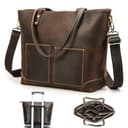
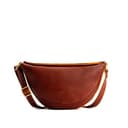
| Format | Laptop tote | Medium sling | XL backpack | Backpack purse | Tote | Crossbody sling |
|---|
| Stated grade | Full-grain | Full-grain | Genuine leather | Genuine leather | Genuine leather | Genuine leather |
|---|
| Published measurement | Fits 14.2 in laptop | Not published | 20 in body | 11.02 x 4.33 x 14.96 in; 2.81 lb | Not published | Not published |
|---|
| Material mix disclosed | No | No | No | Yes - leather + microfiber | No | No |
|---|
| Thickness | Not published | Not published | Not published | Not published | Not published | Not published |
|---|
| Warranty | Not published | Not published | Not published | Not published | Not published | Not published |
|---|
| Country of manufacture | Not published | Not published | Not published | Not published | Not published | Not published |
|---|
Three rows of that table are completely empty, and that is the most honest thing on this page. Not one of these six listings publishes a leather thickness, a warranty term or a country of manufacture. Those three are exactly the claims that cost a maker money to stand behind, and under $100 nobody is standing behind them. Treat any bag in this band as a bag you are buying on looks, format and a grade claim, with no recourse written down anywhere.
Why the best-documented bag is the one with synthetic in it
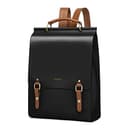
This is worth sitting with, because it is counter-intuitive and it changed our ranking. The Cnoles backpack purse publishes more checkable facts than any other bag here: a footprint to two decimal places, an empty weight, a strap-length range, and a stated hard limit — it says in its own words that it only takes laptops of 13 inches or smaller. It also says, in its first bullet, that it is made of “genuine leather and microfiber leather.”
Microfiber leather is a synthetic: a non-woven fiber base with a polyurethane surface. So part of that bag is not hide, and the listing tells you so without being asked. Nearly every bag at that price makes some version of the same compromise; what is rare is admitting it. Our explainer on what PU leather iscovers what the synthetic actually does over time — it wears flat and eventually abrades through rather than burnishing — and how to tell real leather from fake gives you the checks to run on the bag when it arrives.
We rank it fourth rather than first, because a disclosed compromise is still a compromise and the leather is why you are here. But it ranks above two bags that state nothing at all, and we would rather you bought a bag whose listing told you the truth than one that simply stayed quiet about the same thing.
Format decides more than grade at this price
One more thing the price band does to you: because you cannot buy structure under $100, format matters more than usual. A soft bag with no frame takes its shape from whatever is inside it, so the wrong format is uncomfortable in a way a stiffer bag would hide.
A tote has no frame, so the leather is the structure. That is why the stated grade matters most in this format, and it is why our top pick is a tote: the panels carry the load directly. If a tote is really your work bag, a stated laptop fit is worth more than an extra pocket, and our tote roundup ranks the format properly. The comparison in tote vs. backpack is the right place to start if you have not settled on one.
A sling or crossbody puts constant friction on one strap edge.That is the spot where a thin split delaminates first, and it is the strongest argument for paying up for a stated grade in a small bag. Both of this page’s sling-format picks are covered in depth in best leather crossbody bags, and crossbody vs. shoulder bag covers which one suits a crowd.
A backpack spreads the load but doubles the stitching. Two straps, two anchor points at the top and two at the bottom, all of them taking shear rather than tension. At this price those anchors are the thing to inspect when the bag arrives, and best leather backpacks covers the format across all price bands.
And if you want a small leather bag rather than a cheap large one, the small formats are where this budget goes furthest, because the hide-area problem works in your favor. Stated full-grain is genuinely affordable in a leather belt bag or a leather dopp kit, both of which use a fraction of the hide a tote does. Several picks on those pages state full-grain well under this cap.
What to check in the first week
Under $100 the failure modes are predictable, and all of them show up early enough to return the bag. Four things, in the order they matter.
The strap anchors. Load the bag the way you actually will, wear it for a day, and then look at where the strap meets the body. Stitching that is already pulling, a rivet that has started to rotate or leather that is visibly stretching at the anchor is a return, not a repair. This is the single most common failure in the band and the easiest to spot.
The zipper, if there is one. On a bag with no frame the zipper is the only moving part, and none of these six names a zipper brand. Run it twenty times. A zip that catches on the leather at a corner now will split a tooth later.
The cut edges. Look at an exposed edge of leather. A single thickness of hide has a fibrous, slightly fuzzy core; a laminate or bonded sheet shows a flat line where two layers meet, and a heavily corrected hide shows a painted skin over a different-colored body. This is the check that tells you whether a grade claim was honest, and the full set of real-versus-fake tests is worth reading before the box arrives.
The smell and the finish. A strong chemical smell that does not fade in a week usually means a heavy synthetic topcoat; why leather smells explains what is normal and what is not.
Then condition it once, lightly, and leave it alone. A bag in this band benefits more from one correct conditioning than from anything else you can do to it, because a thinner or more finished hide has less of its own oil to lose — how to condition leather has the method and how often has the interval. Over-conditioning is the more common mistake.
Which one for you
If it has to carry a laptop:the CONTACTS tote. It is the only pick that states full-grain and commits to a screen size, which removes the guesswork that causes most returns in this format. Accept that it states no padded sleeve, so the laptop wants a separate sleeve inside it — our sleeve picks cover that, and several are also under this cap.
If you want a brand name and stated full-grain:the Portland Leather Goods Koala sling. It is medium-sized and will not take a work load, and the listing states nothing about hardware, lining or thickness — but the grade claim on a searchable brand is rare enough to be the reason to buy it. If you were considering the brand specifically, our Portland Leather Goods alternatives page sets out exactly what its listings do and do not publish.
If you need the most room for the money: the DEKVIO 20-inch backpack. Genuine leather, so treat it as a good-looking hauler rather than an heirloom, and expect it to wear rather than patina.
If you want numbers rather than adjectives: the Cnoles backpack purse. A published footprint, weight, strap range and laptop limit, bought knowing a disclosed share of it is microfiber.
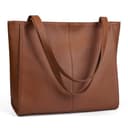
If this is your first real-leather bag: the befen tote. The cheapest sensible step up from a coated PU tote, with a compartmented interior and no pretence about the grade.
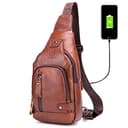
If you want to spend as little as possible: the BULLCAPTAIN sling. Phone, wallet and keys, flat against your back, for two or three years of real use. The listing publishes a model number, which at least means you can check that what arrives is what was ranked.
One closing note on method. We do not own these bags and we have not loaded, carried or weathered any of them. Every specification above was read from a live listing on the date shown on each card, every price renders from the live price layer rather than from a figure typed into this page, and where a listing publishes nothing we say so. The full rules are on our methodology page.