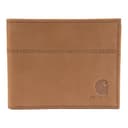
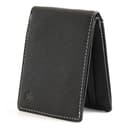
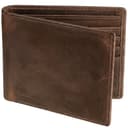
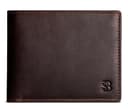
Why full-grain matters more in a wallet than in a bag
It sounds backwards — a bag carries far more weight — but consider what actually kills each item. A bag usually fails at a strap anchor or a zipper, under load. A wallet almost never fails structurally; it fails cosmetically, at the fold and the corners, because of friction and flexing.
That means the wallet’s lifespan is decided almost entirely by whether its surface is leather or a coating on leather. On full-grain, the fold line darkens and the corners burnish. On a coated split, the fold line crazes and the corners go pale and fuzzy where the finish has worn through. There is nothing to repair in the second case, because the thing that wore away was never the leather.
It also means the cost of buying well here is unusually low. A wallet uses a tiny fraction of the hide a bag does, so the price gap between grades is a matter of a few currency units rather than a few hundred. Full-grain is the cheapest luxury in leather.
What else to check besides the grade
- Card count, stated. A listing that publishes a number has thought about capacity; one that says “plenty of slots” hasn’t. Count what you actually carry and add two.
- Bulk before and after. A slim wallet loaded with twelve cards is not slim. If you carry a lot, buy a wallet designed for it rather than forcing a minimalist one — overstuffing is what splits stitching at the corners.
- Stitching at the corners. The corners take the flexing load. Dense, even stitching that turns the corner cleanly is the single best construction tell in a photo.
- RFID, if you want it. It is a common feature and costs little, but it is not the reason to buy. Our honest take on RFID blocking covers how rare the threat actually is.
- Bifold or slim. Format is a personal call, not a quality one. See bifold vs. slim if you are undecided.
What full-grain will and won’t do
It will darken. That is the point — a full-grain wallet develops a patina faster than any other item you own, because your hands are on it every day and it lives against your body. Expect visible change within months, not years.
It will also scratch, and the scratches will mostly disappear when you rub them with a thumb. That is a full-grain behavior: the surface is leather all the way down, so marks burnish out rather than exposing a different material underneath.
What it will not do is stay looking new. If you want a wallet that looks the same in three years as the day you bought it, full-grain is the wrong purchase and a coated finish is the right one — it just will not last three years.
The same stated-grade filter runs across the rest of the site: full-grain belts and full-grain leather bags carry only listings that commit to full-grain in writing.