Types of Leather Bags, Explained
Twelve formats, what each one is actually for, and which of them punish a cheap grade fastest.
How this is funded: we earn a commission if you buy through our links, at no extra cost to you. It never changes which product we recommend, and we’ll tell you when we’d skip one. Full disclosure.
Leather bags divide into about a dozen recurring formats, and the useful way to tell them apart is not the shape but three questions: how does it close, how does it hang, and how much structure does it have? Those three answers predict what a bag is good at — and, less obviously, how badly a cheap leather grade will show.
The formats at a glance
| Format | How it carries | Best at |
|---|---|---|
| Tote | Two handles, open or zip top | High-volume daily carry |
| Satchel | Flap and strap, structured | Looking deliberate; documents |
| Messenger | Long strap, flap, flat body | Quick access on the move |
| Crossbody | One long strap at the hip | Phone, wallet, keys |
| Sling | Wide strap across chest or back | Hands-free small loads |
| Hobo | Slouchy crescent, shoulder strap | Soft, casual everyday carry |
| Bucket bag | Drawstring top, round base | Casual volume without bulk |
| Backpack | Two straps | Weight, comfort, laptops |
| Briefcase | Handle, structured, often framed | Protecting a laptop and papers |
| Laptop bag | Padded sleeve, strap or handle | One device, minimal else |
| Duffel / weekender | Handles plus optional strap | Two to four days of clothes |
| Clutch | Held in hand, no strap | Evenings; nothing heavy |
The everyday carriers
The tote is the least structured bag most people own: two handles, an open or lightly closed top, and panels asked to stand up on their own. It swallows more than it looks like it should, and it is the format where grade shows fastest, because the leather is the structure. See our leather tote picks.
The hobo is the tote’s slouchier cousin: a soft crescent that collapses when you set it down and rides comfortably on one shoulder. It is designed to slump, so a softer hide is a feature rather than a fault — but the same softness means it offers a laptop no protection at all.
The bucket bag closes with a drawstring over a round or oval base. It holds surprising volume for its footprint and hides an untidy interior well. The drawstring and its channel are the wear points; check they are reinforced.
The crossbody and the sling are the minimal end. A crossbody hangs at the hip on a long strap; a sling sits high across the chest or back on a wider strap and swings round for access. Both concentrate their whole load on one strap and its anchors, which is why strap construction matters more here than anywhere else. Our crossbody roundup goes through it, and if you are torn between one of these and a bag worn on one shoulder, the crossbody vs. shoulder bag comparison settles it.
The work carriers
The satchel is a structured shoulder bag with a flap — a school bag grown up. It keeps a defined shape whether full or empty, which is why it reads as smarter than a tote for the same capacity.
The messenger is flatter and softer, cut for a long strap worn across the body, with a flap you can lift one-handed. It is the fastest work bag to get into without taking off, and the most comfortable to wear while moving. Compare it against the alternatives in messenger vs. briefcase and backpack vs. messenger.
The briefcase is the most structured of all: rigid or stiffened panels, a top handle, often a frame. That structure is what protects a laptop and keeps documents flat, and it also means the bag’s shape does not depend on the grade the way a tote’s does. See the briefcase roundup.
The laptop bag is a narrower brief: a padded sleeve with a strap, sized to one device and not much else. If you carry a laptop and a notebook and nothing more, it is the least bulky honest answer. Sizing is the whole game — see what size laptop bag you need.
The backpack is the only format that puts weight on both shoulders, which makes it the right answer whenever the load is genuinely heavy or the walk is genuinely long. In leather it is also the heaviest format for its capacity, because leather is heavy before you put anything in it. Our backpack roundup covers the laptop-fit question in detail.
The occasional carriers
The duffel or weekender is a soft cylinder with handles and usually a detachable shoulder strap, sized for a few days of clothes. It gets thrown into car boots and overhead lockers, so a thicker hide and named zippers matter more than elegance. Our travel bag roundup covers the size question, and how to pack one covers the rest.
The clutch has no strap at all. It carries almost nothing and asks to be held, which makes it the one format where the finish of the leather matters more than its strength — there is no load to speak of.
How format changes which grade you need
The rule of thumb: the less structure a bag has, the more the grade has to do.
- Unstructured (tote, hobo, bucket, crossbody). The leather carries the shape and the load. Full-grain is worth paying for here, and a coated split shows within a season as slumping and stretched anchors.
- Semi-structured (satchel, messenger, duffel). Stiffened panels share the work. Grade still decides surface wear and how it ages, but a mid-grade hide is less punished.
- Structured (briefcase, framed work bag). The frame keeps the shape. Here a lower grade mostly costs you appearance over time, not usability — which is why some perfectly good briefcases never state a grade at all.
One of each, if you want a shortcut
Three formats, three listings that state full-grain rather than leaving you to guess. Each links through to the fuller roundup for its category.
- Backpack
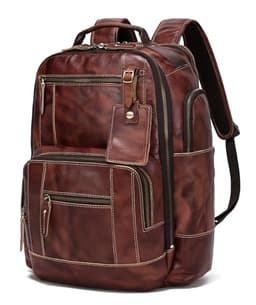
LANNSYNE Full Grain Leather Backpack (16")
Leather grade: Full-grain
The format for heavy loads and long walks, from a listing that states full-grain and a laptop fit — the two specs a leather backpack actually lives or dies on.
$149.99 · View on AmazonPrice as of October 20, 2026. #ad How we’re funded
- Tote
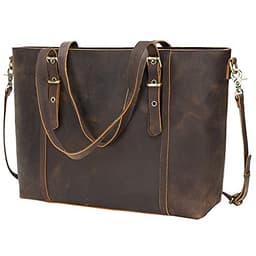
TIDING Full Grain Leather Tote Bag
Leather grade: Full-grain
The least structured format, so the grade is the structure. This listing states full-grain and keeps business-tote proportions rather than slouching from day one.
$105.99 · View on AmazonPrice as of October 20, 2026. #ad How we’re funded
- Sling
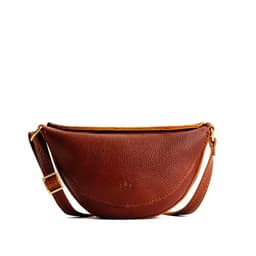
Portland Leather Goods Koala Sling Bag (Medium, Full-Grain)
Leather grade: Full-grain
The minimal end of the range, where the strap takes everything. Stated full-grain means the strap burnishes where it rubs instead of wearing through a coating.
$118.00 · View on AmazonPrice as of October 20, 2026. #ad How we’re funded
Bottom line
Pick the format from how you actually move through a day — how much you carry, how often you open the bag, whether you need both hands — and then let the format tell you how strict to be about grade. Unstructured bags need full-grain to stay the shape you bought; structured ones are more forgiving. For the grade side of the decision, start with types of leather; for the buying checks, see how to choose a leather bag.
How we know this. Veg Tan Club is written by an enthusiast, not a master leatherworker or a test lab. We compile each product’s published specs — grade, tannage, hardware — and reason from there. We say plainly when a listing doesn’t state a grade, and we haven’t physically handled every item we compare.
Frequently asked questions
What are the main types of leather bags?
The formats you meet most often are the tote, satchel, messenger, crossbody, sling, hobo, bucket bag, backpack, briefcase, laptop bag, duffel or weekender, and clutch. They differ in how they close, how they hang and how much structure they have — and those three things decide what each one is good at.
Which type of leather bag is most practical for work?
For carrying a laptop and documents, a briefcase or structured work bag protects the contents best. For carrying a laptop plus everything else a day needs, a tote or a leather backpack is more honest about the load. A messenger sits between the two and is the easiest to get into without taking it off.
What's the difference between a satchel and a messenger bag?
A satchel is a structured shoulder bag with a flap and a defined shape, historically carried by a short strap or a longer one. A messenger is flatter, softer and cut for a long strap worn across the body, with quick flap access. In practice sellers use both words loosely, so read the photos and the strap drop rather than the noun.
Which leather bag format lasts the longest?
Structure is what survives — a briefcase or a structured satchel spreads its load across a frame or a stiffened panel, so no single point takes everything. The formats that fail earliest are the unstructured ones with narrow anchor points: totes at the handle joins and single-strap crossbodies at the rings.
Does the leather grade matter more on some bag types?
Yes. On unstructured bags — totes, hobos, bucket bags — the leather itself is the structure, so a weak grade shows up as a slumped shape within months. On a rigid briefcase the frame carries the shape, so a lower grade shows up later, mostly as a worn surface rather than a deformed bag.
Sources
- Wikipedia — Leather — Overview of leather, grain layers and the full-grain / top-grain / split hierarchy (accessed July 18, 2026)
- Encyclopaedia Britannica — Leather — Britannica on leather as chemically treated animal hide and its uses (accessed July 18, 2026)
- Canadian Conservation Institute — Caring for leather, skin and fur — CCI preventive-conservation guidance on cleaning, dressing and storing leather (accessed July 18, 2026)
Keep reading
How to choose a leather bag
Once you know the format you want, the grade and construction checks that decide which one to buy.
Read the guideTypes of leather, explained
The other half of the decision — grades, tannages and finishes, not formats.
See the full guideBest leather backpacks
The two-strap format, compared on grade, laptop fit and price.
See the picksBest leather tote bags
The unstructured format where grade matters most, compared on shape and capacity.
See the picksBest leather dopp kits & toiletry bags
The one format bought to hold wet things — where the lining matters as much as the grade.
See the picksCrossbody vs. shoulder bag
Two ways of hanging a bag from one strap — how each carries weight, handles crowds and reads at work.
Compare the formats