Veg Tan Club

Best Leather Belts for Jeans

A jean belt gets the hardest life of any belt you own: heavy denim, wide loops, the same hole almost every day. These six are compared on what their listings actually commit to.

By Stephen V.Last updated How we pick

The belt you wear with jeans works harder than any other belt you own. It goes on most days of the week, it is cinched over a heavy denim waistband rather than a light trouser, it often carries keys or a phone clip, and it folds around the buckle at the same hole every time you put it on. That is a lot of strain concentrated at one point, and it is why the jean belt is where the difference between leather grades shows up first.

It is also the easiest place to buy well. A jean belt sits at the casual end of the range — wider, thicker and rougher-finished than a dress belt — and that look tolerates the natural variation in grain that a dress belt tries to hide. So stated full-grain is far more common here than at the formal end, including in the budget tier.

We have not worn these belts. We read each listing for the four things that decide a jean belt — grade, construction, width and buckle — and ranked on how much each one was willing to commit to in writing. Four of the six state full-grain. One states bridle leather, which is a finish rather than a grade, and one states genuine leather and is here partly to show what that word costs you. Not one of them publishes a thickness, and every card below says so.

How this is funded: we earn a commission if you buy through our links, at no extra cost to you. It never changes which product we recommend, and we’ll tell you when we’d skip one. Full disclosure.

Quick picks

Ranked on leather grade, construction and buyer fit. Select a row to jump to the full write-up. We have not handled these items ourselves — here is exactly what we do instead.

#ProductBest forPrice
1
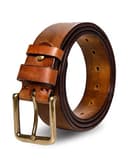
Buffway Full-Grain One-Piece Belt (1.5", 54")

Buffway Full-Grain One-Piece Belt (1.5", 54")

The only listing on this page that states both the grade and the construction at a big-and-tall length: full-grain, solid one piece, 1.5" wide, listed at 54". Above about 50 inches a strap is where a maker is most tempted to splice shorter offcuts together, so "solid one-piece" is the phrase worth paying for here.

Best overall
$39.99 · View on Amazon

Price as of September 20, 2026. #ad How we’re funded

2
VATAN Full-Grain Leather Casual Jean Belt

VATAN Full-Grain Leather Casual Jean Belt

Stated full-grain, handmade, at a budget price — the best grade-per-dollar casual belt here. If you want the grade that lasts without the ratchet mechanism, this is it.

Best value full-grain
$19.99 · View on Amazon

$29.9933% off

Price as of September 20, 2026. #ad How we’re funded

3
wolksprong Thick Full-Grain Heavy-Duty Work Belt

wolksprong Thick Full-Grain Heavy-Duty Work Belt

The heavy-duty pick: stated full-grain, thickened for work and EDC loads. If a belt has to hold tools or a holster, start with a thick full-grain strap like this one.

Best heavy-duty
$39.99 · View on Amazon

Price as of September 20, 2026. #ad How we’re funded

4
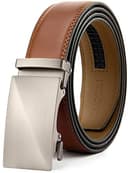
CHAOREN Full-Grain Leather Ratchet Belt (35mm)

CHAOREN Full-Grain Leather Ratchet Belt (35mm)

The listing states full-grain, and the ratchet track adjusts in ~5mm steps instead of inch-apart holes — so it fits after a big lunch or a winter layer. The most practical belt here, and it's cheap.

Best ratchet
$14.99 · View on Amazon

Price as of September 20, 2026. #ad How we’re funded

5
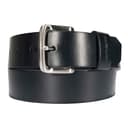
Carhartt Bridle Leather Belt, Nickel Roller Buckle (52")

Carhartt Bridle Leather Belt, Nickel Roller Buckle (52")

The one familiar workwear name on this page that carries a 52", and a good demonstration of why a familiar name is not the same as a disclosed spec. The listing states bridle leather and a nickel roller buckle — both real, useful facts — but bridle describes how a hide was finished, not which layer of it you are getting.

Best bridle leather
$34.99 · View on Amazon

$37.998% off

Price as of September 20, 2026. #ad How we’re funded

6
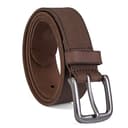
Timberland 35mm Classic Leather Jean Belt

Timberland 35mm Classic Leather Jean Belt

The no-drama name-brand pick: a genuine-leather 35mm belt with a classic buckle, warrantied by a brand you know. Grade layer isn't stated beyond genuine, but it's the safe everyday choice.

Best name brand
$22.99 · View on Amazon

Price as of September 20, 2026. #ad How we’re funded

The picks in full

#1Best overall

Buffway Full-Grain One-Piece Belt (1.5", 54")

The only listing on this page that states both the grade and the construction at a big-and-tall length: full-grain, solid one piece, 1.5" wide, listed at 54". Above about 50 inches a strap is where a maker is most tempted to splice shorter offcuts together, so "solid one-piece" is the phrase worth paying for here.

Strengths

  • Listing states full-grain — the layer that holds tension rather than stretching
  • States solid one-piece leather, so there is no splice or bond line down the strap
  • 1.5" width threads jean and casual loops and reads correctly with business casual

Trade-offs

  • Thickness in ounces is not published, so you cannot compare its stiffness on paper
  • Sold as fixed lengths rather than an adjustable range — you have to order the right size
  • Mid-tier price: cheaper big-and-tall belts exist, but none we cover states one-piece construction
Leather gradeFull-grain
TannageNot published
ThicknessNot published
HardwareNot published
Made inNot published
WarrantyNot published

Spec note. "Solid one-piece leather" is the claim to look for above 50 inches. A long strap is the easiest place to hide a splice or a laminate, and neither survives the fold as long as one cut of hide.

Specs read from the product listing, on August 31, 2026. “Not published” means the listing does not state that spec.

#2Best value full-grain

VATAN Full-Grain Leather Casual Jean Belt

Stated full-grain, handmade, at a budget price — the best grade-per-dollar casual belt here. If you want the grade that lasts without the ratchet mechanism, this is it.

Strengths

  • Listing states full-grain leather
  • Handmade construction
  • Traditional pin buckle

Trade-offs

  • Fixed holes, no micro-adjust
  • Hardware finish is basic
Leather gradeFull-grain
TannageNot published
ThicknessNot published
HardwareNot published
Made inNot published
WarrantyNot published

Specs read from the product listing, on July 18, 2026. “Not published” means the listing does not state that spec.

#3Best heavy-duty

wolksprong Thick Full-Grain Heavy-Duty Work Belt

The heavy-duty pick: stated full-grain, thickened for work and EDC loads. If a belt has to hold tools or a holster, start with a thick full-grain strap like this one.

Strengths

  • Listing states full-grain leather
  • Thickened, heavy-duty strap
  • High-hardness buckle

Trade-offs

  • Thick and stiff — needs a break-in
  • Heavier than a dress belt
Leather gradeFull-grain
TannageNot published
ThicknessNot published
HardwareNot published
Made inNot published
WarrantyNot published

Specs read from the product listing, on July 18, 2026. “Not published” means the listing does not state that spec.

#4Best ratchet

CHAOREN Full-Grain Leather Ratchet Belt (35mm)

The listing states full-grain, and the ratchet track adjusts in ~5mm steps instead of inch-apart holes — so it fits after a big lunch or a winter layer. The most practical belt here, and it's cheap.

Strengths

  • Listing states full-grain leather
  • Ratchet adjusts in tiny steps — no fixed holes to stretch out
  • Trim-to-fit strap, low price

Trade-offs

  • The ratchet buckle is a mechanism that can eventually wear
  • 35mm width is casual, not formal
Leather gradeFull-grain
TannageNot published
ThicknessNot published
HardwareRatchet (micro-adjust) buckle
Made inNot published
WarrantyNot published

Specs read from the product listing, on July 18, 2026. “Not published” means the listing does not state that spec.

#5Best bridle leather

Carhartt Bridle Leather Belt, Nickel Roller Buckle (52")

The one familiar workwear name on this page that carries a 52", and a good demonstration of why a familiar name is not the same as a disclosed spec. The listing states bridle leather and a nickel roller buckle — both real, useful facts — but bridle describes how a hide was finished, not which layer of it you are getting.

Strengths

  • States bridle leather — a wax-and-tallow finishing tradition built for tack and hard use
  • Roller-bar buckle: the bar turns as you cinch, so the strap abrades less at the fold
  • A brand with a returns and support process behind it, which most listings here do not have

Trade-offs

  • "Bridle leather" is a finish, not a grade — the layer of hide is still unpublished
  • Thickness, width, country and warranty are not stated
  • Sold at one fixed length per listing, so the size you need has to be the one in stock
Leather gradeNot published
TannageNot published
ThicknessNot published
HardwareNickel roller-bar buckle
Made inNot published
WarrantyNot published

Spec note. Bridle leather names a finishing process — hide stuffed with waxes and tallow for tack and harness work. It is a genuine description of how the leather was treated, and it tells you nothing about grade.

Specs read from the product listing, on August 31, 2026. “Not published” means the listing does not state that spec.

#6Best name brand

Timberland 35mm Classic Leather Jean Belt

The no-drama name-brand pick: a genuine-leather 35mm belt with a classic buckle, warrantied by a brand you know. Grade layer isn't stated beyond genuine, but it's the safe everyday choice.

Strengths

  • Trusted brand, easy returns
  • Classic 35mm jean-belt width
  • Widely stocked in many sizes

Trade-offs

  • Genuine-leather grade, not full-grain
  • Fixed holes, no micro-adjust
Leather gradeGenuine leather
TannageNot published
ThicknessNot published
HardwareNot published
Made inNot published
WarrantyNot published

Specs read from the product listing, on July 18, 2026. “Not published” means the listing does not state that spec.

What makes a belt a jean belt

Nothing on a listing certifies a belt for jeans. Four physical traits do the work.

  • Width. Jean loops are cut wider and sturdier than dress-trouser loops. Our belt width guide puts the casual and jeans width at about 1.5 inches (38–40mm), with work belts running up to about 1.75 inches. A 35mm strap is a little narrower — a mid-width that still threads jean loops and looks less chunky, which is what two of the picks here are cut to.
  • Thickness. A casual belt is usually a single, thicker strap rather than the thinner, often lined construction of a dress belt. Our leather weight guide puts belts at roughly 8–10 oz. None of these six listings publishes a figure, so you are judging thickness from words like “thickened” and from how stiff the belt is when it arrives.
  • Buckle. A larger, plainer frame than a dress buckle, usually with a single prong. Roller bars and double prongs turn up on wider work straps.
  • Finish. Matte, oiled, pebbled or distressed surfaces, and edges left a little rawer. These hide scuffs well, which is what you want on a belt that rubs against denim all day.

Why jeans are where full-grain earns its money

A jean belt is often the one you reach for every day, and every fastening flexes the strap at the buckle fold and loads the same punched hole. That is the belt-specific reason grade matters, covered in full in full-grain vs. genuine leather belts; the short version follows.

Full-grain keeps the hide’s intact outer layer, where the fibers are densest and most tightly interwoven, so a strap cut from it bends at the fold as one continuous material: it creases, softens and darkens, and the hole you use most elongates only slowly. A belt of split layers glued together under a printed surface has an adhesive bond sitting right at that fold. Flex it daily and the bond gives, the finish cracks around the hole, and the belt peels from the fold outward.

Nothing obliges a seller to tell you which one you are getting. The FTC’s leather guides govern when something may be described as leather and when an imitation or a non-leather backing has to be disclosed, but no rule makes a listing name a grade. A maker who cuts from full-grain almost always says so, because it is the strongest true thing it can say, and silence is information. That is the filter behind our full-grain belt picks, and it was the first thing we checked here.

How we chose

The criteria came first, in the order below. The ranking reflects how many of them each listing answers in writing; where two belts disclose a similar amount, we favored the simpler buckle and the better fit for jean loops.

  • A stated grade, in the listing’s own words. “Full-grain” or another named grade — not “premium leather,” not a photograph of a tan strap. Four picks state full-grain. The Timberland states genuine leather, a lower split-based grade, and it is ranked accordingly.
  • One solid strap. Full-grain names the layer of the hide; “solid one-piece” names the construction. Only one listing here, the Buffway, states both, which is why it ranks first even though the listing we read is a big-and-tall length.
  • A published width that fits jean loops. Three listings publish one: 1.5 inches on the Buffway, 35mm on the CHAOREN and the Timberland. The other three do not, so check the size chart against your loops before you order.
  • A buckle you can live with for years. We noted the buckle wherever a listing names one — a traditional pin, a roller bar, a ratchet, a “high-hardness” buckle. None of the six says how it is attached.
  • Thickness, if published. It never was. A published ounce figure is worth watching for when you shop beyond this list.

Width: check your loops, not the photo

Width is a hard limit before it is a style choice, because the strap has to pass through the loops. Where people go wrong is buying one belt for jeans and the one pair of dress trousers they own: dress loops are typically cut for something closer to 1.25 inches, and a jean-width strap will not thread them. If one belt has to cover jeans and chinos, the 35mm picks here are the safer bet — tidy enough with a lighter trouser, still substantial with denim. If it will only ever see jeans and work trousers, go to 1.5 inches. Our comparison of dress and casual belts covers what else changes between the two ends of the range.

The buckle: simple wins on a daily belt

On a good strap the buckle is usually the part that gives up first, and fewer moving parts means fewer ways to fail. A plain frame with a single prong has one pivot and no spring — what wears on a pin-buckle belt is the hole, not the hardware, and on full-grain that happens slowly.

The alternatives each buy something. A roller bar, as on the Carhartt, turns as you cinch so the strap drags less across the frame at the fold. A ratchet, as on the CHAOREN, adjusts in small steps instead of inch-apart holes, which helps if the same belt goes over a heavy pair of jeans one day and a lighter pair the next. The cost is a mechanism that can eventually wear and a buckle housing that is chunkier than a classic frame; our ratchet vs. traditional comparison covers that trade in full.

The detail no listing here publishes is how the buckle is attached. Two screws or snaps at the fold mean the buckle can be swapped and the strap shortened at home; a stitched fold means neither. Look for them in the photos. Our guide to belt buckle types explains what each attachment means for the life of the belt.

Color, finish and denim

Brown is the easy default with jeans; it sits comfortably with light and dark washes alike. Black suits black or very dark denim, particularly with black boots or shoes. The convention of matching belt to shoes is far looser with jeans than it is with a suit, so this is one place to buy the color you like.

The finish decides how it ages. Smooth full-grain darkens and develops a patina where your hands and the buckle touch it; an oiled or distressed finish hides scuffs from the start. Bridle leather sits between the two. American Bench Craft describes it as leather developed for horse tack, finished by waxing or hot stuffing, with a smooth, polished surface that develops a patina. The same source defines bridle as full-grain vegetable-tanned leather — but a definition is not a listing, and the Carhartt pick above states bridle without stating a grade. Our explainer on what bridle leather is covers the rest.

One practical warning. Pale leather and dark, unwashed denim do not always get along: dye can transfer into a light belt, particularly when either is damp, and on vegetable-tanned leather that mark is largely permanent. If you wear new dark jeans, a mid or dark brown is far more forgiving than a natural tan.

Sizing a jean belt

Belt size is not your jeans size. Measure a belt that already fits from the fold at the buckle to the hole you use, and buy that number, aiming for the middle hole. Heavy denim is exactly the case where our belt sizing guide suggests adding about an inch, because a thick waistband takes up length.

Two picks here are listed at a single length — the Buffway at 54 inches, the Carhartt at 52 — and both are sold in fixed lengths, so make sure the length you need is the one you are ordering. The CHAOREN is trimmed to fit, which sidesteps the problem, and the Timberland is widely stocked in many sizes. If your measurement is above about 50 inches, our big and tall belt picks go deeper.

Who should skip each pick

  • Buffway. Skip it if you want to compare stiffness on paper — the thickness is not published — or if you would rather buy an adjustable range than a fixed length.
  • VATAN. Skip it if you want a published width or more than basic hardware. It uses fixed holes, and the listing does not state a width, so check the size chart against your loops.
  • wolksprong. Skip it if you want a belt that feels comfortable on day one or doubles as a dress belt. It is thick and stiff, needs a break-in, and is heavier than a dress belt.
  • CHAOREN. Skip it if you want the fewest moving parts. A ratchet is a mechanism that can eventually wear, and a cobbler cannot repair it.
  • Carhartt. Skip it if a stated grade is non-negotiable. Bridle is a finish; the layer of hide, the width and the thickness are all unpublished.
  • Timberland. Skip it if this is meant to be your daily belt for years. Genuine leather is a lower grade, and a daily jean belt is where that shows fastest.

Breaking it in and keeping it

A thick full-grain strap is stiff when new and relaxes with wear — our guide to breaking in a leather belt covers the safe ways to speed that up. After that, watch the fold at the buckle: condition it lightly when it looks dry, keep the belt away from radiators and hot cars, and rotate two belts if you can. The full routine is in how to care for a leather belt.

If you are still working out what to look for in any belt, not just a jean belt, start with our guide to choosing a quality leather belt. And a note on how we work: we do not handle these products, so nothing above is a durability test. It is a comparison of what each listing publishes and an argument about what that means, as set out on our methodology page.
Frequently asked questions

What width belt is best for jeans?

About 1.5 inches (38-40mm) is the standard jeans width, and it threads almost any jean loop. A 35mm strap is a slightly narrower mid-width that still suits jeans and looks tidier with chinos, which makes it the better choice if one belt has to cover both. Go to 1.75 inches only for work pants with loops cut for it, and check your narrowest loops before you order.

Should a belt for jeans be full-grain?

If it is the belt you wear most days, yes. A jean belt is cinched over heavy denim and folded at the same hole daily, and that fold is where glued, split-based belts crack and delaminate. A solid full-grain strap creases and softens there instead. Read the listing for the word itself; a belt described only as 'leather' or 'genuine leather' is almost never full-grain.

Brown or black belt with jeans?

Brown is the most versatile choice with jeans and sits comfortably with light and dark washes alike. Black works best with black or very dark denim, especially alongside black boots or shoes. The rule about matching belt to shoes is much looser with jeans than with a suit. If you wear new dark denim, avoid a very pale belt, because dye can transfer into light leather.

Is a genuine leather belt OK for jeans?

As an occasional or backup belt, it is a reasonable budget choice, as long as you know what you are buying. 'Genuine leather' is real leather, but it names a lower, split-based grade, and belts built from glued splits tend to crack at the fold. For the belt you wear with jeans every day, that fold is exactly where you do not want to economize.

What buckle is best on a jean belt?

A plain frame with a single prong is the most durable, because it has one pivot and no spring to wear out. A roller bar reduces abrasion where the strap folds through the frame, a double prong suits wide work straps, and a ratchet gives finer adjustment at the cost of a mechanism. Whatever the type, a buckle held on with screws or snaps can be replaced.

Can I wear a jean belt with dress pants?

Usually not. Dress trousers have narrower loops, typically cut for something closer to 1.25 inches, so a 1.5-inch jean belt often will not thread them and looks bulky when it does. A 35mm belt may fit some business-casual trousers, but a distressed or heavily stitched casual belt will still read as casual under a jacket. Owning one of each is usually the better answer.

Sources

Keep reading