What Is Italian Leather?
Tuscany really does tan some of the world's best hides. That doesn't mean the words 'Italian leather' on a listing tell you anything about what you're buying.
How this is funded: we earn a commission if you buy through our links, at no extra cost to you. It never changes which product we recommend, and we’ll tell you when we’d skip one. Full disclosure.
“Italian leather” is a claim about where a hide was tanned, not about what grade it is. Italy — and Tuscany especially — does host some of the world’s most respected vegetable tanneries, but the phrase on a product listing is unregulated shorthand. It can sit on an exceptional veg-tan satchel or on a coated split, and by itself you cannot tell which.
What Italy actually does well
The reputation is real and it is specific. A cluster of tanneries in Tuscany, mostly in the district around Santa Croce sull’Arno near Pisa, specialize in vegetable tanning — the slow method that uses plant tannins rather than chromium salts. Vegetable tanning takes far longer than the chrome process that dominates world production, and it produces the firm, pale, deeply-darkening leather used in high-end belts, satchels and saddlery.
Those tanneries organized themselves into a consortium, the Consorzio Vera Pelle Italiana Conciata al Vegetale, which operates a guarantee trademark for leather tanned by member tanneries. Goods made from that leather can carry the consortium’s mark. That is a meaningfully different thing from a listing that types the words “Italian leather” into a title: one points at an identifiable body with members you can look up, the other points at nothing in particular.
What the phrase does not tell you
Four things people assume “Italian leather” guarantees, and none of them follow:
- It does not state a grade. Full-grain, top-grain, split, bonded — the country name is silent on all of it. Grade is the spec that predicts lifespan, and it has to be stated separately.
- It does not mean the hide is Italian. Italian tanneries import raw hides at scale. The tanning happened there; the cow generally did not live there.
- It does not mean vegetable-tanned. Italy tans enormous volumes of chrome-tanned leather too. Tuscany’s veg-tan reputation gets borrowed by listings that have nothing to do with it.
- It does not mean the product was made in Italy. “Italian leather” and “Made in Italy” are different claims, and the first is routinely used on goods cut and stitched elsewhere.
On the regulatory side, the FTC’s leather guides are aimed at composition deception — calling something leather when it is imitation, hiding a non-leather backing, using a hide-shaped tag on a product that is not substantially leather. They are not a grading standard and they do not police the word “Italian.” So nothing in the rulebook stops a seller from pairing a country name with total silence on grade.
The phrase to be most careful with
“Genuine Italian leather” deserves its own warning. It reads like two quality signals stacked together, and it is closer to the opposite: a vague provenance word plus the leather trade’s most misleading grade term. “Genuine leather” does not mean authentic; in ordinary trade usage it describes a lower, split-based layer sitting well down the grade ladder. When a listing reaches for both words and never says full-grain, it has told you which one it could not honestly claim.
How to read an “Italian leather” listing
Work through it in this order, and the claim either survives or collapses quickly:
- Find the grade first. Ignore the country until you have found the word full-grain, top-grain, split or bonded somewhere in the copy. No grade, no purchase decision — whatever the flag on the label.
- Check whether a tannery or consortium is named. “Vegetable-tanned in Tuscany,” a named tannery, or the consortium mark are checkable. “Made with fine Italian leather” is not.
- Separate the leather claim from the assembly claim. Ask which one the listing is actually making. Many make the vaguer one deliberately.
- Weigh the price against the claim. Genuinely Tuscan vegetable-tanned full-grain is expensive to produce. A bag priced like a mass-market split, sold on an Italian-leather claim, is telling you which of those two it really is.
What a country claim looks like when it's backed up
One listing that names Italy and commits to a grade, and one that skips the country entirely but states its grade plainly. The second is the safer trade of the two.
- Names Italy and the grade
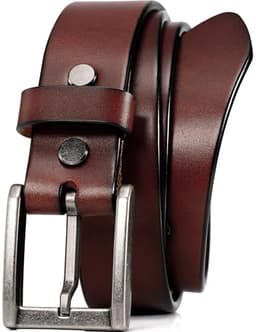
WOLFANT Italian Solid Full-Grain Leather Belt (1.5")
Leather grade: Full-grain
The listing pairs the Italian claim with a stated full-grain, solid-strap construction — so the provenance word is attached to something checkable rather than standing in for it.
$39.98 · View on AmazonPrice as of October 20, 2026. #ad How we’re funded
- No country claim, grade stated
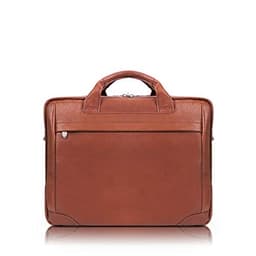
McKlein Montclare Pebble-Grain Calfskin Briefcase (13")
Leather grade: Top-grain
No Italian branding at all, but the listing names top-grain calfskin. That is more information than most 'Italian leather' listings give you, and it is the spec that actually predicts wear.
What about buying leather in Florence?
Florence’s leather markets are a genuine draw, and the city has a real leather-working tradition, including a well-known school attached to a monastery complex. But the tourist markets around San Lorenzo are a retail environment like any other: some stalls sell workshop-quality goods, others sell imported bags with an Italian label attached at the last step. The same rule applies standing in the market as it does on a product page — ask what grade it is, and be suspicious when nobody will say.
We are a buying-guide site, not a travel guide, so we will not tell you which stall to visit. What we can tell you is what to ask when you get there: which layer of the hide is this, and was it vegetable-tanned or chrome-tanned? A workshop that made the bag can answer both without hesitating.
Bottom line
Italy earns its leather reputation in its tanneries, not on its listings. Treat “Italian leather” as a piece of context that becomes useful only once the grade is stated — and treat “genuine Italian leather” as a signal that the grade is being avoided. If you want the thing the reputation actually refers to, look for vegetable-tanned, full-grain, and a named tannery or consortium mark; if a listing offers none of the three, the country name is decoration. For the wider map of what these terms mean, see types of leather.
How we know this. Veg Tan Club is written by an enthusiast, not a master leatherworker or a test lab. We compile each product’s published specs — grade, tannage, hardware — and reason from there. We say plainly when a listing doesn’t state a grade, and we haven’t physically handled every item we compare.
Frequently asked questions
What does 'Italian leather' actually mean?
At minimum it claims some part of the process happened in Italy — usually the tanning. It is a provenance claim, not a quality grade. It does not tell you whether the hide is full-grain, top-grain, a split or a coated layer, and it does not tell you where the hide itself came from, since Italian tanneries import raw hides from around the world.
Is Italian leather better than other leather?
Italy's tanning industry, and Tuscany's in particular, has a genuine reputation for high-end vegetable tanning. But a phrase on a product listing is not the same as that industry's output. A stated grade from any country tells you more about how a bag will age than an unqualified 'Italian leather' claim does.
What is the Tuscan vegetable-tanned leather consortium?
The Consorzio Vera Pelle Italiana Conciata al Vegetale is an association of Tuscan tanneries that vegetable-tan leather and operate a guarantee trademark for it. Goods made from member leather can carry that consortium mark. It is one of the few 'Italian leather' signals that points to a specific, checkable body rather than to marketing language.
Is 'genuine Italian leather' a good sign?
It is a mixed signal at best. 'Genuine leather' is the leather trade's most misleading grade term — it typically describes a lower, split-based layer — so pairing it with a country name stacks a vague quality word onto a vague provenance word. Look for the grade stated separately and plainly.
Can I trust 'Made in Italy' on a leather bag?
'Made in Italy' is a stronger claim than 'Italian leather' because it refers to where the product was assembled, but it still says nothing about grade, and rules on how much of the process must happen locally vary. Treat it as one input among several, not as a substitute for the grade the listing does or doesn't state.
Sources
- Consorzio Vera Pelle Italiana Conciata al Vegetale — The Tuscan consortium of vegetable tanneries and its guarantee trademark for Italian vegetable-tanned leather (accessed August 19, 2026)
- 16 CFR Part 24 — FTC Guides for Select Leather and Imitation Leather Products — The FTC guides on leather labeling: unqualified 'leather' claims, imitation-leather disclosure, backing material and misuse of trade names (accessed August 19, 2026)
- Wikipedia — Tanning (leather) — The tanning process, vegetable vs. chrome tannage, and why ~90% of leather is chrome-tanned (accessed July 18, 2026)
- Wikipedia — Leather — Overview of leather, grain layers and the full-grain / top-grain / split hierarchy (accessed July 18, 2026)
Keep reading
Best Italian leather goods
Six listings that use the word Italian, ranked by how checkable each claim actually is.
See the picksWhat is vegetable-tanned leather?
The tannage Tuscany is famous for — what plant tannins do to a hide and why the result darkens with use.
Read the explainerFull-grain vs. genuine leather
Why 'genuine leather' is the most misleading phrase on any listing, Italian or otherwise.
See the differenceHow to tell real leather from fake
The look, feel, smell, edge and label tests for when the listing won't commit to anything.
Learn the testsTypes of leather, explained
The full map of grades, finishes and hide types, so you can place any claim a listing makes.
See the full guide