How to Clean a Leather Wallet
A wallet collects a different kind of dirt from a bag — hand oil at the fold, lint in the slots, blue from your jeans. Here's how to lift it without soaking, stiffening or darkening the leather.
How this is funded: we earn a commission if you buy through our links, at no extra cost to you. It never changes which product we recommend, and we’ll tell you when we’d skip one. Full disclosure.
To clean a leather wallet, empty it completely, brush the lint out of the slots, wipe the outside and the card-slot edges with a soft cloth that is only barely damp (or with a leather cleaner applied to the cloth), then let it dry open at room temperature. Never soak it and never put it in a washing machine. Condition it afterward only if it feels dry, and then with a very small amount. That is the whole method. The rest of this page is about why a wallet needs a slightly different approach from every other leather good you own.
Why wallet dirt is different
A bag picks up dust, rain and the occasional spill across broad panels. A wallet picks up hands. Skin oil, sweat, pocket lint and whatever is on your fingers get pressed into it by body heat and the weight of sitting on it, day after day, and the grime concentrates in three places:
- The fold. It is where you grip the wallet, and it flexes every time you open it, so oil and dirt get worked in rather than sitting on top.
- The card-slot mouths. Every card you pull out drags a little grime over the slot edge, and those edges are handled constantly. They are usually the first part of a wallet to look gray.
- The outer edges and corners. They rub against the pocket lining all day, collecting lint and wearing faster than the flat faces.
Add two problems that bags rarely have — blue dye from your jeans and a smell from living warm in a pocket — and you have the reason this guide exists separately from our bag-cleaning routine.
One thing to settle before you start: not all darkening is dirt. On a full-grain wallet, a darker, glossier fold and burnished corners are patina, the change good leather is bought for, and no amount of cleaning should try to remove it. Grime looks different. It sits on the surface, feels slightly tacky, looks gray rather than rich, and comes off on a cloth. Clean off the grime; leave the patina alone.
First, work out what your wallet is made of
The same damp cloth that is perfectly safe on one wallet leaves a ring on another. Most wallets fall into one of five surfaces, and each wants a slightly different touch:
| Surface | Usually looks like | How to clean it | Watch for |
|---|---|---|---|
| Coated or pigmented (often sold as 'genuine leather') | Very even color, a slight sheen, no visible pores | Barely damp cloth or a mild leather cleaner; the finish is doing the protecting | Scrubbing through the finish; flaking at the fold means the coating is failing |
| Full-grain with a light finish | Visible pores and small marks; darkens where it is handled | Leather cleaner on the cloth, light pressure, spot-test first | Over-wetting; darkening from too much conditioner |
| Vegetable-tanned, unfinished | Matte and firm, pale when new, darkens fast with use | Dry-clean first; if you must use moisture, a barely damp cloth over the whole panel | Water spots, dye transfer and permanent darkening |
| Suede or nubuck (often the lining) | A soft, fuzzy nap | A soft dry brush only | Any liquid or conditioner mats and stains the nap |
| Bonded leather or PU | Plastic-uniform surface, sometimes a fabric backing at the edges | A barely damp wipe; there is nothing for a conditioner to feed | Peeling, which no cleaner or conditioner reverses |
If the listing or the tag said “genuine leather,” you are most likely holding a coated split. If it said vegetable-tanned, follow the stricter rules in our veg-tan care guide — veg-tan is minimally finished, so water carries tannins with it and leaves a tide line where it stops. If you genuinely can’t tell, treat the wallet as the delicate case and test inside a card slot first.
What you’ll need
- Two soft, lint-free cloths — one to clean, one to dry and buff.
- A soft, dry brush for the slots and the fold.
- A few cotton swabs for the card-slot mouths.
- Clean water, or a dedicated leather cleaner for greasy build-up.
- A conditioner, only if the leather feels dry once it is clean — and on a wallet, you will use a tiny amount.
What you won’t need: household sprays, alcohol wipes, baby wipes or dish soap straight from the bottle. They are made for other surfaces, and on leather they can strip a finish or dry the leather out.
How to clean a leather wallet, step by step
- Empty it completely. Every card, note, receipt, coin and photo. Wallets hide things — the receipt folded behind a card is the one that has been forcing the fold open for months. You can’t clean a slot with a card in it, and you don’t want cleaner reaching anything you carry.
- Dry-clean first. Shake out the lint, run a soft brush into each slot and along the fold, then wipe the outside with a dry cloth. Grit is abrasive, and a damp cloth over grit grinds it into the grain. On a lightly used wallet, this and a dry buff are often all it needed.
- Spot-test somewhere hidden. Inside a card slot or on an inner panel that never shows. Let it dry completely before judging, and check the cloth: dye coming off onto it is a signal to stop and go gentler.
- Wipe with a barely damp cloth, or cleaner on the cloth. Wring the cloth until it is only just damp, or put a small amount of leather cleaner on the cloth — never pour or spray anything onto the wallet. Work the whole outer panel with light pressure rather than scrubbing one patch, because a cleaned patch next to an uncleaned one shows. Give the fold and edges a second pass, and use a barely damp cotton swab along each card-slot mouth.
- Blot, then dry it open. Blot with the dry cloth, then stand the wallet half-open on a towel at room temperature. Keep it away from radiators, hair dryers, sunny windowsills and car dashboards: fast drying pulls oils out and leaves the fold stiff at exactly the point it has to bend. Don’t close it or reload it while it is still damp.
- Condition only if it feels dry. Once it is fully dry, run a thumb over the fold. If it feels supple, stop. If it feels dry or papery, spot-test a conditioner, then work a very small amount over the whole outside with a cloth and buff off anything left on the surface. There is no need to condition inside the card slots.
- Let it rest before reloading. A few hours, or overnight after conditioning, so nothing transfers to your cards. Then reload it with fewer cards than it claims to hold — an overstuffed wallet strains its stitching and forces the fold open, as our guide to how long a leather wallet lasts explains.
The fold, the slot mouths and the edges
The fold is where the most oil builds up, and it is also where patina forms first, so this is where restraint matters most. Wipe until the cloth comes away clean, not until the leather looks new. If it still feels tacky after a gentle wipe, a second pass with a leather cleaner on the cloth is better than pressing harder with water.
The slot mouths are often skived thin so the wallet folds flat, which makes them the most delicate leather on it. A barely damp swab, one slot at a time, is plenty. If the edges are pale and fuzzy rather than dirty, that is a worn-through finish on a coated wallet, not grime, and no cleaner will bring it back.
The outer edges are either painted or burnished. Either way, wipe them rather than scrub them: edge paint is a coating, and a coating is what scrubbing removes. A burnished edge on a veg-tan wallet usually needs nothing more than a dry cloth.
Blue marks from your jeans
Indigo from dark denim rubs onto whatever sits against it, and a pale or tan wallet in a back pocket is the classic victim, especially when the jeans or the wallet are damp. What you can do about it depends on the surface. On a coated wallet the dye often sits partly on the finish, and a leather cleaner on a soft cloth, tested inside the wallet first, can lift some of it. Go gently: rubbing alcohol and other solvents can strip the wallet’s own dye and finish along with the indigo.
On vegetable-tanned or unfinished leather, the dye soaks in and is largely permanent. Scrubbing spreads it and burnishes the surface unevenly, which looks worse than the mark. Prevention is the only reliable answer: keep a pale wallet away from dark denim, particularly when either is damp, or choose a darker wallet if you live in raw denim. For ink, grease and other stubborn marks, our guide to removing stains from leather goes stain by stain.
If your wallet smells
New leather has its own smell, and vegetable-tanned leather in particular smells of tannin; that is not a problem to fix. An unpleasant smell usually comes from sweat and body warmth, or from the wallet having been damp and closed. The fix is conservative: empty it, clean it gently as above, then leave it open somewhere dry, ventilated and out of direct sun for a few days. Don’t seal it in a plastic bag, and don’t spray it with perfume or fabric freshener — neither is made for leather, and both put more liquid into it.
A musty smell is a different signal. It points to moisture, and moisture is how mold starts. Conservation guidance from the U.S. National Park Service keeps leather below roughly 65% relative humidity, and a wallet kept in a drawer in a damp room can drift above that. Check the seams and slots for any bloom and, if you find it, follow our guide to removing mold from leather. If a smell survives a gentle clean and several days of airing, there is no home method we would point you to with confidence.
Why you should never soak or machine-wash a wallet
It is tempting, because a wallet is small and a sink is right there. Don’t. The Canadian Conservation Institute’s guidance is that most leathers are damaged by direct contact with water. Soaking carries dye and tannins through the leather and leaves tide lines as it dries, and a wallet that has been wet through tends to dry stiff and distorted at the fold. A washing machine adds detergent, agitation and often heat; a dryer finishes the job. A barely damp cloth is the most water a leather wallet should ever meet on purpose.
If it has already been through the wash, don’t reach for heat. Pull it out, blot it, ease it back into shape, and let it dry slowly and half-open at room temperature. Once it is completely dry, condition it lightly to restore some flexibility, and expect it to feel stiffer than before. The same principles apply as in our guide to drying a wet leather bag, just at a smaller scale.
Conditioning a wallet: lightly, and rarely
A wallet is the one leather good that feeds itself. Your hands put oil into it every time you open it, and it lives against your body, so it dries out far more slowly than a bag or a belt. That is why the advice on our full-grain wallet picks is “rarely, and lightly”: an occasional very thin coat if it starts to feel dry is enough, and over-conditioning makes a wallet limp and can leave it darker than you wanted, permanently. Our guide to how often to condition leather puts a wallet at one to two times a year as a starting point, and less is fine.
Color is the other consideration. Many conditioners darken pale leather, and on a tan or natural wallet that change is hard to undo. A conditioner whose maker states it won’t darken is the safer starting point there, but it is not a guarantee: spot-test inside a card slot and let it dry before judging. For the three-way decision between the most common bottles, see Leather Honey vs. Bick 4 vs. Lexol.
What to use on a wallet
Clean first, condition rarely. On a wallet you will use very little of either, so buy for the leather you have rather than the biggest bottle.
- For the clean step
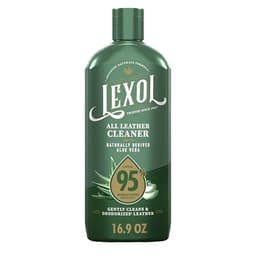
Lexol All Leather Cleaner (with Aloe)
Type: Cleaner
Lexol says its cleaner is pH-balanced to match the natural pH of leather, is free of silicones, alcohols and waxes, and leaves leather prepared for conditioning. Put it on the cloth, not the wallet, and keep it off suede and nubuck.
$14.99 · View on AmazonPrice as of September 20, 2026. #ad How we’re funded
- For pale or tan wallets
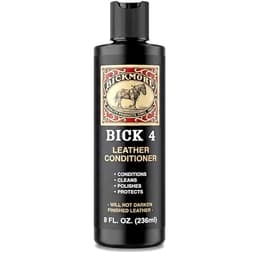
Bickmore Bick 4 Leather Conditioner & Cleaner (8 oz)
Type: Cleaner + conditioner
Its maker states it will not darken leather, which is the claim that matters on a light wallet. Bickmore also says to check colorfastness in a hidden area first, so test inside a card slot, and it describes the product for smooth finished leather, not suede or napped leather.
- Two-step kit, cloths included
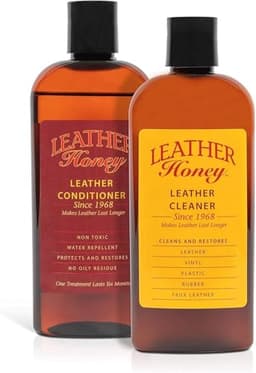
Leather Honey Complete Leather Care Kit (Cleaner + Conditioner)
Type: Cleaner + conditioner kit
A cleaner and a conditioner in one box, with cloths, so the clean-then-condition order is built in. Its conditioner can darken pale leather, so spot-test inside the wallet first, and remember a kit like this maintains leather; it won't fix a torn slot.
When to stop
Cleaning maintains a wallet. It can’t rescue one, and a few situations call for putting the cloth down:
- Peeling or flaking at the fold. That is a coating losing its bond, not dirt, and it is common on coated splits and bonded leather. Cleaning won’t stop it and conditioner can creep under the lifting edges. See how to fix peeling leather for what a repair can realistically do.
- Cracks through the leather. A fold that has dried past the point of flexing has cracked, and cracks don’t heal. Conditioning keeps the rest of the wallet supple; it won’t close the crack.
- A torn slot or popped stitching. That is a job for a leatherworker, and a small one if you catch it early.
- Ink, or a stain on a wallet you value. Aggressive home methods often remove the finish along with the mark.
- A grubby suede interior. Brush it with a soft, dry brush and leave it at that; liquids mat the nap.
Bottom line
Empty it, dry-clean it, wipe it with a cloth that is barely damp, dry it open and away from heat, and condition only if it genuinely feels dry. Treat the whole panel rather than one spot, leave the patina alone, and never let a wallet near a sink or a washing machine. If yours is peeling rather than dirty, cleaning was never going to be the answer; the replacement should be a wallet whose listing states its grade, and our guide to what leather is best for a wallet explains what to look for.
How we know this. Veg Tan Club is written by an enthusiast, not a master leatherworker or a test lab. We compile each product’s published specs — grade, tannage, hardware — and reason from there. We say plainly when a listing doesn’t state a grade, and we haven’t physically handled every item we compare.
Frequently asked questions
Can you put a leather wallet in the washing machine?
No. Conservation guidance is blunt that most leathers are damaged by direct contact with water, and a machine adds detergent, agitation and often heat on top. Expect a stiff, distorted wallet with tide marks. If it has already been through a wash, blot it, reshape it and let it dry open at room temperature away from any heat, then condition it lightly once it is completely dry.
How do I clean a leather wallet at home without buying anything?
Empty it, brush the lint out of the slots, and wipe the outside with a soft cloth barely damp with plain water, working the whole panel rather than one spot. Let it dry open at room temperature. That handles most everyday grime. For greasy build-up at the fold, a dedicated leather cleaner does what water alone won't; skip household sprays, alcohol wipes and baby wipes.
How do I get a smell out of a leather wallet?
Empty it, clean it gently, then leave it open somewhere dry, ventilated and out of direct sun for a few days. Don't seal it in a bag and don't spray it with perfume or fabric freshener. A musty smell points to moisture, which is a storage problem: keep leather below roughly 65% relative humidity and check it for mold.
Can you get jeans dye off a leather wallet?
Sometimes, partly, on a coated wallet: a leather cleaner on a soft cloth, tested inside the wallet first, can lift dye sitting on the finish. On vegetable-tanned or unfinished leather, indigo soaks in and is largely permanent, and scrubbing only spreads it and wears the surface. Prevention is the real fix: keep pale wallets away from dark denim, especially when either is damp.
Should I condition my wallet after cleaning it?
Only if it feels dry, and then very lightly. A wallet picks up oils from your hands every day, so it needs far less than a bag or a belt; once or twice a year is a sensible ceiling for most. Over-conditioning makes a wallet limp and can leave it permanently darker, especially if it is pale or vegetable-tanned.
Is cleaning a 'genuine leather' wallet any different?
'Genuine leather' is usually a coated split, so what you are cleaning is mostly the finish. That makes it forgiving of a barely damp cloth or a mild leather cleaner, but there is little underneath for a conditioner to feed. If the surface is flaking at the fold, the coating is failing: cleaning won't stop it, and conditioner can work under the lifting edges.
Sources
- Canadian Conservation Institute — Caring for leather, skin and fur — CCI preventive-conservation guidance on cleaning, dressing and storing leather (accessed July 18, 2026)
- U.S. National Park Service — Curatorial Care of Objects Made From Leather and Skin — NPS museum-handbook guidance on cleaning, handling and storing leather; humidity below ~65% (accessed July 18, 2026)
- Lexol — All Leather Cleaner (maker's product page) — Maker's claims: pH-balanced formula that matches the natural pH of leather; free of silicones, alcohols and waxes; leaves leather prepared for conditioning (accessed September 18, 2026)
- Bickmore — Bick 4 Leather Conditioner (maker's product page) — Maker's claims: will NOT darken leather; completely wax-free; for smooth finished leather; not for suede, rough-out, distressed or napped leathers; always check colorfastness in a hidden area first; made in the USA (accessed September 18, 2026)
Keep reading
How to care for vegetable-tanned leather
The stricter routine for veg-tan wallets — why water spots, dye and conditioner all show, and how to keep the patina even.
Read the guideLeather Honey vs. Bick 4 vs. Lexol
If your wallet does need conditioning, the three-way decision by leather color, compared on what each maker states.
Compare the threeHow long does a leather wallet last?
Why load, pocket and grade decide a wallet's lifespan far more than cleaning does.
Read the answerBest full-grain leather wallets
If yours is peeling, the replacement should be one whose listing actually states full-grain.
See the picksHow to clean a leather bag
The same principles on a bigger canvas — stains, mold and drying a whole bag safely.
Read the guideHow to remove stains from leather
Ink, grease and water marks, stain by stain — for the marks a general clean won't lift.
See the stain guide