Veg Tan Club

Best Gun Belts for Concealed Carry

A carry belt is a structural part, not an accessory. These are the belts whose listings actually publish the two specs that decide whether one holds its shape — and the ones that quietly don't.

By Stephen V.Last updated How we pick

An ordinary belt holds your trousers up. A gun belt has to do that while carrying a rigid object hung off one point of your waistband, all day, without letting it tip outward or drag the whole belt into a sag. That is a fundamentally different engineering problem, and it is why people who buy a holster first and a belt second usually end up buying a second belt.

The failure is always the same and it is always mechanical. A soft or thin strap can’t resist the leverage of a weighted holster, so the belt rolls over at that point — the top edge folds outward, the holster tips away from your body, and everything you were trying to conceal prints through your shirt. No amount of tightening fixes it, because the problem is that the strap has no stiffness in the first place.

So the shortlist below is built on the two published specs that actually predict stiffness: the stated leather grade and the published thickness in ounces. Almost no belt listing gives you both. One of the five below publishes a real thickness. Three state full-grain. Two say nothing about their grade at all, and we’ve kept them in and labeled the gap, because on a belt sold specifically to carry a holster, that silence is worth reading. We have not handled any of these; we read each listing for what it commits to, then compared what it actually said.

How this is funded: we earn a commission if you buy through our links, at no extra cost to you. It never changes which product we recommend, and we’ll tell you when we’d skip one. Full disclosure.

Quick picks

Ranked on leather grade, construction and buyer fit. Select a row to jump to the full write-up. We have not handled these items ourselves — here is exactly what we do instead.

#ProductBest forPrice
1
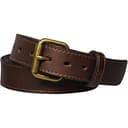
Hanks Gunner Full-Grain Gun Belt (1.5")

Hanks Gunner Full-Grain Gun Belt (1.5")

The only belt here that states all four of the things that matter: full-grain leather, a 1.5" width, US manufacture and a stainless buckle, backed by a published 100-year warranty. A warranty that long is a claim about the strap, not the marketing, and it is the strongest published commitment on this page.

Best overall
$89.00 · View on Amazon

Price as of September 5, 2026. #ad How we’re funded

2
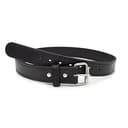
1791 GUNLEATHER Heavy Duty 14 oz Gun Holster Belt

1791 GUNLEATHER Heavy Duty 14 oz Gun Holster Belt

The one listing on this page that publishes a number instead of an adjective: 14 oz, roughly 5.6 mm of hide. That is the single most useful spec on a carry belt, because rigidity comes from thickness far more than from branding. It states American steerhide and IWB/OWB holster support — but never names a grade.

Best published thickness
$68.99 · View on Amazon

Price as of September 5, 2026. #ad How we’re funded

3
Daltech Force Tactical Steel Core Full-Grain Gun Belt

Daltech Force Tactical Steel Core Full-Grain Gun Belt

States full-grain and adds a steel core through the strap, which is a different answer to the same problem: instead of relying on hide thickness alone to stop the belt rolling under a holster, it puts a spring-steel spine inside it. The most rigid option here, and the one to reach for if a heavier setup keeps folding your current belt over.

Best for a heavy setup
$89.99 · View on Amazon

Price as of September 5, 2026. #ad How we’re funded

4
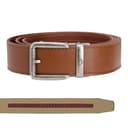
Nexbelt Rogue EDC Ratchet Gun Belt (1.5")

Nexbelt Rogue EDC Ratchet Gun Belt (1.5")

A carry belt with a micro-adjust track instead of punched holes, which matters more here than on an ordinary belt: the right tension changes the moment you add or remove a holster, and holes an inch apart rarely land where you need them. Listed with a nickel buckle, set screws and a nylon backing behind the leather.

Best micro-adjustment
$74.99 · View on Amazon

Price as of September 5, 2026. #ad How we’re funded

5
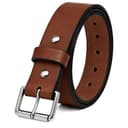
Kmioc Concealed Carry CCW Gun Belt (1.5")

Kmioc Concealed Carry CCW Gun Belt (1.5")

States 100% full-grain at a price closer to a mall belt than a carry belt, which makes it the sensible way to find out whether a proper gun belt fixes your sagging problem before spending three times as much. The grade claim is the reason it is here at all.

Best budget full-grain
$32.99 · View on Amazon

Price as of September 5, 2026. #ad How we’re funded

The picks in full

#1Best overall

Hanks Gunner Full-Grain Gun Belt (1.5")

The only belt here that states all four of the things that matter: full-grain leather, a 1.5" width, US manufacture and a stainless buckle, backed by a published 100-year warranty. A warranty that long is a claim about the strap, not the marketing, and it is the strongest published commitment on this page.

Strengths

  • Listing states full-grain leather — the layer that holds tension instead of stretching
  • 1.5" width, the standard slot size on most holsters
  • Stainless steel buckle and stated US manufacture
  • Published 100-year warranty

Trade-offs

  • Thickness in ounces is not published, so you cannot compare its stiffness on paper
  • The most expensive belt on this page
  • A solid full-grain strap this rigid takes real time to break in
Leather gradeFull-grain
TannageNot published
ThicknessNot published
HardwareStainless steel buckle
Made inUSA
Warranty100 years

Specs read from the product listing, on August 30, 2026. “Not published” means the listing does not state that spec.

#2Best published thickness

1791 GUNLEATHER Heavy Duty 14 oz Gun Holster Belt

The one listing on this page that publishes a number instead of an adjective: 14 oz, roughly 5.6 mm of hide. That is the single most useful spec on a carry belt, because rigidity comes from thickness far more than from branding. It states American steerhide and IWB/OWB holster support — but never names a grade.

Strengths

  • Publishes an actual thickness — 14 oz — which almost no belt listing does
  • States American steerhide and support for both IWB and OWB holsters
  • Costs less than the stated-full-grain belts above it

Trade-offs

  • Leather grade is not published — steerhide names the animal, not the layer
  • Width, hardware and country are not stated on the listing
  • 14 oz is genuinely stiff; it will not double as a dress belt
Leather gradeNot published
TannageNot published
Thickness14 oz
HardwareNot published
Made inNot published
WarrantyNot published

Spec note. The listing states "14 oz" and "American steerhide" but no grade. Steerhide is a hide type, not a layer of it — a 14 oz strap can still be a split.

Specs read from the product listing, on August 30, 2026. “Not published” means the listing does not state that spec.

#3Best for a heavy setup

Daltech Force Tactical Steel Core Full-Grain Gun Belt

States full-grain and adds a steel core through the strap, which is a different answer to the same problem: instead of relying on hide thickness alone to stop the belt rolling under a holster, it puts a spring-steel spine inside it. The most rigid option here, and the one to reach for if a heavier setup keeps folding your current belt over.

Strengths

  • Listing states full-grain leather
  • Steel core resists the roll-over that happens under a loaded holster
  • Stays rigid without needing the strap to be extremely thick

Trade-offs

  • A steel core cannot be shortened at home — you cannot trim it like a plain strap
  • Thickness in ounces is not published
  • Rigid enough to be noticeable when you sit; this is not a casual jeans belt
Leather gradeFull-grain
TannageNot published
ThicknessNot published
HardwareSteel-core reinforced strap
Made inNot published
WarrantyNot published

Spec note. The stiffness here is partly hardware, not hide — a steel spine inside the leather. That changes how you size it, because the core cannot be cut.

Specs read from the product listing, on August 30, 2026. “Not published” means the listing does not state that spec.

#4Best micro-adjustment

Nexbelt Rogue EDC Ratchet Gun Belt (1.5")

A carry belt with a micro-adjust track instead of punched holes, which matters more here than on an ordinary belt: the right tension changes the moment you add or remove a holster, and holes an inch apart rarely land where you need them. Listed with a nickel buckle, set screws and a nylon backing behind the leather.

Strengths

  • Micro-adjust track means no fixed holes to stretch out or miss by half an inch
  • 1.5" width, and the buckle is designed to sit flat under a shirt
  • Set screws let the strap be trimmed to length

Trade-offs

  • Leather grade is not published
  • Some of the stiffness comes from a nylon backing rather than the hide itself
  • A ratchet is a mechanism, and mechanisms are the part that eventually wears
Leather gradeNot published
TannageNot published
ThicknessNot published
HardwareDistressed nickel ratchet buckle, set screws
Made inNot published
WarrantyNot published

Spec note. The listing names a nylon backing bonded behind the leather — worth knowing, because it means the rigidity is a laminate, not a single thick hide.

Specs read from the product listing, on August 30, 2026. “Not published” means the listing does not state that spec.

#5Best budget full-grain

Kmioc Concealed Carry CCW Gun Belt (1.5")

States 100% full-grain at a price closer to a mall belt than a carry belt, which makes it the sensible way to find out whether a proper gun belt fixes your sagging problem before spending three times as much. The grade claim is the reason it is here at all.

Strengths

  • Listing states 100% full-grain leather
  • 1.5" width, sized for standard holster slots
  • By far the cheapest stated-full-grain option here

Trade-offs

  • Thickness, hardware, country and warranty are all unpublished
  • No stated backing or core, so rigidity depends entirely on a thickness you cannot check
  • Nothing behind the grade claim — no warranty, no published construction detail
Leather gradeFull-grain
TannageNot published
ThicknessNot published
HardwareNot published
Made inNot published
WarrantyNot published

Specs read from the product listing, on August 30, 2026. “Not published” means the listing does not state that spec.

What actually makes a belt a gun belt

There is no standard, no certification and no legal definition. “Gun belt” is a marketing category, which means the only thing separating one from a regular belt is construction — and construction is exactly what most listings decline to describe. A belt earns the name by being stiff enough not to deform under a point load, and there are only three ways a maker can achieve that.

The first is thickness. A single hide cut thick enough simply resists bending. This is the traditional answer and the one that ages best, because there is nothing in the strap to delaminate or fatigue. The second is lamination: two thinner layers of leather bonded together, sometimes with a fabric layer between them, so the sandwich is stiffer than either layer alone. The third is a core— a strip of spring steel or rigid polymer running down the middle of the strap, which resists the roll-over directly rather than relying on the leather at all.

All three work. They fail differently, though, and that difference should drive your choice. A thick solid strap softens slowly and evenly over years and never really breaks — it just becomes a very good ordinary belt. A laminated belt can separate at the bond line, usually at the fold nearest the buckle, and once it starts the belt is done. A steel core keeps working long after the leather around it has gone soft, but it also means the belt cannot be trimmed or shortened at home, and a core that takes a permanent bend stays bent.

How we chose these

The criteria below are in order of how much they predict the outcome. This is deliberately the same method used across the rest of this site: read the listing, rank on what it commits to, and mark what it leaves out rather than filling the gap with a guess.

  • Stated grade, first. A belt takes tension at the same fold thousands of times, so the layer of hide it’s cut from matters more here than on any other leather good. Full-grain keeps the hide’s dense outer surface and holds that tension; a split coated to look like it will stretch and then crease. If the listing does not say full-grain, assume it isn’t — see full-grain vs. top-grain leather for what each layer is.
  • Published thickness, second. Stiffness scales sharply with thickness, so an actual number in ounces beats every adjective in the title. “Heavy duty” is a claim; 14 oz is a measurement. Our leather weight and thickness guide covers what the ounce scale means and how it converts to millimeters.
  • Width, and whether it fits your holster. This is the spec people skip and then regret. Holster belt slots are cut to a size, and a belt wider than the slot will not thread through it. 1.5″ is the common carry width and what four of the five belts here state. If your holster is cut for 1.25″, a 1.5″ belt is simply the wrong purchase, however good it is. Our belt width guide covers how width reads across dress and casual wear.
  • Buckle and how it attaches. A carry belt is cinched harder and more often than a dress belt, so the buckle takes more cycles. A stated metal — stainless, nickel — is a better sign than an unnamed “alloy.” Screw or Chicago-screw attachment lets you replace a buckle or shorten a strap; a stitched-in buckle does not.
  • What the maker is willing to stand behind. A published warranty is the one claim that costs the seller money if the belt fails. Most listings in this category publish none. One below publishes a hundred years, which is a marketing number and also a real commitment.

Ounces, not adjectives

Leather thickness is sold by weight: one ounce is about 1/64 of an inch, or roughly 0.4 mm. So a 14 oz strap is around 5.6 mm thick, which is close to double a normal dress belt and genuinely difficult to fold by hand. That is the entire point — you want a strap that resists the leverage of a holster rather than accommodating it.

The reason we rank a published number so highly is that it is the only spec in this category that cannot be spun. Every listing here says “heavy duty.” Only one says how heavy. When a maker publishes ounces, they have committed to something checkable; when they publish “thick and sturdy,” they have committed to nothing, and you are buying the photograph.

A useful floor: most carry belts worth the name sit somewhere in the 12–16 oz range, and belts marketed for carry that come in noticeably under that tend to be relying on a backing or a core for their rigidity instead. That is not automatically worse — it is just a different design, and one you should know you are buying.

Steel core, laminate, or just thick leather?

If you carry a lightweight polymer-framed pistol in an inside-the-waistband holster, a thick single strap of stated full-grain is very likely enough on its own, and it is the version that will still be a good belt in fifteen years. Solid leather has no bond line to fail and no core to take a set.

A steel core earns its place when the load gets heavier or more off-center — a full-size handgun, an outside-the-waistband holster with more leverage, or a belt that also carries a spare magazine and a light on the opposite side. The trade is real, though: you lose the ability to trim the belt to length, the belt is heavier, and it is stiff in a way you notice sitting down in a car.

A leather-and-nylon laminate, like the ratchet belt below, sits between the two. It gets stiffness from the backing rather than from hide thickness, which keeps it lighter and thinner under a shirt. It is also the construction most exposed to a bond-line failure over a long enough timeline, and it is the one where an unstated leather grade matters least — the leather is doing less of the structural work in the first place.

Sizing a carry belt is not the same as sizing a normal belt

Two things change. First, a gun belt is worn over a holster, and an inside-the-waistband holster plus the grip of a handgun adds real circumference — commonly one to two inches, depending on the setup. People routinely order their usual belt size and find the last hole is the one they now live in. Second, a very stiff strap does not stretch to forgive a near-miss the way a soft one does.

Measure the belt you actually wear, from the buckle’s fold to the hole you use, rather than trusting your trouser size — how to measure your belt size walks through it. Then decide whether you want the belt to work with the holster on, with it off, or both, and size for the case you will be in most. If you are between sizes, the ratchet belt below sidesteps the question entirely, which is most of its argument.

One warning specific to this category: do not plan on shortening a steel-core belt. On a plain strap, trimming the buckle end is a routine fix — our guide to shortening a leather belt covers it. A core changes that from a ten-minute job into a belt you have ruined.

Break-in, and what a stiff belt feels like at first

A proper carry belt arrives feeling wrong. It is close to unbendable, it will not lie flat in a drawer, and the first week it feels like wearing a hoop. This is expected and it is the property you paid for. Solid full-grain softens along the lines where it actually flexes — at the buckle fold and where it curves around your hips — while staying rigid across its width, which is exactly the behavior a holster needs. Our guide to breaking in a leather belt covers how to speed that up without damaging the hide.

What you should not do is try to force it with heat or soak it. Both dry out the fibers you are relying on for structure, and a belt that has been cooked soft never comes back. A carry belt that has gone limp is not broken in; it is broken. Occasional conditioning — see how to care for a leather belt — keeps it supple at the fold without turning the whole strap soft.

What we can’t tell you

We have not worn any of these belts, and we do not run a test lab. Everything above is read from what each listing publishes, on the date stamped on each card, and ranked on how much of it is checkable. Where a listing does not state a grade, a thickness, a country or a warranty, the spec table says “Not published” rather than filling in a plausible number.

That means we cannot tell you how any of these belts behaves in year three, and we will not pretend otherwise. What we can tell you is which ones committed to something in writing before you spent your money — which, in a category with no standard and no definition, is the most reliable filter available to you. Our full methodology explains how the picks on every page here are built.
Frequently asked questions

Do I really need a dedicated gun belt?

If you carry regularly, yes — but the reason is mechanical, not brand loyalty. A holster hangs a rigid weight off one point of the belt, and a strap that can't resist that leverage rolls over at that point, tipping the holster away from your body. Any belt stiff enough to resist it works; a dedicated gun belt is just a belt sold with that stiffness as the stated goal.

How thick should a gun belt be?

Most carry belts worth the name sit around 12 to 16 oz of leather, which is roughly 4.8 to 6.4 mm — close to double a typical dress belt. Very few listings publish the figure, which is exactly why we rank the one on this page that does. A belt marketed for carry that comes in noticeably thinner is usually relying on a nylon backing or a steel core for rigidity instead.

Is a steel core better than thick leather?

Neither is better outright; they fail differently. Thick solid leather has no bond line and no core to take a permanent bend, so it softens gradually over many years and stays usable. A steel core delivers more rigidity for less thickness and handles heavier setups better, but it cannot be trimmed to length at home and it is noticeably stiffer to sit in.

What width gun belt should I buy?

1.5 inches is the common carry width and what most holsters are cut for. Check your holster's belt slots before you order anything: a 1.5-inch belt will not thread through a slot cut for 1.25 inches, and that mismatch is the single most common returned-belt mistake in this category.

What size gun belt do I order if I carry inside the waistband?

Size it with the holster on. An inside-the-waistband rig plus the grip of a handgun typically adds one to two inches of circumference, so ordering your usual belt size often leaves you living on the last hole. Measure your current belt from the buckle fold to the hole you actually use, then add for the setup you'll wear most.

Will a gun belt work as an everyday belt?

It will hold your trousers up perfectly well, and a thick full-grain strap looks good doing it. It won't pass as a dress belt, though — 1.5 inches is too wide for most suit-trouser loops, and the rigidity that makes it good at carrying makes it look and feel heavy under formal clothes. If you want one belt for both jobs, you are going to compromise on one of them.

Why do so many gun belt listings not state a leather grade?

Because they are not required to. The FTC's leather guides govern how a product may be described as leather and when imitation or backing material must be disclosed, but nothing compels a seller to name the layer of the hide. On a belt sold specifically to hold a holster steady, that omission is information: the makers who cut from full-grain generally say so, because it is the strongest thing they can say.

Sources

Keep reading