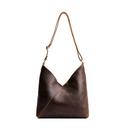
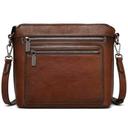
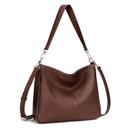
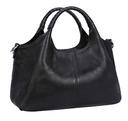
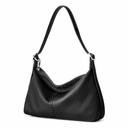
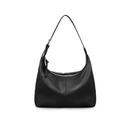
Why this page is not the handbag roundup with a price filter
Worth saying outright, because price-band pages often are exactly that: not one of the handbags on our main leather handbags roundup carries a live price under $100. The three bags on that page sit at roughly $108, $115 and $220 on the current layer. So this is a different list of bags rather than a cheaper cut of the same one, and it was built by resolving six listings the registry did not previously hold.
It is also distinct from best leather bags under $100, which is deliberately cross-format: that page's picks are a laptop tote, a sling, two backpacks and a shoulder tote, because under $100 the question most shoppers have not yet answered is which kindof bag they want. This page assumes the answer is a handbag — a shoulder bag, satchel or hobo carried on the body rather than a work bag — and no pick is shared between the two.
The three things we ranked on
1. A published empty weight.Four of six give one: 12 oz on the Portland, 0.92 lb on the light befen, about 1.1 lb on the anti-theft befen, 1.5 lb on the COOLCY and the pebbled befen, and roughly 1.9 lb on the Iswee. On a bag you carry on one shoulder for eight hours, an extra pound is not a detail. It is also the figure a maker publishes when it is proud of it and omits when it is not.
2. A stated load or a stated dimension set.All six publish dimensions, which is a better rate than the grade column manages. Only one publishes a load: the befen pebbled hobo says a 12.9-inch iPad Pro and an A4 magazine, and that is the single most checkable capacity claim in the band. “Roomy” is not a specification; “fits a 12.9-inch tablet” is.
3. Whatever the listing says about the hide, read from the bullets. Two state full-grain — the Portland and, in its bullets only, the pebbled befen. One states a vegetable tannage without ever naming a grade. Two state genuine leather. One says “first layer cowhide genuine leather,” which names where on the hide the panel came from without naming a tier, so we record no grade and explain the phrase instead. Where a title claims more than the bullets support — one befen title says top-grain where its bullets say only genuine pebbled leather — the bullets win and the title's claim goes in the cons. Full-grain vs. genuine leather is the piece that makes all of that readable.
The finding on this page: the tannage is worth more than the grade here
One bag in this band states a tannage and never states a grade. Two state a grade and never state a tannage. If you are buying for how the bag will look in three years, the first disclosure is the more valuable one, and that is the opposite of how the category is usually read.
The mechanism is straightforward. Grade tells you which layer of the hide you got. Tannage tells you whether that layer can absorb anything. A vegetable-tanned panel is tanned slowly with plant tannins and left relatively open, so it takes up oils from your hands and from conditioner, darkens unevenly where it is handled, and develops the patina people actually mean when they say leather ages well — what vegetable-tanned leather is covers the process, and leather patina covers the result. A chrome-tanned panel under a pigment finish, which is the default at this price, is sealed: it will scuff and it will crease, but it will not darken, because nothing can get into it.
So a full-grain panel that has been chrome-tanned and pigmented is tougher than a cheaper bag and will still look essentially the same in five years. A genuine-leather panel that has been vegetable-tanned is thinner and less durable and will visibly change. Neither is wrong to buy — but at this price only one bag on the page even lets you make that choice, and knowing which disclosure to look for is the whole value of reading the listing at all.
What none of these six will tell you
A country of manufacture, on all six.The Portland states US hide, which is a hide-origin claim and not a workshop. Nobody else answers the question. We record only what each listing claims, which is why five of six cards read “Not published” in that row.
A hardware metal, on five of six.The Iswee says silver metal hardware, the pebbled befen says silver-tone — which names a color, not a metal — and the rest say nothing. On a handbag the zip and the strap hardware are the parts that fail first and the parts you cannot replace, so this is a real gap rather than a pedantic one. Our how long a leather bag lasts page sets out the usual failure order, and it is almost never the leather.
A warranty term, on all six. Not one publishes one. At this price that is the expected state of the category rather than a surprise, and it is one of the clearest differences between this band and the tier above it.
A panel thickness, on all six.Universal in this category and not specific to the price band — we have yet to read a handbag listing anywhere that publishes one.
The six, side by side
Every cell is read from the listing or marked “Not published.” The weight column is the one this page is about.
| Handbag | Stated empty weight | Hide, as stated | Shape |
|---|
| Portland Leather Goods Naomi | 12 oz | Full-grain, US hide | Slouchy shoulder |
| COOLCY crossbody satchel | 1.5 lb | Genuine, vegetable-tanned | Structured satchel |
| befen pebbled hobo | 1.5 lb | Full-grain (bullets only) | Soft hobo |
| Iswee cowhide satchel | About 1.9 lb | “First layer cowhide” | Reinforced satchel |
| befen anti-theft RFID | About 1.1 lb | Genuine leather | Convertible shoulder |
| befen lightweight hobo | 0.92 lb | Genuine pebbled | Small-medium hobo |
Four of six publish an empty weight, six of six publish dimensions, one publishes a tannage, one publishes a load, one has a reinforced base, and none publishes a warranty term, a thickness or a country of manufacture.
How to buy one, in order
Start with weight, then size.Work out what the bag has to hold — a tablet changes everything — and then take the lightest bag that holds it. The spread on this page is from 0.92 lb to about 1.9 lb before anything goes in, and a pound on one shoulder is the difference between a bag you reach for and a bag in a cupboard.
Then decide slouch or structure, because it is not reversible. A slouchy hobo is lighter, more forgiving and collapses when you set it down; a reinforced satchel stands on a desk and holds its outline, and costs you weight and a stiffer carry. Only one bag here states a reinforced bottom. Our types of leather bags page runs through the formats, and crossbody vs. shoulder bag takes the carry decision underneath them.
Then read the strap numbers, not the strap photograph.Four of these publish a drop range, and the ranges are genuinely different: 19–36 in on the Portland, 21.5–25 in on the pebbled befen, 8.78–21 in on the anti-theft befen, 10–12.5 in on the light one. A bag whose strap will not reach your hip is not a crossbody no matter what the listing calls it.
Then set your expectations from the tannage, not the price. If the listing names a vegetable tannage, the bag will change color with handling and wants conditioning once or twice a year. If it says nothing, assume a finished chrome-tanned panel: it will stay the color you bought and wants cleaning rather than feeding. How to clean a leather bag covers the routine for both.
Then accept what this band does not include and buy accordingly. No warranty, no stated thickness, no named hardware metal, no country of manufacture. If any of those four is the thing that decides your purchase, the honest answer is that you need to spend more, and our main handbag roundup and full-grain leather bags are where those disclosures start appearing. One closing note on method: we do not own any of these bags and we have not carried them. Every specification above is read from a live listing on the date shown on each card, every price renders from the live price layer, and no grade, tannage, warranty or country is asserted that a listing does not state. The full rules are on our methodology page.