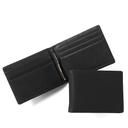
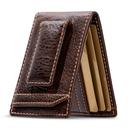
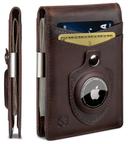
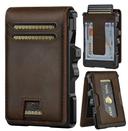
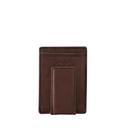
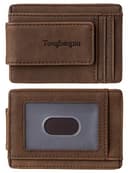
Magnet, spring clip or plain metal? The decision in one paragraph
A magnetic clip— four of these six — holds by attraction, so it never loses tension and never needs to be bent back. It will hold a thick fold (the two House of Jack wallets state fifteen-plus bills, thirty layers) and it releases with no fuss. The trade is that a magnet is a lump: it adds thickness at one end of the wallet, and it sits against your cards. A spring or stainless-steel clipgrips by tension, so it is flatter and it holds a thin fold more securely — and it does gradually relax, which is the one failure mode a magnet does not have. A plain stitched metal clip, as on the Leatherology, is the quietest of the three and the most dependent on the stitching that anchors it.
The practical rule: if you carry a thick fold of cash, buy the magnet. If you carry three bills and want the wallet to disappear in a front pocket, buy the metal clip. If you are not sure you want a clip at all, read money clip vs. wallet before you spend anything, and slim and minimalist wallets for the formats that drop cash handling altogether.
The three things we ranked on
1. What holds the cash, stated in specifics.“Money clip” on its own is not a specification. Three of the six say what the clip is made of or what it is rated to hold: a stainless-steel clip on the SERMAN BRANDS, a magnetic clip rated for fifteen-plus bills on the House of Jack, a metal clip rated for up to fourteen bills on the Leatherology. The furid hides a magnetic clip behind an aluminum card chamber, which is a different idea again. The Fossil and the Toughergun say “magnetic” and stop there.
2. A stated grade, read from the bullets rather than the title.Four of six name a layer of hide: three say full-grain and one says genuine leather. Two listings say both things about the same wallet — the furid title sells “Full Grain” while its first bullet says “premium genuine leather” — and in that case we record nothing, because a contradiction is not a disclosure. Full-grain vs. genuine leather is the piece that makes those two phrases readable.
3. A published capacity, in cards and in bills. All six publish something, which makes this the best-documented column on the page: twelve-plus cards and fifteen-plus bills on the furid, eleven card slots on the SERMAN BRANDS, eight to ten cards on the House of Jack, six slots on the Leatherology, three slots on the Fossil. Count your own cards before you read any of those numbers as generous, because every one of them assumes a single card per slot.
The finding on this page: the clip is better documented than the hide
On every other wallet format we cover, the mechanism is nothing and the hide is everything — a bifold is two panels and a fold, so the only variable worth publishing is the leather. This format inverts that. Here the makers publish the clip material, the bill count, the magnet strength and the card layout in detail, and then describe the leather in a single adjective.
That is not an accident, and it is worth understanding before you spend. A clip is a component with a specification sheet behind it; leather is a judgment call the seller would rather you not make. A stainless-steel clip rated for thirty layers of paper is a fact a factory can hand over. A grade claim invites the question of which part of the hide, and most listings in this category would rather answer the first question loudly than the second question at all. The two picks here that do answer it — with a tannage, or with a named tannery certification — are also the two most expensive, which tells you roughly what the answer costs.
The practical consequence: on a money clip wallet, read the clip spec to decide whether the wallet suits how you carry cash, then read the grade to decide whether it is worth buying twice. Both of those are separate decisions here in a way they are not on a bifold, and is full-grain leather worth it is where we take the second one seriously.
What none of these six will tell you
Panel thickness. Not one publishes a figure in ounces or millimeters. On this format that number decides whether the clip sits proud of a thin panel or disappears into a thick one, and whether the card slots stretch in a year or in five. Leather weight and thickness sets out what the missing figure would have told you.
Country of manufacture, on all six.The Fossil says “imported” and names nothing. The Leatherology names Italian or German hide, and the Portland-style distinction applies: where a hide came from is not where the wallet was cut and stitched, and we record only what each listing actually claims. The House of Jack names the certification its tanneries hold, which is the closest thing to provenance on this page and still not a country.
Whether the clip is replaceable. None of them says. A magnet that comes loose or a spring clip that relaxes is the most likely thing to end one of these wallets, and no listing here addresses repair at all. The furid publishes a lifetime warranty and the SERMAN BRANDS twelve months against factory defects; the other four publish no term, so a failed clip is a replacement purchase.
The six, side by side
Every cell is read from the listing or marked “Not published.” The clip column is the one this page is about.
| Wallet | Clip | Stated grade | Stated capacity |
|---|
| Leatherology slim bifold | Metal clip, up to 14 bills | Full-grain, vegetable-tanned | 6 slots + 2 pockets |
| House of Jack Co. Ivor | Magnetic, 15+ bills (30 layers) | Full-grain cowhide | 8-10 cards |
| SERMAN BRANDS AirTag | Stainless steel | Full-grain | 11 slots + AirTag pocket |
| furid aluminum pop-up | Hidden magnetic clip | Not published (title and bullet disagree) | 12+ cards, 15+ bills |
| Fossil Ingram card case | Magnetic | Genuine leather | 3 slots + slide pocket |
| Toughergun ultralight | Magnetic | Genuine leather | Slim card slots + clip |
Four of six name a layer, one names a tannage, two publish a warranty term, and none publishes a panel thickness. Four carry an RFID-blocking lining; whether that is worth anything is a separate question we answer honestly on are RFID wallets worth it.
How to buy one, in order
Start with how much cash you actually carry. Three bills and a magnet is a different object from fifteen bills and a magnet, and the listings here are unusually specific about it. If you carry a thick fold, the House of Jack and the furid are the only two that state a figure above ten bills. If you carry cash rarely, the Fossil is small enough to vanish and the clip becomes a convenience rather than a feature you paid for.
Then count your cards and pick one slot above it.Leather slots stretch permanently under load, and on this format the slots sit beside a rigid clip, so an overstuffed money clip wallet deforms faster than an overstuffed bifold. The furid is the exception on this page precisely because its card chamber is aluminum rather than leather — nothing stretches, which is the same argument we take seriously on Ridge wallet alternatives.
Then decide whether you are buying the hide or the hardware. The two picks that publish real leather disclosure are the two dearest. The three cheapest publish clip and capacity and leave the hide at one adjective. Both are defensible purchases; what is not defensible is paying full-grain money for a wallet whose listing never says what layer it used. Best full-grain wallets is the page if the grade is the deciding factor regardless of format.
Then leave the clip alone and condition the panel.Do not bend a spring clip to adjust its grip — that is how tension is lost permanently — and keep conditioner off the magnet and the clip anchor points, where it softens the leather that is holding metal in place. How to condition leather covers how little to use. One closing note on method: we do not own any of these wallets and we have not tested them. Every specification above is read from a live listing on the date shown on each card, every price renders from the live price layer, and no grade, tannage, warranty or country is asserted that a listing does not state. The full rules are on our methodology page.