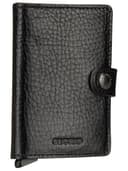
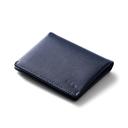
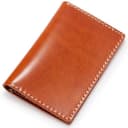
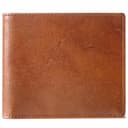
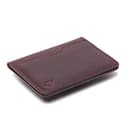
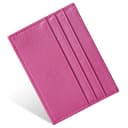
The two Ekster listings this page compares against
Every fact we state about the original is read from its own dated Amazon listing rather than from reputation - which is the only way we will write an alternatives page. Here they are, with their own specs on their own cards.
- The original
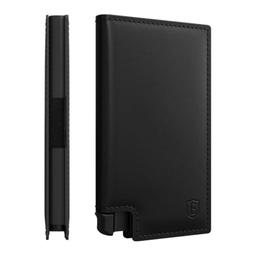
Ekster Parliament Pop-Up Wallet (Nappa Black)
Leather grade: Top-grain
The Parliament is the Ekster most people mean: a stated top-grain wrap over a 6063 T5 aluminium housing, with a published 10-plus card capacity and no warranty term.
- The dearer original
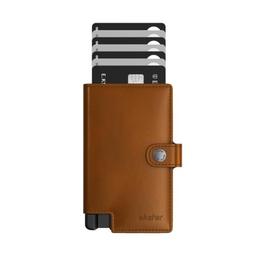
Ekster Wallet PRO Pop-Up (Italian Vachetta, Tan)
Leather grade: Not published
The Wallet PRO names an Italian Vachetta hide and recycled aluminium, publishes a footprint to the millimetre - and never names a layer of hide at all.
What the Ekster listings publish, and what they leave out
On the hardware, a lot.Both name their alloy. The Parliament specifies 6063 T5 aluminium; the Wallet PRO says 100 percent recycled aluminium with an all-metal trigger. Both publish a measured footprint. Both state card capacity as a range of real cards rather than a vague “holds plenty”. That is better hardware disclosure than almost any leather wallet on this site manages.
On the leather, much less.The Parliament states top-grain, which is a real claim and one rung below full-grain — full-grain vs. top-grainsets out what the sanded surface costs you. It also names an LWG silver-rated tannery, which is a genuine third-party audit of the tannery’s environmental practice and says nothing about which layer of hide you are buying. The Wallet PRO is the weaker of the two: “Italian Vachetta” is a finish-and-origin term, not a grade, so we record no layer for it. At that price, a leather claim weaker than wallets at a third of the money is worth noticing.
On recourse, nothing on either.Neither listing publishes a warranty term. The Parliament offers a satisfaction promise — send it back if it is not right — which is a returns policy rather than a term, and the two are not interchangeable once a year has passed. Three of the six alternatives below publish a defined term, one of them three years.
Where the original wins outright, and you should buy it
We will say this plainly because it is true and because the point of this page is to be useful rather than flattering to our own picks. Leather card slots stretch permanently under load. A rigid housing does not.
The mechanism is the same one behind every stretched-out wallet you have owned: hide fibers held under sustained tension lengthen and do not spring back, which is set out in does leather stretch. In a leather card slot, a card held in it for two years leaves a slot that no longer grips a single card. An aluminium cage cannot do that. So if you carry exactly four to six cards and you want them gripped identically in year five, buy the Ekster — or the SECRID, which uses the same idea and publishes more about its leather.
The second thing it wins on is one-handed access. A trigger that fans six cards into a staircase is faster than any leather slot, full stop. No wallet below matches it; the Bellroy pull-tab is the nearest thing and it lifts a stack rather than fanning it. If you tap a transit card and a door badge a dozen times a day, that difference is real and it is worth money.
The third is RFID shielding as structure rather than lining. A metal housing shields the cards inside it as a consequence of being metal. A fabric RFID lining is a separate layer that has to stay intact. Whether you need shielding at all is a different question and we answer it honestly on are RFID wallets worth it.
What a leather wallet gives you instead
A stated grade, on five of our six. Four state full-grain and one states top-grain, against one stated top-grain and one unstated across the two Eksters. If you want the hide to be the thing you are buying, that is the trade.
A stated tannage, on four of six.This is the disclosure that decides whether a wallet can age at all, and it is the single biggest gap in the Ekster listings — “Vachetta” gestures at a traditional Italian veg-tan style without stating the process. Vegetable-tanned vs. chrome-tanned explains why that word matters more than most people think, and leather patina explains what you get for it.
A warranty term, on three of six.Three years on the Bellroy, twelve months on two others. On a wallet, what fails is stitching and edge coat rather than hide, so a defined term against workmanship is worth real money — and it is precisely what neither Ekster listing offers.
And capacity that is not fixed by a cage. The housing that stops your cards stretching the leather also caps how many go in it. Four to six, plus whatever rides in the outer pockets. If your real number is nine, that architecture is working against you, and best wallets for lots of cards is the page you actually want.
The comparison, side by side
Every cell is read from the listing or marked “Not published.” The two Ekster rows are the originals, not picks.
| Wallet | Stated grade | Stated tannage | Stated warranty |
|---|
| Ekster Parliament (original) | Top-grain | Not published (LWG silver tannery) | Not published |
| Ekster Wallet PRO (original) | Not published | Not published (Italian Vachetta) | Not published |
| SECRID Miniwallet veg-tan | Not published | Vegetable-tanned | Not published |
| Bellroy Slim Sleeve | Top-grain | Not published | 3 years |
| HISCOW veg-tanned card holder | Full-grain | Vegetable-tanned | 1 year |
| ALBEPPE Tuscan bifold | Full-grain | Vegetable-tanned | 12 months |
| FOXHACKLE card holder | Full-grain | Vegetable-tanned | 12 months |
| URAQT card holder | Not published | Not published | Not published |
The SECRID is the interesting row. It matches the Ekster’s architecture, publishes a tannage and a country where Ekster publishes neither, and states no grade at all— so on the one spec Ekster does publish, the Parliament is ahead of it. There is no wallet in this comparison that wins every column, and we are not going to invent one. Our Secrid alternatives page takes the same comparison from the other side, and Ridge alternatives does it for the metal-plate version of the same idea.
How to choose, in three questions
How many cards do you actually carry? Count them. Four to six is Ekster territory and a rigid housing is the right tool. Seven to twelve and the housing becomes a constraint, so a sleeve or a slim bifold serves you better. Thirteen and up and none of this is your page.
Do you carry notes?Ekster puts bills in an outer pocket or under a cash strap, folded. If you want a full-length bill compartment, you want a bifold, and the ALBEPPE on this page is the veg-tanned version of that — our bifold roundup is the wider field. If you rarely carry cash, a card holder is lighter, thinner and cheaper, and slim minimalist wallets covers the whole format.
Do you want it to change with use, or stay as it arrived?This is the real dividing line and it is not about price. An aluminium housing with a top-grain wrap is a product designed to look the same in year five. A full-grain, vegetable-tanned card holder is designed not to — it will darken, burnish where your thumb sits and develop a patina that is specific to you. Both are legitimate. Only one of them is leather doing what leather does, and what leather is best for a wallet is the page that goes deeper.
One closing note on method. We do not own any of these wallets, we have not tested them, and nothing on this page disparages Ekster — every statement about it is read from its own listing on the date shown on its card. Every price renders from the live price layer rather than a figure typed into this page, and no grade, tannage, warranty or country is asserted that a listing does not state. The full rules are on our methodology page.