Veg Tan Club

Best Leather Bifold Wallets

The bifold is the format most people actually carry, and the one where listings disclose the least. Six ranked on a stated grade first, a stated warranty term second and a published card layout third.

By Stephen V.Last updated How we pick

The verdict: the Tony Perotti full-grain Italian bullhide bifoldis the one to buy if you want it to be the last one you buy — it is the only bifold we track whose listing states both a grade and a tannage (full-grain, vegetable-tanned), and that pair is what actually produces a patina rather than a worn-out wallet. If you want the longest recourse instead, the STAY FINE top-grain bifold is the only pick here with a stated lifetime warranty, and it names a lower layer to get there. For a work wallet that shows a badge and a licence without being opened, the Carhartt oil-tan passcase states full-grain with two clear ID windows. The budget pick is the Wise Owl crazy-horse bifold: the cheapest bifold we will stand behind, and the only wallet on this page that publishes a country of manufacture.

Here is what makes the bifold worth a page of its own. A bifold is two panels and one fold, and the fold is the only moving part. Everything that goes wrong with one happens there or at the stitching beside it: the spine creases, the edge coat cracks off the fold, and the card slots nearest the hinge stretch first because that is where the pack flexes. That is why we weight a stated grade and a stated warranty term above the feature list. The grade tells you whether the dense outer fiber of the hide is still on the panel that bends. The term tells you whether the maker will stand behind the stitching that holds it.

Five of these six state a leather grade, which is a high disclosure rate for the category. Exactly one states a tannage, exactly one states a lifetime term, and exactly one states where it was made — and they are three different wallets. We have not carried any of these. Every figure below is read from a live listing on the date printed on its card, prices render from the live price layer rather than being typed into this page, and where a listing publishes nothing we write “Not published” rather than estimate.

How this is funded: we earn a commission if you buy through our links, at no extra cost to you. It never changes which product we recommend, and we’ll tell you when we’d skip one. Full disclosure.

Quick picks

Ranked on leather grade, construction and buyer fit. Select a row to jump to the full write-up. We have not handled these items ourselves — here is exactly what we do instead.

#ProductBest forPrice
1
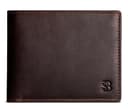
Tony Perotti Full-Grain Italian Bullhide Bifold

Tony Perotti Full-Grain Italian Bullhide Bifold

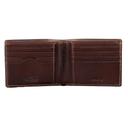
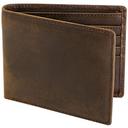
The best-disclosed bifold we track and the only one that states a tannage. Full-grain Italian bullhide, vegetable-tanned, a published 4.5 x 3.75 in closed, eight card slots, four receipt pockets and a double currency divider. It is also the only pick here with no RFID lining, which looks like a deliberate omission rather than an oversight.

Best overall
$59.99 · View on Amazon

Price as of November 21, 2026. #ad How we’re funded

2
STAY FINE Top-Grain Leather RFID Bifold with 2 ID Windows

STAY FINE Top-Grain Leather RFID Bifold with 2 ID Windows

The only wallet on this page with a stated lifetime warranty, and the trade is explicit: it names a lower layer than the full-grain picks and backs it with the longest term. Top-grain leather, eight card slots, two flip-up ID windows, RFID lining in every slot and a published 4.3 x 3.5 in closed.

Best warranty
$34.99 · View on Amazon

$39.9913% off

Price as of November 21, 2026. #ad How we’re funded

3
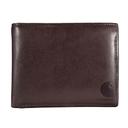
Carhartt Oil-Tan Full-Grain Leather Passcase Wallet

Carhartt Oil-Tan Full-Grain Leather Passcase Wallet

The workwear pick, from the brand on this page with the most durability reputation to lose. Full-grain leather with a stated natural oil finish, eight cards across six slots and two side pockets, two clear ID windows, RFID blocking and a published 3.5 x 4.5 in. The warranty is real but limited to defects, not to wear.

Best for work
$32.23 · View on Amazon

$42.9925% off

Price as of November 21, 2026. #ad How we’re funded

4
SERMAN BRANDS Full Grain Leather RFID Bifold

SERMAN BRANDS Full Grain Leather RFID Bifold

Stated full-grain with 12 card slots and RFID blocking at a budget price — the best grade-per-dollar bifold here if you carry a lot of cards.

Best for lots of cards
$28.22 · View on Amazon

$34.9519% off

Price as of November 21, 2026. #ad How we’re funded

5
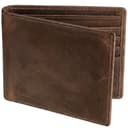
RUNBOX Full Grain Crazy Horse RFID Bifold

RUNBOX Full Grain Crazy Horse RFID Bifold

Full-grain with a crazy-horse finish — a waxed top coat that scuffs into a lived-in patina fast, so it looks better the more you beat it up. The rugged-looks pick.

Best for fast patina
$33.19 · View on Amazon

$39.9917% off

Price as of November 21, 2026. #ad How we’re funded

6
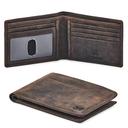
Wise Owl Real Leather RFID Bifold with ID Window (Crazy Horse)

Wise Owl Real Leather RFID Bifold with ID Window (Crazy Horse)

The budget pick, and the only wallet here that publishes a country of manufacture. It states made in India, offers a choice between a nappa and a crazy-horse finish, holds a stated 8-plus cards across seven slots with an ID window, and is RFID lined. It never names a layer of hide, and at this price that silence is the honest expectation rather than a scandal.

Budget pick
$13.28 · View on Amazon

$17.9926% off

Price as of November 21, 2026. #ad How we’re funded

The picks in full

#1Best overall

Tony Perotti Full-Grain Italian Bullhide Bifold

The best-disclosed bifold we track and the only one that states a tannage. Full-grain Italian bullhide, vegetable-tanned, a published 4.5 x 3.75 in closed, eight card slots, four receipt pockets and a double currency divider. It is also the only pick here with no RFID lining, which looks like a deliberate omission rather than an oversight.

Strengths

  • States full-grain AND a vegetable tannage — the only bifold we track that states both
  • Bullhide is a denser, thicker hide than standard cowhide
  • Eight card slots, four receipt pockets and a double currency divider
  • Published 4.5 x 3.75 in closed, with rounded edges

Trade-offs

  • No RFID-blocking lining, unlike every other pick on this page
  • No warranty term published
  • Italian leather is a hide-origin claim; no country of manufacture is stated
  • The dearest bifold here by a wide margin
Leather gradeFull-grain
TannageVegetable-tanned
ThicknessNot published
HardwareNot published
Made inNot published
WarrantyNot published

Spec note. Vegetable-tanned full-grain is the combination that actually patinas: the tannage leaves the hide able to absorb oils and darken, and the grade leaves the dense outer fiber in place to burnish.

Specs read from the product listing, on November 21, 2026. “Not published” means the listing does not state that spec.

#2Best warranty

STAY FINE Top-Grain Leather RFID Bifold with 2 ID Windows

The only wallet on this page with a stated lifetime warranty, and the trade is explicit: it names a lower layer than the full-grain picks and backs it with the longest term. Top-grain leather, eight card slots, two flip-up ID windows, RFID lining in every slot and a published 4.3 x 3.5 in closed.

Strengths

  • Stated lifetime warranty — the only one on this page
  • States top-grain rather than hiding behind an unnamed grade
  • Two flip-up ID windows plus eight card slots
  • RFID lining in every card slot, not just one pocket

Trade-offs

  • Top-grain is a sanded and refinished surface, so it will not patina like full-grain
  • Leather from Argentina is a hide-origin claim, not a country of manufacture
  • No tannage and no thickness published
  • Love it or we buy it back is a returns promise, not a defined warranty scope
Leather gradeTop-grain
TannageNot published
ThicknessNot published
HardwareNot published
Made inNot published
WarrantyLifetime

Spec note. A lifetime term on a wallet is worth more than it sounds: stitching and edge coat are what actually fail on a bifold, and both are workmanship rather than hide.

Specs read from the product listing, on November 21, 2026. “Not published” means the listing does not state that spec.

#3Best for work

Carhartt Oil-Tan Full-Grain Leather Passcase Wallet

The workwear pick, from the brand on this page with the most durability reputation to lose. Full-grain leather with a stated natural oil finish, eight cards across six slots and two side pockets, two clear ID windows, RFID blocking and a published 3.5 x 4.5 in. The warranty is real but limited to defects, not to wear.

Strengths

  • States full-grain leather with a natural oil finish
  • Two clear ID windows — show a licence and a work badge without opening it
  • Eight cards plus a full-length billfold compartment
  • Carhartt limited warranty against defects in materials and workmanship

Trade-offs

  • An oil finish darkens with handling and can transfer onto pale cloth early
  • The warranty covers defects, not the wear that actually ends a wallet
  • No tannage, thickness or country of manufacture published
  • Calls full-grain the highest grade of leather available, which is a marketing line rather than a graded standard
Leather gradeFull-grain
TannageOil finish (stated as a natural oil finish)
ThicknessNot published
HardwareNot published
Made inNot published
WarrantyLimited warranty against defects in materials and workmanship

Spec note. An oil-finished full-grain wallet is the one case where early color transfer is expected: the finish sits in the hide rather than on it, and it moves.

Specs read from the product listing, on November 21, 2026. “Not published” means the listing does not state that spec.

#4Best for lots of cards

SERMAN BRANDS Full Grain Leather RFID Bifold

Stated full-grain with 12 card slots and RFID blocking at a budget price — the best grade-per-dollar bifold here if you carry a lot of cards.

Strengths

  • Listing states full-grain leather
  • 12 card slots + ID window
  • RFID blocking at a budget price

Trade-offs

  • More slots means more bulk
  • Tannage not published
Leather gradeFull-grain
TannageNot published
ThicknessNot published
HardwareRFID-blocking lining
Made inNot published
WarrantyNot published

Specs read from the product listing, on July 18, 2026. “Not published” means the listing does not state that spec.

#5Best for fast patina

RUNBOX Full Grain Crazy Horse RFID Bifold

Full-grain with a crazy-horse finish — a waxed top coat that scuffs into a lived-in patina fast, so it looks better the more you beat it up. The rugged-looks pick.

Strengths

  • Listing states full-grain leather
  • Crazy-horse wax finish scratches into character
  • RFID blocking

Trade-offs

  • Crazy-horse finish shows every scuff (the point, but not for everyone)
  • Slim it is not
Leather gradeFull-grain
TannageNot published
ThicknessNot published
HardwareNot published
Made inNot published
WarrantyNot published

Spec note. Crazy-horse is a hot-waxed finish applied to full-grain leather; scratches buff out or blend into the patina, which is why these look more characterful with use.

Specs read from the product listing, on July 18, 2026. “Not published” means the listing does not state that spec.

#6Budget pick

Wise Owl Real Leather RFID Bifold with ID Window (Crazy Horse)

The budget pick, and the only wallet here that publishes a country of manufacture. It states made in India, offers a choice between a nappa and a crazy-horse finish, holds a stated 8-plus cards across seven slots with an ID window, and is RFID lined. It never names a layer of hide, and at this price that silence is the honest expectation rather than a scandal.

Strengths

  • Publishes a country of manufacture (made in India) — almost nothing in this category does
  • Offers the finish as a choice: nappa for smooth, crazy horse for waxed pull-up
  • Five card slots plus two behind them, an ID window and a stated 8-plus card capacity
  • RFID lining and a published 3.4 in closed height

Trade-offs

  • Says real leather and names two finishes, but never names a layer — so no grade is recorded here
  • Crazy horse is a wax finish, not a grade: it says nothing about which layer you are buying
  • No warranty term, no tannage and no thickness published
  • Thinnest construction on the page, which is where a cheap bifold fails first
Leather gradeNot published
TannageNot published
ThicknessNot published
HardwareNot published
Made inIndia
WarrantyNot published

Spec note. The listing calls nappa and crazy horse two leather qualities. They are two finishes. Neither word tells you whether the panel is full-grain, top-grain or split.

Specs read from the product listing, on November 21, 2026. “Not published” means the listing does not state that spec.

Bifold, trifold or slim? The decision in one paragraph

A bifold folds once and keeps bills flat and full length, which is why it has been the default for a century. A trifold folds twice: it carries more cards in a smaller footprint and sits three layers thick in your pocket. A slim or minimalist wallet drops the bill compartment altogether and asks you to carry fewer cards. We have taken both of those decisions in full on bifold vs. trifold and bifold vs. slim wallet.

The practical rule: a bifold is the right format if you carry paper money, need the footprint to stay small in one direction, and want a back pocket to stay flat. If you carry ten cards or more, read best wallets for lots of cards before you buy a bifold, because the format gets thick fast.

The three things we ranked on

1. A stated grade, read from the bullet rather than the title.Five of six name a layer: four say full-grain, one says top-grain, and the sixth says “real leather” and names two finishes without ever naming a layer. That last one is the pattern to recognise, because it is everywhere in this category — a listing that offers you “nappa or crazy horse” has described two surface treatments and told you nothing about which part of the hide you are buying. Full-grain vs. genuine leather is the piece that makes that sentence readable.

2. A stated warranty term. Three of the six publish something. One is a stated lifetime (STAY FINE), one is a named limited warranty against defects in materials and workmanship (Carhartt), and the rest say nothing or offer a returns promise dressed as a guarantee. Those are not the same thing, and the difference matters on this format precisely because the failure is a seam, not a hide. A lifetime term against workmanship is worth more on a bifold than on any other leather good you own.

3. A published card layout. All six publish one, which makes this the only fully populated column on the page: eight card slots and four receipt pockets on the Tony Perotti, eight slots plus two flip-up ID windows on the STAY FINE, eight cards across six slots and two side pockets on the Carhartt, twelve slots plus an ID window on the SERMAN BRANDS, twelve slots plus two flip-up IDs on the RUNBOX, and seven slots with a stated eight-plus capacity on the Wise Owl. Count your own cards before you read any of those numbers as generous.

The finding on this page: grade and term run in opposite directions

The two best grade claims here come with no warranty term at all, and the only stated lifetime term comes with the lowest grade claim of the five that name a layer. That is not a coincidence and it is worth understanding before you spend.

A full-grain, vegetable-tanned panel is an expensive input: the hide has not been sanded and refinished, so it has to be a clean hide to start with, and a vegetable tannage takes weeks rather than hours. Vegetable-tanned vs. chrome-tanned covers why that time shows up in the price. A lifetime replacement promise is a different kind of expense — it is a reserve against returns, and the cheapest way to fund it is a corrected, consistent, predictable top-grain panel that behaves the same way on every unit. So the money goes into the hide or into the guarantee, and at this price almost never into both.

Which you should prefer depends on what you want from the wallet. If you want a wallet that looks better in five years than it did new, buy the hide. Patina is a property of uncorrected, absorbent leather and it cannot be added later; leather patina explains the mechanism. If you want a wallet that is replaced free when the stitching lets go, buy the term — and accept that a sanded surface wears evenly and quietly rather than developing character.

What none of these six will tell you

Thickness. Not one publishes a figure in ounces or millimetres, and on a bifold that is the number that decides whether the wallet stays slim or becomes a brick. A wallet is only as thin as its panels plus its cards, and the panels are unknown on all six. Leather weight and thickness sets out what the missing number would have told you.

Country of manufacture, on five of six.The Wise Owl states made in India. Everyone else is silent, including the two that name a hide origin — “Italian bullhide” and “leather from Argentina” are claims about where the hide came from, not where the wallet was cut and stitched. We treat those as two different disclosures and record only what each listing actually claims. It is worth saying plainly that the cheapest wallet on the page is the only one that answers the question.

A tannage, on five of six. Only the Tony Perotti states one. One other states a finish that implies an oil treatment rather than a tannage, which is the Carhartt, and we record it as a finish because that is what the listing says.

The six, side by side

Every cell is read from the listing or marked “Not published.” The last two columns are the trade this page is about.

BifoldStated gradeCard slotsStated warranty
Tony Perotti Italian bullhideFull-grain, vegetable-tanned8 + 4 receipt pocketsNot published
STAY FINE top-grainTop-grain8 + 2 ID windowsLifetime
Carhartt oil-tan passcaseFull-grain, oil finish6 slots + 2 pockets (8 cards)Limited, against defects
SERMAN BRANDS full-grainFull-grain12 + ID windowNot published
RUNBOX crazy horseFull-grain, crazy-horse finish12 + 2 ID windowsNot published
Wise Owl crazy horseNot published (made in India)7 + ID windowNot published

Five of six name a layer, one names a tannage, one names a lifetime term, one names a country, and none names a thickness. Five of six carry an RFID lining — the exception is the dearest wallet on the page, which looks like a choice rather than an oversight, and are RFID wallets worth it covers whether that should bother you.

How to buy one, in order

Count your cards first, then pick the slot count one above it.A bifold with twelve slots and four cards in it flaps open; a bifold with eight slots and twelve cards in it will stretch the slots nearest the fold within a year and never recover. Leather slots stretch permanently, which is the whole argument of a rigid card housing — we take that argument seriously on Ekster alternatives.

Then decide whether you want patina or a guarantee, using the trade above. There is no wallet on this page that gives you both, and pretending otherwise is how people end up disappointed by a perfectly good wallet.

Then check for an ID window if you need one, because retrofitting it is impossible and four of these six have one. Best wallets with an ID window is the page if that is the deciding feature.

Then condition the spine, twice a year, with almost nothing. The fold is the only place a bifold dries out, and it is the one place a drop of conditioner genuinely extends the life of the wallet; how to condition leather covers how little to use. One closing note on method: we do not own any of these wallets and we have not tested them. Every specification above is read from a live listing on the date shown on each card, every price renders from the live price layer, and no grade, tannage, warranty or country is asserted that a listing does not state. The full rules are on our methodology page.
Frequently asked questions

What is the best leather bifold wallet?

On published specification, the Tony Perotti full-grain Italian bullhide bifold. It is the only bifold we track whose listing states both a leather grade and a tannage - full-grain and vegetable-tanned - which is the combination that actually produces a patina rather than simply wearing out. It publishes 4.5 by 3.75 inches closed, eight card slots, four receipt pockets and a double currency divider. The caveats are that it has no RFID lining, no stated warranty term and no stated country of manufacture, and it is the dearest wallet on the page.

Is a bifold or a trifold wallet better?

A bifold if you carry cash and want a flatter back pocket; a trifold if you carry a lot of cards and would rather the wallet be small in footprint than thin. A bifold folds once, so bills stay flat and full length and the wallet is two layers thick. A trifold folds twice, so it holds more cards in a smaller outline but sits three layers thick. The practical test is your own pocket: a trifold in a front trouser pocket is comfortable, and in a back pocket it is a wedge.

How many cards should a bifold wallet hold?

Buy one slot count above the number of cards you actually carry, and no more. The reason is mechanical: leather card slots stretch permanently under load, and the slots nearest the fold take the most flex, so an overstuffed bifold loses its grip on cards within a year and never gets it back. An under-filled bifold with twelve empty slots simply flaps open. On this page the layouts run from seven slots to twelve plus two ID windows, all published.

Do leather bifold wallets state how thick the leather is?

Almost never, and not one of the six on this page does. That is the most useful missing number in the category, because a bifold is only as slim as its two panels plus its cards, and the panels are unpublished on every pick here. Where thickness is missing we rank on what is published - a stated grade read from the bullet rather than the title, a stated warranty term, and a published card layout - and we leave the thickness row visibly empty rather than estimating it.

What does a lifetime warranty on a wallet actually cover?

On the one wallet here that states one, it is a replacement promise rather than a defined repair scope - the listing says lifetime warranty and adds that if you do not love it they will buy it back. That is worth real money on a bifold specifically, because what fails on this format is stitching and edge coat rather than hide, and both are workmanship. What it does not do is make the leather better: that same listing states top-grain, a sanded and refinished surface, where the two dearest picks state full-grain and publish no term at all.

Where do bifold wallets wear out first?

At the spine, every time. The fold is the only moving part: the crease flexes thousands of times a year, the edge coat along it cracks and lifts, and the card slots immediately beside it stretch because that is where the card pack bends. Everything else on a bifold is static. That is why a dense, uncorrected full-grain panel is worth paying for on this format, and why the only maintenance that matters is a trace of conditioner along the fold twice a year.

Is crazy-horse leather better for a bifold wallet?

It is a different look, not a better grade. Crazy horse is a heavily hot-waxed pull-up finish applied over leather: scuff it and the wax moves out of the line so the color lightens, then redistributes with handling so the mark closes up. On a wallet, which lives in a pocket and takes constant small abrasion, that is genuinely useful - it hides wear better than any other finish at this price. What it does not tell you is which layer of hide is underneath. Two wallets on this page use the finish, and one of them names a layer while the other does not.

Sources

Keep reading