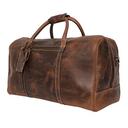
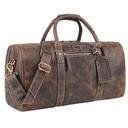
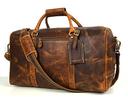
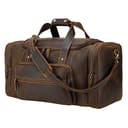
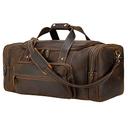
Pick the capacity first, and ignore the inches
Duffels are sold by length because length is easy to print. Length is the least useful dimension on a soft bag. A 24-inch duffel can be 25 liters or 40 depending on how deep and how tall it is, and on how much of that 24 inches is external pocket rather than main compartment.
The Polare 30-inch is the only listing here that fixes that problem properly, and the way it does it is worth copying: it publishes the main compartment length (26 inches) separately from the overall length (30 inches). That four-inch difference is the side pockets. No other bag in this registry publishes that split, and it is the gap that makes a stated length misleading whenever a maker leaves it out.
Here is the rough translation the stated liters on this page support, and it is the frame we would use to choose:
- 30 liters— two to three nights. Clothes, a toiletry bag, shoes if you are disciplined. This is the size that genuinely goes in an overhead bin.
- 35 liters— three to four nights, or three with a jacket and a second pair of shoes. Still carry-on in shape, at the limit in practice.
- 72 liters— a week, or two people for a weekend. This is a checked bag or a car bag, whatever the listing says about being TSA friendly.
If you are packing rather than buying, how to pack a weekender bag covers getting three days into 30 liters, and best leather dopp kits covers the toiletry bag that goes inside one.
The weight problem, stated plainly
A leather duffel is heavy and there is no version of this page where that is not true. The published empty weights here run from 2.6 lb for the Aaron Leather Goods 20-inch up to 7 lbfor the Polare 30-inch — and 7 lb is before anything goes in it. On airlines that enforce a cabin weight limit, a 7 lb empty bag has consumed a meaningful share of the allowance by existing.
That is the structural reason a nylon duffel at the same money will carry more for less weight, and we would rather say so than pretend otherwise; the honest comparison is in leather vs. nylon and leather vs. canvas bags. What leather buys for the extra pounds is a bag that gets better rather than worse: a full-grain panel scuffed by an airport floor darkens and burnishes, where a nylon panel abrades and eventually frays. If you fly weekly for work, buy nylon. If you travel a few times a year and want the bag to be twenty years old one day, that is the whole case for leather, and how patina forms is why it works.
Buffalo hide, which three of these six use, is thicker and more pebbled than cowhide. It looks rugged from new rather than after a year of wear, and it is heavier for the same panel area — what buffalo leather is covers the trade properly.
Where a leather duffel actually fails, and which picks address it
Not in the middle of a panel. In three specific places, in this order.
The base goes first.A duffel is set down on concrete, dragged across tiled floors and shoved under seats, and the bottom panel takes all of it. The Leather Village is the only pick here that states a defense against this — metal studs on the base, which lift the hide off the floor so the studs abrade instead of the leather. On every other bag here, the base is the part to inspect first when the bag arrives and the part to condition most often.
The zipper goes second, and on a duffel it is the failure that ends the bag, because the main compartment is a single long zip with no alternative way in. Four of these six name the zipper brand and all four say YKK, which is the best indicator available in a category where nobody publishes a cycle rating.
The handle and strap anchors go third.A full duffel is 25 to 40 lb hanging from two small stitched areas, and hide under sustained tension lengthens without returning — see does leather stretch. This is where hide thickness would tell you most, and it is the row that is empty for all six: not one of these listings publishes an ounce figure for the leather. Our guide to leather weight and thickness explains what that missing number would have told you.
The two claims to read carefully
“Water resistant” on the Leather Village describes the inner lining, not the hide.That is still worth having — it is what stops a leaked bottle soaking into clothes and into the leather from the inside — but a full-grain exterior remains an untreated natural material that absorbs rain and darkens where it lands. If you want the outside to shed water you treat it yourself; how to waterproof a leather bag and best leather protector sprays cover how, and is leather waterproof covers why the answer is no.
“TSA friendly” and “approved for cabin use by most airlines” are marketing phrases, not certifications.There is no body that approves a bag for cabins; every carrier sets its own limits and enforces them differently. A 30-liter bag at 20 x 11.5 x 9 inches genuinely fits most overhead bins. A 30-inch duffel does not, whatever the bullet says. Check the published footprint against your own airline’s stated maximum, and remember that a soft bag packed full is wider than the same bag empty.
One more on origin claims, because two listings here contain them. The Polare 30-inch says “authentic American leather,” which is a statement about where the hide came from, not about where the bag was made. The Rustic Town pairs “U.S.A. SELLER” with “handcrafted by Indian artisans” in the same bullet, which is a seller location and a craft claim rather than a clean country of manufacture. We record neither as a country of manufacture, which is why that field reads “Not published” on both cards.
The six, side by side
Every cell is read from the listing or marked “Not published.” Read the capacity column and the weight column together: that ratio is the only honest way to compare travel bags.
| Duffel | Stated capacity | Empty weight | Stated grade |
|---|
| Rustic Town 20 in | 30 L | 3.3 lb | Full-grain buffalo |
| Leather Village 24 in | 35 L | 3.65 lb | Full-grain |
| Aaron Leather Goods 20 in | Not published | 2.6 lb | Full-grain buffalo |
| Polare 23 in weekender | Not published | Not published | Full-grain cowhide |
| Polare 30 in | 72 L | 7 lb | Full-grain cowhide |
| Cuero 24 in handmade | Not published | Not published | Genuine leather |
Two rows are empty for all six: hide thickness and country of manufacture. Only two publish a warranty — one year each, from Aaron Leather Goods and from Polare — and both are defect warranties rather than wear warranties. That distinction matters on a bag that will be dragged through airports: a seam that opens in month three is a defect, and a base panel scuffed gray after two years of travel is not.
Five of the six state full-grain and one states genuine leather, which is an unusually good disclosure rate for this site — and there is a structural reason for it. A duffel is a big-panel object, so the maker has already committed to buying a lot of hide area; having done that, naming the layer costs nothing. Compare it with the opposite pattern on best leather bags under $100, where almost nothing states a grade, and the reason is the same fact read the other way: hide area is the expensive part.
One closing note on method. We do not own any of these bags and we have not travelled with them. Every specification above is read from a live listing on the date shown on each card, every price renders from the live price layer rather than a figure typed into this page, and no grade, thickness, capacity, warranty or country is asserted that a listing does not state. The full rules are on our methodology page, and how to store leather bags covers keeping a duffel in shape between trips, which is where most of its life is spent.