A grade names a layer. It does not name a proportion.
This is the most useful thing on the page, and Bellroy’s own two listings demonstrate it better than any explainer could. Both state the same grade. Their material lines are not remotely the same.
The Note Sleevestates “environmentally certified top-grain leather: 70% Leather, 25% Recycled Polyester, 5% Other Materials.” The Slim Sleevestates “environmentally certified top-grain leather: 95% Leather, 5% Other Materials.” Same brand, same marketplace, same stated grade — and a quarter of one of them, by the maker’s own composition figure, is recycled polyester rather than hide.
Neither of those is a scandal and we want to be clear about that. Recycled polyester in a wallet is usually a lining, a stiffener or a stitched panel, it is a reasonable engineering choice in a product that has to stay thin, and publishing the percentage at all is rarer than it should be— most of the registry simply says “leather” and leaves you to guess. But it does settle a question the grade alone leaves open. A grade tells you which layer of the hide was used. It tells you nothing about how much of the object is hide at all. If you have been reading “top-grain” as a statement about the whole wallet, this pair is the correction. Our explainers on full-grain vs. top-grain and types of synthetic leather cover both halves of that sentence.
One more note on “environmentally certified.” The phrase almost certainly refers to a tannery audit scheme rather than to the leather itself — the Leather Working Group program is the one most makers mean, and it rates tanneries on environmental and traceability criteria rather than grading hide quality. It is a real thing and worth something. It is not a grade claim, and we have not treated it as one.
What top-grain actually costs you in a wallet
Worth being precise, because the grade ladder gets overstated in both directions. Top- grain is the second layer down: the hide’s outermost surface has been sanded or buffed to remove marks, then usually sealed with a finish. That makes it uniform, predictable in color and easier to manufacture to a tight tolerance — which is exactly what a wallet designed to a published millimeter needs. It is not a bad material and it is not “fake leather.”
What it costs you is the aging. The dense outer fiber layer that full-grain keeps is the layer that absorbs oil from your hands and darkens into a patina. Buff it off and seal what is underneath, and the wallet wears instead: it scuffs, the finish dulls at the fold, and eventually the coating crazes rather than the leather burnishing. For a wallet, which lives in a pocket and gets handled dozens of times a day, that difference shows up within a couple of years. Our pages on how a patina forms and how long a leather wallet lasts lay out the mechanism and the failure order.
So the trade is clean: Bellroy gives you precision engineering in a material chosen for consistency, with a 3-year warranty behind it. The alternatives below give you the layer of hide that improves with handling, usually with no warranty at all. What leather is best for a wallet is the page to read if you want that argument at full length.
The four things people are usually replacing
Search traffic for Bellroy alternatives splits into four distinct wants, and knowing which is yours decides the pick fast.
1. The same slimness, a better grade.The most common one, and the easiest to satisfy. Stated full-grain is abundant in wallets — a wallet is cut from small pieces, so a maker can state the grade cheaply in a way it cannot on a bag — and four of the six picks below state it. Two of those also publish a card count, which is the Bellroy habit worth keeping. The full-grain wallet roundup ranks that field on its own.
2. The same architecture, much cheaper. The pull-tab-plus-quick-slots layout is a design, not a patent, and the cheap approximation of it is a front-pocket sleeve with a few slots and a captive pocket. You will not get the pull tab, and you will not get the tolerance; you will get most of the thinness for a fraction of the money. Our slim minimalist wallet picks cover that whole field, and bifold vs. slim wallet is the right place to start if you are not sure you want to leave the bifold format at all.
3. Cards that do not slide out. This is the under-rated reason people like the sleeve format: a pull-tab section holds the stored cards captive, so nothing escapes in a pocket. One pick below answers that directly with a magnetic closure, which is the cheap mechanical version of the same idea.
4. Published measurements.If the thing you actually valued was a maker that measures its own product, the alternative is not a cheaper wallet — it is another precise one. Exactly one wallet we track publishes both an exact size and an exact weight, and it quotes capacity by card type (four embossed cards or six flat) rather than by slot count. It is the Secrid Miniwallet, and it is the third pick below for that reason. Our Secrid alternatives page runs this same comparison from the other direction.
How the six compare on the four Bellroy claims
Every cell is read from the listing or marked “Not published.” The original is the first column. Read the grade row and the capacity row together — the interesting result is that the cheap wallets win the first and lose the second.
| | Bellroy (original) | Swear Brands | SERMAN | SECRID | RUNBOX | BULLIANT | Buffway |
|---|
| Grade stated | Top-grain | Full-grain | Full-grain | Not published | Full-grain | Genuine leather | Genuine leather |
|---|
| Tannage stated | Not published | Not published | Not published | Vegetable-tanned | Not published | Not published | Not published |
|---|
| Capacity published | 4-11 cards + flat bills | 1-12 cards | 12 slots + ID window | 4 embossed or 6 flat, +4 in wrap | Not published | Not published | Not published |
|---|
| Size published | 4 x 3.6 in | Not published | Not published | 102 x 65 x 21 mm; 70 g | Not published | Not published | Not published |
|---|
| Warranty stated | 3 years | Not published | Not published | Not published | Not published | Not published | Not published |
|---|
| Country stated | Not published | Not published | Not published | Italy and Holland | Not published | Not published | Not published |
|---|
| RFID stated | Yes (Note Sleeve) | Yes | Yes | Not published | Yes | Yes | Yes |
|---|
Three patterns come out of that table. First, the two listings that publish real numbers are the two that will not state a grade— Bellroy states top-grain and the Secrid states none at all, and both publish a measured size. The four cheaper wallets name the better layer of hide and publish almost nothing you can check. That inverse shows up on every page of this site, and it is the honest reason a premium wallet is not simply a worse deal.
Second, the warranty column has one entry in it. A 3-year manufacturer term on a wallet is close to unheard of in this category, and if a written remedy is what you are buying, no pick below replaces it. Judge that against the fact that a wallet failing in three years is usually failing at a stitch line, which is repairable by a cobbler for very little.
Third, RFID shielding is nearly universal and nearly meaningless as a differentiator— five of the six alternatives state it. Our position has not changed and is set out in are RFID wallets worth it: contactless skimming is a real but uncommon attack, chip transactions are tokenized, and shielding is worth having when it comes free rather than worth distorting a purchase for. Notably, the one wallet here built around a rigid card protector is the one whose listing does not mention RFID at all.
Capacity: the number that actually decides this
If you take one practical thing from this page, take this. A slim wallet is a compromise between thickness and how many cards you carry, and the single biggest cause of disappointment is buying the thin one and then carrying nine cards in it. Bellroy’s honesty here is the thing worth copying: it states a range, 4 to 11, because the wallet behaves differently at each end of it. At four cards it is genuinely slim. At eleven it is a normal wallet with an elegant layout.
Two details almost nobody publishes and everyone should. First, embossed cards are thicker than flat ones— if your bank still raises the numbers, three embossed cards occupy the space of four or five flat ones, which is exactly why the Secrid listing quotes “4 embossed or 6 flat” rather than a slot count. Second, cash is not thickness-neutral: a sleeve that takes flat bills stays flat, and one that takes folded bills doubles the paper at the fold. The Bellroy Slim Sleeve takes folded bills, which is how it gets smaller than the Note Sleeve while holding the same card range.
So count your actual carry before you shop. Four to six cards and no cash is the sleeve or card-holder territory covered in best leather card holders. Eight to twelve cards and some notes is bifold territory, and three of the picks below are bifolds for exactly that reason. More than twelve and you want a wallet built for a big card load rather than a slim one you will overstuff.
Which one for you
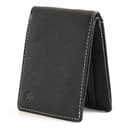
If you want the grade Bellroy does not state: Swear Brands. Stated full-grain, a published 1-to-12 card capacity, a card pull strap and a cash pocket in a genuinely slim body. It publishes no thickness, tannage or warranty, and it costs more than the budget full-grain bifolds beneath it.
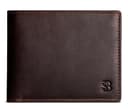
If you want full-grain for much less:SERMAN BRANDS. Stated full-grain with twelve slots, an ID window and RFID blocking at a budget price — the best grade-per-dollar pick here. Twelve slots means more bulk than a sleeve, so this is the alternative for someone whose honest card count was never four.
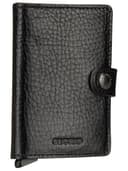
If what you valued was a maker that measures: the Secrid Miniwallet. The only wallet we track that publishes both an exact size and an exact weight, with a stated vegetable tannage and stated countries of manufacture. It states no grade, it is the most expensive pick here, and its rigid housing has a hard, low card ceiling.
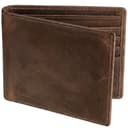
If you want it to look better the more you beat it up:RUNBOX. Stated full-grain under a crazy-horse wax finish, where scuffs blend into the patina instead of accumulating — what crazy horse leather is explains the mechanism. Slim it is not.
If cards sliding out is the problem you are solving:BULLIANT. A magnetic closure holds the stack captive, which is the cheap mechanical answer to what Bellroy’s pull-tab section does by design. Entry-grade leather, and the magnet adds a hair of thickness.
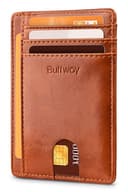
If you want to spend as little as possible:Buffway. A genuine-leather front-pocket wallet with RFID, enough capacity for real life, and many colorways. Not the thinnest and not full-grain — but the cheapest honest way to test whether you can live in a slim wallet at all before buying a good one. More of this bracket is ranked on best leather wallets under $50.
If you still want the original
Both Bellroy listings we track, with their live prices and the specs each one actually publishes. Buying the original is a perfectly rational outcome of this page - the architecture is the reason the brand is searched for by name, and no pick above reproduces the pull-tab layout or the 3-year term.
- The one the search is about
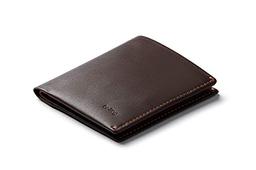
Bellroy Note Sleeve Slim Leather Wallet
Leather grade: Top-grain
Three quick-access slots plus a pull-tab section, a stated 4-11 cards with flat bills, a published 4 x 3.6 in footprint and a 3-year warranty - bought knowing the material line reads 70% leather and 25% recycled polyester.
- The thinner, higher-leather one
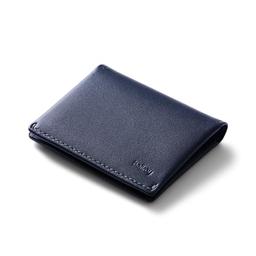
Bellroy Slim Sleeve Leather Wallet
Leather grade: Top-grain
The same stated grade and warranty in a smaller body, and 95% leather by the listing's own breakdown against the Note Sleeve's 70%. The trade is folded bills instead of flat and two quick-access slots instead of three.
One closing note on method. We do not own any of these wallets, we have not carried or loaded them, and we do not review brands — a brand review implies handling the product. Everything above is read from a live listing on the date shown on each card, every price renders from the live price layer rather than from a figure typed into this page, and no grade, tannage, country or warranty is asserted that a listing does not state. The full rules are on our methodology page, and how to clean a leather wallet covers keeping whichever one you buy alive.