Leather Belts
Dress, casual and full-grain belts compared on grade and buckle — the accessory where the difference between full-grain and bonded shows up fastest.
A belt does something no other small leather good has to: it takes real, repeated tension every single day. You cinch it, sit, bend and load it with the weight of your trousers and whatever hangs off them. That daily pull is exactly why a belt is the fastest place to see the difference between a good hide and a bad one — a solid full-grain strap flexes and softens for years, while a cheap belt built from glued-together layers cracks along the fold and starts to peel within a season or two.
This section is built to help you buy one belt that lasts instead of three that don’t. Below you’ll find our men’s belt roundup, a focused look at the belts whose listings actually state full-grain, and a plain-English guide to measuring your size correctly the first time. Start with whichever tile matches your question, or read on for the three things that decide whether a belt is worth your money.
Everything in Belts
Best Leather Belts for Men
Ratchet, classic and heavy-duty belts compared on grade and fit — including why a full-grain belt outlasts a bonded one many times over.
Our top pick
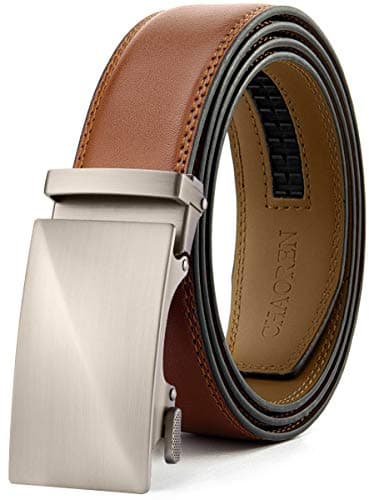
CHAOREN Full-Grain Leather Ratchet Belt (35mm)
$14.99 · View on AmazonPrice as of October 20, 2026. #ad How we’re funded
Best Full-Grain Leather Belts
The belts whose listings actually state full-grain — a single solid strap, not glued plies that split within a year.
Our top pick
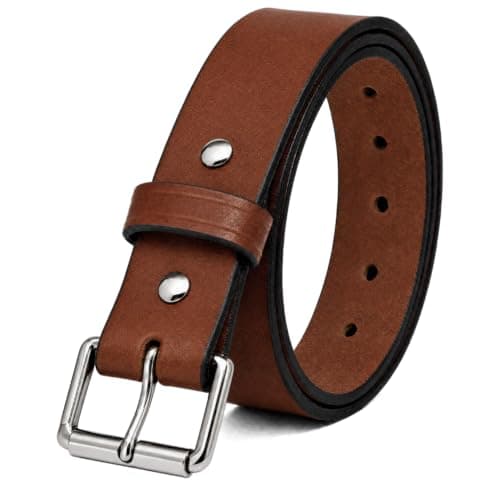
wolksprong Thick Full-Grain Heavy-Duty Work Belt
Best Gun Belts for Concealed Carry
Carry belts compared on the two specs that decide whether one sags — stated grade and published thickness — plus steel cores, ratchets and the listings that stay silent.
Our top pick
Hanks Gunner Full-Grain Gun Belt (1.5")
$89.00 · View on AmazonPrice as of October 20, 2026. #ad How we’re funded
Best Big and Tall Leather Belts
Belts that actually come in 50, 60 and 70 inches — ranked on stated size range, stated grade and whether the strap is one solid piece or spliced.
Our top pick
Buffway Full-Grain One-Piece Belt (1.5", 54")
$39.99 · View on AmazonPrice as of October 20, 2026. #ad How we’re funded
How to Measure Your Belt Size
The two-minute way to size a belt correctly the first time — and why belt size isn't the same as your pant waist.
How to Break In a Leather Belt
Why a stiff full-grain belt softens with time, how to speed it up safely, and what to never do to force it.
Ratchet vs. Traditional Belt
Micro-adjust ratchet belts against classic hole-and-buckle straps — the real trade-offs in fit, longevity and repairability.
Full-Grain vs. Genuine Leather Belt: Which Lasts?
A belt takes daily tension at the same fold, so grade matters most here — one solid full-grain strap against glued 'genuine leather' plies that split.
How to Care for a Leather Belt
Wipe, condition occasionally, rotate and store it right — the simple routine that keeps a good leather strap from cracking at the fold.
Leather Belt Width Guide: What Width Should You Buy?
Dress belts run narrow, casual and jean belts run wider — how to match belt width to your loops, buckle and occasion so it looks right.
Dress Belt vs. Casual Belt: Width, Buckle and Finish
Four differences separate the two — width, buckle, finish and edge — and one of them decides whether a single belt can cover both jobs.
Leather Belt Buckle Types, Explained
Frame, plate, box, ratchet, D-ring and interchangeable buckles — how each attaches, how each fails, and which suits a dress or work belt.
How to Shorten a Leather Belt
Cut the buckle end, never the finished tip. The step-by-step for shortening a belt, adding a hole, and knowing when it is not worth the effort.
Best Leather Belts for Jeans
The belt that works hardest: wide, solid casual straps for jean loops, ranked on stated grade, one-piece construction and a buckle that lasts.
Our top pick
Buffway Full-Grain One-Piece Belt (1.5", 54")
$39.99 · View on AmazonPrice as of October 20, 2026. #ad How we’re funded
Best Leather Belts for Women
Six women's belts ranked on what the listing commits to in writing — stated grade, one-piece construction, published width and buckle — including the 'leather belt' that turns out to be PU.
Our top pick
Belts.com Women's Solid Brass Roller Buckle Full-Grain Belt (1-1/8", 30mm)
$28.95 · View on AmazonPrice as of October 20, 2026. #ad How we’re funded
How to Choose a Quality Leather Belt
Seven checks in order — grade, one solid strap, thickness, edge, buckle, width and size — that separate a belt you keep for years from one that splits at the fold.
Best Leather Ratchet Belts
Three micro-adjust belts compared on the two things the track cannot fix — the grade of the strap it is bolted to, and what happens to a mechanism you cannot replace.
Our top pick
CHAOREN Full-Grain Leather Ratchet Belt (35mm)
$14.99 · View on AmazonPrice as of October 20, 2026. #ad How we’re funded
Best Leather Dress Belts
Five belts for trousers and suits, ranked on stated grade and published width — including the women's dress belt and the no-holes option most dress roundups miss.
Our top pick
WOLFANT Italian Solid Full-Grain Leather Belt (1.5")
$39.98 · View on AmazonPrice as of October 20, 2026. #ad How we’re funded
How Long Does a Leather Belt Last?
Belts fail in a fixed order — holes, then fold, then edge, then buckle — and the grade decides how long each stage takes. What to expect at each price level.
Best Leather Work Belts
A work belt is a load-bearing strap, not an accessory. Five picks ranked on the three specs that decide whether it holds a tool bag up: published thickness, stated width and one-piece construction.
Our top pick
wolksprong Thick Full-Grain Heavy-Duty Work Belt


What actually decides a leather belt
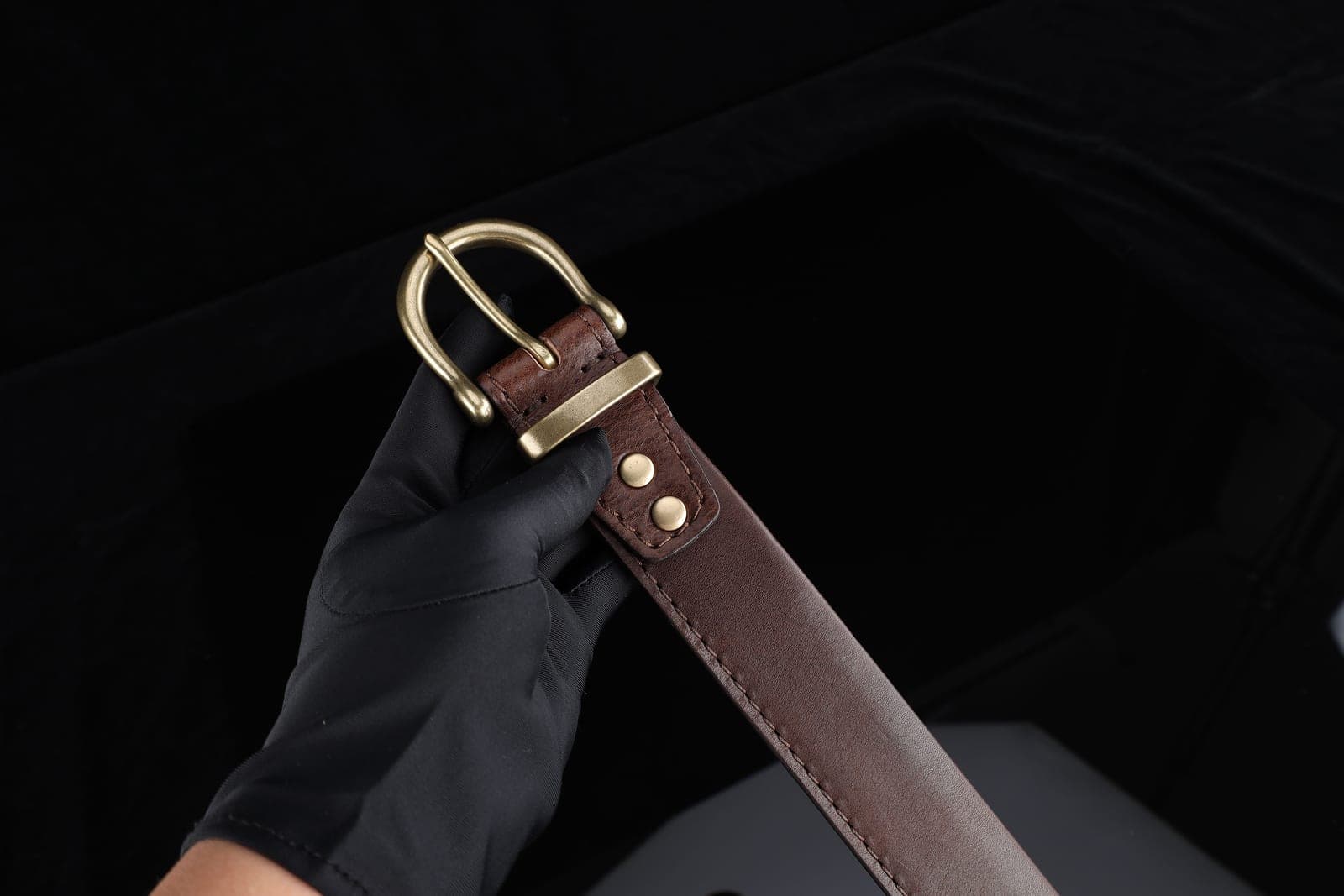
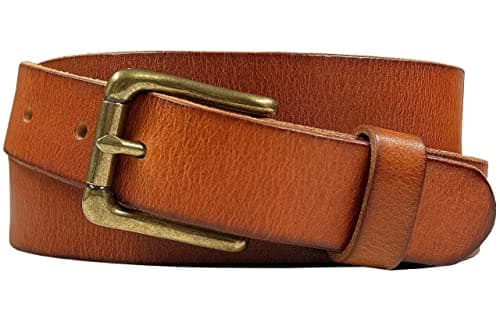
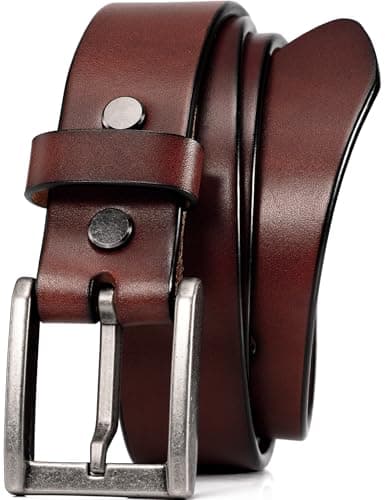
Strip away the branding and a belt comes down to three things: the grade of the leather, the buckle that adjusts it, and the width that suits how you dress. Get those right and almost any belt will serve you well; get the grade wrong and no buckle or brand name will save it.
Grade: a single solid strap beats glued plies
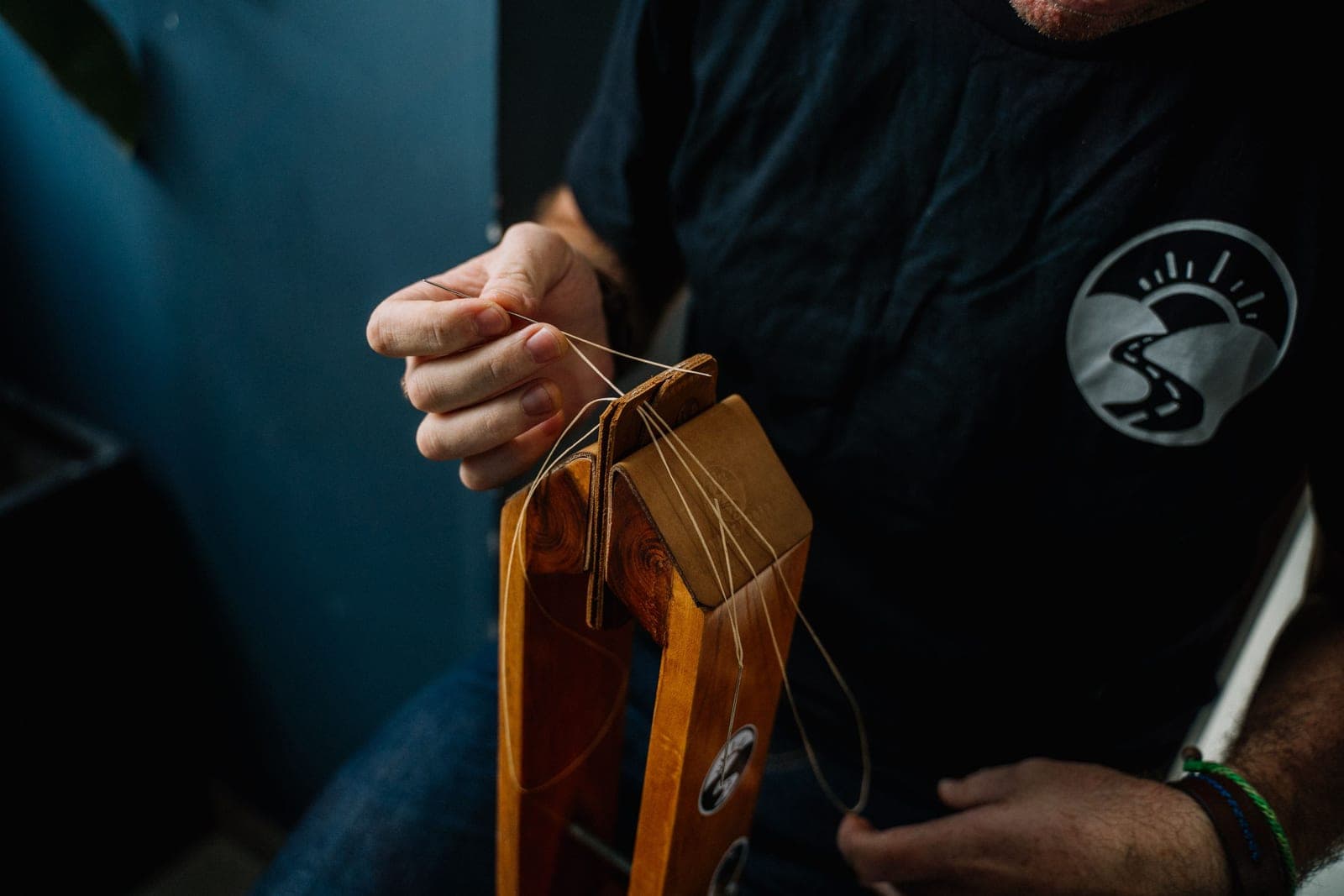
The single biggest predictor of how long a belt lasts is whether it is cut from one solid piece of leather or laminated from thinner layers glued together. Full-grain leather keeps the dense, tightly woven outer surface of the hide, so a full-grain strap bends at the buckle fold thousands of times without splitting. “Bonded” or unstated-grade belts are often several thin layers held with adhesive and wrapped in a coating; the fold is where that glue fails first, and once it starts to peel the whole belt goes quickly. If you read one spec on a belt listing, read for the word full-grain — and see our full-grain vs. top-grain guide for why the wording matters.
Buckle: ratchet or traditional holes
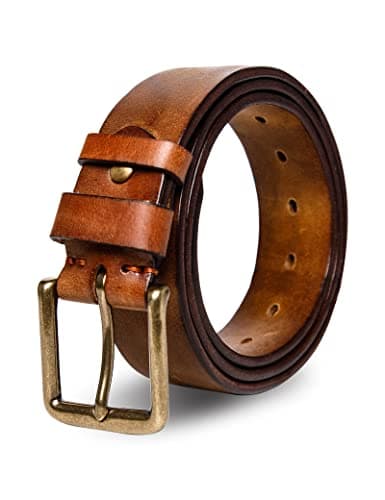
Two systems dominate. Traditional belts use a pin buckle and a row of punched holes about an inch apart — simple, dressy and endlessly repairable. Ratchet (or “micro-adjust”) belts replace the holes with a hidden track that clicks in roughly quarter-inch steps, so you can fine-tune the fit after a big meal or over a heavier layer, at the cost of a small mechanism that can eventually wear. Neither is better outright: holes for a dress belt you’ll keep for decades, a ratchet for an everyday belt you want to dial in. Our ratchet vs. traditional belt guide weighs the two systems in full.
Width: dress versus casual
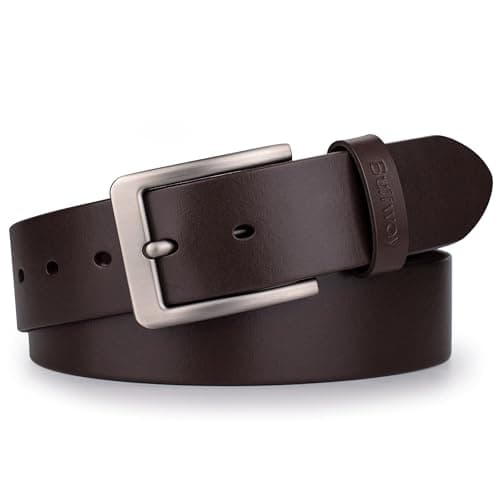
Belt width is measured across the strap, and it quietly decides how formal a belt reads. A slim strap around 1.25 inches is the dress width that slips through the narrow loops on suit trousers. A broader strap around 1.5 inches is the casual and jeans width — sturdier, more relaxed, and too wide for most formal loops. Match the width to your loops and your outfit first, because a beautiful belt that won’t fit your dress trousers is simply the wrong belt.
How to use this section
If you just want a recommendation, start with the men’s belt roundup or the women’s belt roundup. If you already know you want the grade that lasts, jump straight to the full-grain belts. And before you order any of them, spend two minutes on how to measure your belt size — belt sizing is not the same as your pant waist, and getting it wrong is the most common reason a good belt ends up unworn in a drawer. And once a stiff full-grain strap arrives, our guide to breaking in a leather belt covers softening it safely without ruining the leather.
Frequently asked questions
What's the difference between a full-grain and a bonded leather belt?
A full-grain belt is cut from one solid piece of the hide's strong top layer, so it bends at the buckle fold for years without splitting. A bonded belt is made from leather scraps ground up and glued to a backing, then coated; it looks fine at first but peels and cracks along the fold, often within a year of daily use.
Is a ratchet belt better than a belt with holes?
Neither is better outright. A ratchet belt adjusts in tiny steps with no fixed holes, so it fine-tunes the fit and won't stretch out one favorite hole — but the buckle is a mechanism that can wear. A traditional pin-and-hole belt is simpler, dressier and easily repaired. Choose a ratchet for everyday precision and holes for a formal belt you'll keep for decades.
What width belt should I buy?
Roughly 1.25 inches for a dress belt, so it slides through the narrow loops on suit trousers, and about 1.5 inches for a casual or jeans belt. Check your trouser loops before you buy: a wide casual belt won't fit formal loops, and a slim dress belt looks lost on heavy jeans.
Sources
- Wikipedia — Leather — Overview of leather, grain layers and the full-grain / top-grain / split hierarchy (accessed July 18, 2026)
- Wikipedia — Tanning (leather) — The tanning process, vegetable vs. chrome tannage, and why ~90% of leather is chrome-tanned (accessed July 18, 2026)