Veg Tan Club

Best Vegetable-Tanned Leather Wallets

Vegetable tannage is the reason a wallet darkens into something that looks like yours. These are the wallets whose listings actually say they have it.

By Stephen V.Last updated How we pick

Most leather buying advice argues about grade. Grade is the layer of the hide you get. Tannage is what a tannery did to that hide to stop it rotting — and it is tannage, not grade, that decides whether your wallet will darken over the years or sit at the same color it shipped in. The two are independent, and they get confused constantly.

Roughly nine in ten leather goods are chrome-tanned: fast, cheap, soft, colorfast, and largely finished. Vegetable tannage uses plant tannins over weeks rather than chemicals over hours. The result is firmer, absorbs oil from your hands, and changes visibly — which is the whole reason a decade-old veg-tan wallet looks like a possession and a decade-old chrome-tanned one looks like stock.

So this page has one entry rule: the listing has to say so. That turns out to be a brutal filter. Across the seventy-plus leather goods already in our product registry — bags, belts, briefcases, wallets — not one listing stated its tannage before this page was built. Every wallet below does, in its own title or its own bullet copy, read on the dates shown in each spec table. We have not carried these wallets; we read what their makers were willing to commit to in writing and compared it.

How this is funded: we earn a commission if you buy through our links, at no extra cost to you. It never changes which product we recommend, and we’ll tell you when we’d skip one. Full disclosure.

Quick picks

Ranked on leather grade, construction and buyer fit. Select a row to jump to the full write-up. We have not handled these items ourselves — here is exactly what we do instead.

#ProductBest forPrice
1
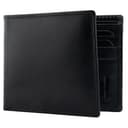
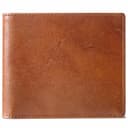
ALBEPPE Tuscan Vegetable-Tanned Leather Bifold Wallet

ALBEPPE Tuscan Vegetable-Tanned Leather Bifold Wallet

The most thoroughly documented leather listing we have read in this category. It states full-grain and vegetable-tanned, names the tannery the hide came from (Conceria Monteverdi, Tuscan, in operation since 1955), and says each wallet ships with a numbered authenticity certificate from the Italian vegetable-tanned leather consortium. Almost nothing else in the wallet aisle publishes a supply chain at all, which is why this is the pick before you even look at the layout.

Best overall
$54.95 · View on Amazon

Price as of September 6, 2026. #ad How we’re funded

2
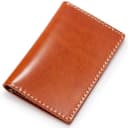
HISCOW Slim Full-Grain Veg-Tanned Card Holder (Cognac)

HISCOW Slim Full-Grain Veg-Tanned Card Holder (Cognac)

The slim end of the category, and the one listing here that describes a finish as well as a tannage: full-grain Italian vegetable-tanned oil leather with a 100% aniline finish and a pull-up effect. Aniline means the color is dyed through rather than sprayed on top, which is the finish that lets veg-tan darken instead of scuffing pale. It is cut as a one-piece shell with raw edges, so there is no bonded edge coat to crack.

Best slim veg-tan
$55.00 · View on Amazon

Price as of September 6, 2026. #ad How we’re funded

3
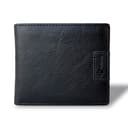
O'Hare Bags Vegetable-Tanned Cowhide RFID Billfold

O'Hare Bags Vegetable-Tanned Cowhide RFID Billfold

A compact everyday bifold at 3.5 x 4.3 inches and about 2.4 ounces, with RFID blocking stated in every card slot rather than in one shielded pocket. It is also the clearest teaching case on this page: the listing commits to the tannage but describes the leather only as genuine cowhide, which is the vaguest grade word in the trade. Tannage stated, grade not — read it exactly that way.

Best compact bifold
4
GZBOSHENG Vegetable-Tanned Cowhide Bifold Wallet

GZBOSHENG Vegetable-Tanned Cowhide Bifold Wallet

The cheapest way to find out whether you actually like how veg-tan ages. It states vegetable-tanned cowhide and carries the most capacity on this page — 9 card slots, 2 cash pockets and 2 ID windows — for a fraction of what the documented Italian options cost. What you give up is everything above the tannage: no grade beyond genuine, no warranty, no country, no tannery.

Best budget veg-tan
$24.99 · View on Amazon

Price as of September 6, 2026. #ad How we’re funded

5
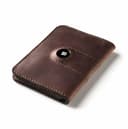
Crazy Horse Craft AirTag Passport Wallet (Alpine Green)

Crazy Horse Craft AirTag Passport Wallet (Alpine Green)

A travel document holder rather than an everyday wallet: it takes two passports, one on each side, in vegetable-tanned leather from Italy paired with 100% wool felt, and the listing says a veg-tan quality certificate ships with it. There is a pocket sized for a Bluetooth tracker, which matters because a passport wallet is the one leather item people genuinely lose.

Best for travel
$69.00 · View on Amazon

Price as of September 6, 2026. #ad How we’re funded

6
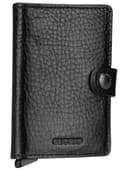
SECRID Miniwallet Vegetable Tanned (Caramello Sand)

SECRID Miniwallet Vegetable Tanned (Caramello Sand)

The only pick here from a maker whose name people already know, and the only listing that publishes its weight in grams and splits card capacity by card type — 4 embossed or 6 flat, plus 6 more in the wrap. That precision comes from a company that measures. The irony is that it says less about the leather than the unbranded options do: the tannage is in the product name, and nothing beyond it is published.

Best card-first carry
$123.45 · View on Amazon

Price as of September 6, 2026. #ad How we’re funded

The picks in full

#1Best overall

ALBEPPE Tuscan Vegetable-Tanned Leather Bifold Wallet

The most thoroughly documented leather listing we have read in this category. It states full-grain and vegetable-tanned, names the tannery the hide came from (Conceria Monteverdi, Tuscan, in operation since 1955), and says each wallet ships with a numbered authenticity certificate from the Italian vegetable-tanned leather consortium. Almost nothing else in the wallet aisle publishes a supply chain at all, which is why this is the pick before you even look at the layout.

Strengths

  • States both the grade and the tannage — full-grain and vegetable-tanned, not one or the other
  • Names the tannery and cites a consortium certificate with a serial number for traceability
  • 8 card slots, 2 bill compartments and 2 flat pockets, with a 12-month warranty stated

Trade-offs

  • The listing says where the leather was tanned, not where the wallet was assembled
  • Thickness in ounces or millimeters is not published, so you cannot judge stiffness on paper
  • A polyester lining and an RFID layer add bulk a leather-on-leather wallet would not have
Leather gradeFull-grain
TannageVegetable-tanned
ThicknessNot published
HardwareNot published
Made inNot published
Warranty12 months

Spec note. A named tannery plus a consortium certificate is the strongest provenance claim available on a mass-market listing — it is checkable, unlike the word "Italian" on its own.

Specs read from the product listing, on September 6, 2026. “Not published” means the listing does not state that spec.

#2Best slim veg-tan

HISCOW Slim Full-Grain Veg-Tanned Card Holder (Cognac)

The slim end of the category, and the one listing here that describes a finish as well as a tannage: full-grain Italian vegetable-tanned oil leather with a 100% aniline finish and a pull-up effect. Aniline means the color is dyed through rather than sprayed on top, which is the finish that lets veg-tan darken instead of scuffing pale. It is cut as a one-piece shell with raw edges, so there is no bonded edge coat to crack.

Strengths

  • States full-grain, vegetable-tanned and a 100% aniline pull-up finish — three separate, checkable claims
  • One-piece outer shell with raw edges; nothing bonded and no edge paint to chip
  • 4.3 x 2.8 x 0.6 in and roughly 1.3 oz, so it disappears in a front pocket; 1-year warranty stated

Trade-offs

  • No bill compartment — this is a card holder, so cash rides folded or in another pocket
  • Eight credit cards is a hard ceiling; a heavy carrier will outgrow it quickly
  • Raw edges are honest but unsealed, so they fuzz with wear where a burnished edge would not
Leather gradeFull-grain
TannageVegetable-tanned
ThicknessNot published
HardwareNot published
Made inNot published
Warranty1 year manufacturer

Spec note. "100% aniline" is the finish claim that matters on veg-tan. An aniline hide is dyed through with no pigment layer, so wear burnishes the leather instead of removing a coating.

Specs read from the product listing, on September 6, 2026. “Not published” means the listing does not state that spec.

#3Best compact bifold

O'Hare Bags Vegetable-Tanned Cowhide RFID Billfold

A compact everyday bifold at 3.5 x 4.3 inches and about 2.4 ounces, with RFID blocking stated in every card slot rather than in one shielded pocket. It is also the clearest teaching case on this page: the listing commits to the tannage but describes the leather only as genuine cowhide, which is the vaguest grade word in the trade. Tannage stated, grade not — read it exactly that way.

Strengths

  • States vegetable-tanned cowhide and publishes both the footprint (3.5 x 4.3 in) and the weight (about 2.4 oz)
  • RFID blocking stated in every card slot, not only in one shielded pocket
  • Drill-fabric lined interior, with stitching called out as a construction feature

Trade-offs

  • "Genuine leather" is a grade word that guarantees nothing above the split — full-grain is never claimed
  • No warranty, thickness or country published; the Chicago reference is where the company is, not where the wallet is made
  • Amazon has not been publishing a price on this listing, so the buy link sends you to the live page to check it
Leather gradeGenuine leather
TannageVegetable-tanned
ThicknessNot published
HardwareNot published
Made inNot published
WarrantyNot published

Spec note. Tannage and grade are independent claims, and this listing proves it — vegetable-tanned is specific, "genuine leather" is not, and both sit in the same bullet list.

Specs read from the product listing, on September 6, 2026. “Not published” means the listing does not state that spec.

#4Best budget veg-tan

GZBOSHENG Vegetable-Tanned Cowhide Bifold Wallet

The cheapest way to find out whether you actually like how veg-tan ages. It states vegetable-tanned cowhide and carries the most capacity on this page — 9 card slots, 2 cash pockets and 2 ID windows — for a fraction of what the documented Italian options cost. What you give up is everything above the tannage: no grade beyond genuine, no warranty, no country, no tannery.

Strengths

  • States vegetable-tanned cowhide, which most wallets at this price will not commit to
  • 9 card slots, 2 cash pockets and 2 ID windows — the highest capacity here
  • An RFID-blocking lining at the lowest price bracket on the page

Trade-offs

  • Grade is only ever described as genuine, which sits below both full-grain and top-grain
  • No warranty, thickness, tannery or country published anywhere in the listing
  • Nine loaded slots plus two ID windows makes a thick wallet — this is capacity, not slimness
Leather gradeGenuine leather
TannageVegetable-tanned
ThicknessNot published
HardwareNot published
Made inNot published
WarrantyNot published

Spec note. Veg-tan at a budget price is usually a thinner, softer cut than the firm tooling leather people picture. Expect it to slouch sooner than the Tuscan options here.

Specs read from the product listing, on September 6, 2026. “Not published” means the listing does not state that spec.

#5Best for travel

Crazy Horse Craft AirTag Passport Wallet (Alpine Green)

A travel document holder rather than an everyday wallet: it takes two passports, one on each side, in vegetable-tanned leather from Italy paired with 100% wool felt, and the listing says a veg-tan quality certificate ships with it. There is a pocket sized for a Bluetooth tracker, which matters because a passport wallet is the one leather item people genuinely lose.

Strengths

  • States vegetable-tanned leather from Italy and says a quality certificate for it is included
  • Fits two passports, one per side — a couple, or a parent and child, travel on one wallet
  • A tracker pocket in the item most likely to go missing in an airport

Trade-offs

  • No grade is stated anywhere — the tannage is on the record and the grade is not
  • Passport-sized at 4.13 x 5.51 in, so it does not replace a pocket wallet
  • Half the build is wool felt, which stains and pills where leather will not; the listing does not say a tracker is included
Leather gradeNot published
TannageVegetable-tanned
ThicknessNot published
HardwareNot published
Made inNot published
WarrantyNot published

Spec note. Wool felt against a passport cover is a deliberate choice — it is soft enough not to abrade the document, which stiffer synthetic linings can do over years of travel.

Specs read from the product listing, on September 6, 2026. “Not published” means the listing does not state that spec.

#6Best card-first carry

SECRID Miniwallet Vegetable Tanned (Caramello Sand)

The only pick here from a maker whose name people already know, and the only listing that publishes its weight in grams and splits card capacity by card type — 4 embossed or 6 flat, plus 6 more in the wrap. That precision comes from a company that measures. The irony is that it says less about the leather than the unbranded options do: the tannage is in the product name, and nothing beyond it is published.

Strengths

  • Vegetable tannage is stated in the product name itself, on the maker's dedicated veg-tan line
  • Publishes exact metric dimensions (68 x 102 x 16 mm) and weight (72 g) — precision nothing else here offers
  • Quotes capacity honestly by card type: 4 embossed or 6 flat, plus 6 extra in the wrap

Trade-offs

  • No grade, no tannery, no country and no warranty published — the leather detail stops at the tannage
  • The most expensive wallet on this page by a wide margin
  • Fixed, low card capacity in a rigid housing — the least forgiving format here if you carry a lot
Leather gradeNot published
TannageVegetable-tanned
ThicknessNot published
HardwareNot published
Made inNot published
WarrantyNot published

Spec note. Quoting capacity as "4 embossed or 6 flat" is a real-world number rather than a slot count — embossed cards are thicker, and slot counts quietly assume they are not.

Specs read from the product listing, on September 6, 2026. “Not published” means the listing does not state that spec.

How we chose

The criteria came first and the products second. A wallet had to clear all three of these before it could be considered, and then the ranking came down to how much of its own story the listing was willing to put in writing.

  • Stated tannage, in the listing’s own words. A product name or a bullet that says vegetable-tanned or veg-tan. Not “natural leather”, not “develops a patina”, not a photograph of a tan hide. Marketing copy describing an effect is not a claim about a process, and only the process is checkable.
  • Currently purchasable. Every wallet here returned a live listing with stock on the day we built the page. A roundup full of dead links is worse than no roundup.
  • Enough published detail to compare. Dimensions, capacity, or both. A listing that states a tannage and then refuses to say how big the wallet is has not told you enough to buy.

After that, the ordering is about disclosure. A listing that names its tannery outranks one that says “Italian leather”; a listing that states full-grain andvegetable-tanned outranks one that states only the tannage. That is not a proxy for how nice the wallet feels — we cannot know that without carrying it — but it is a proxy for how much the maker is prepared to be held to, and in a category with no independent testing that is the most honest signal available.

What vegetable tannage actually changes in a wallet

A wallet is the most intimate leather good most people own. It lives against your body, it gets handled several times a day, and your fingers deposit oil on it constantly. Veg-tan is unusually receptive to all of that, because the tannins bond to the hide’s collagen in a way that leaves the fiber structure open rather than sealed.

Three practical consequences follow:

  • It darkens, and it does it fast in a wallet. Patina on a veg-tan wallet is visible in months, not years, and the corners and fold go first because that is where your hands are. A light natural or tan veg-tan wallet will not stay light. If you want it to, buy chrome-tanned.
  • It starts stiff and softens on your schedule. Veg-tan is firm out of the box. The fold takes a couple of weeks to break in properly. What you get in exchange is a wallet that holds its shape instead of turning into a floppy pouch after a year.
  • It is thirstier and less water-tolerant. An open fiber structure takes stains, and water marks it more readily than a pigmented chrome-tanned finish would. That is a real trade-off, not a detail — it is why veg-tan care is its own routine.

Tannage and grade are different questions

This is the single most useful thing to take from the page. Grade describes which layer of the hide you are holding: full-grain keeps the intact outer surface, top-grain has been sanded, and a split is the fibrous under-layer that usually ends up sold as “genuine leather”. Tannage describes what the tannery used to preserve it. You can have vegetable-tanned split leather and chrome-tanned full-grain, and both exist in volume.

Look at the spec tables above and you can watch it happen. Three of these six wallets state a grade alongside the tannage; three state the tannage and stop, and one of those describes the leather as “genuine cowhide” in the same breath as “vegetable-tanned”. That is not a contradiction — it is a listing being specific about one axis and vague about the other, and it is why we print “Not published” instead of guessing.

The combination worth paying for is both: full-grain and vegetable-tanned. Full-grain gives you a surface that burnishes rather than wearing through, veg-tan gives that surface something to develop into. Full-grain chrome-tanned is durable but changes less. Veg-tan split leather changes color while the leather underneath is still weak. If a listing states only one of the two, assume nothing about the other.

Reading a veg-tan listing without getting sold

  • “Italian leather” is geography, not process. Italy tans enormous volumes of chrome leather too. The meaningful version of the claim names a tannery or cites the Tuscan vegetable-tanned consortium, which runs a certificate scheme with serial numbers precisely because the phrase alone is unenforceable. Our guide to what Italian leather means covers where the line sits.
  • “Natural” and “pure” mean nothing. Neither is a defined term. “Vegetable-tanned” and “full-grain” are at least specific enough to be wrong, which is what makes them worth reading.
  • An aniline finish is a real signal. Aniline means dyed through with no pigment layer on top. It is what allows the darkening people buy veg-tan for; a heavily pigmented finish would block it. One wallet on this page states it outright, and that is unusual enough to be worth noting.
  • Check what the lining is. Several veg-tan wallets are veg-tan on the outside and polyester, drill fabric or felt inside. That is normal and often sensible, but it means the wallet ages on the outside only. The listings that say so are being straight with you.
  • Weight and dimensions beat adjectives. “Slim” is a claim anyone can make. A published thickness in inches or a weight in grams is one you can check against the wallet you already carry.

Format: what actually fits your carry

Tannage does not change which shape you should buy. Card capacity and bulk do, and veg-tan makes the bulk question slightly sharper because the leather is firmer to start with — an overstuffed veg-tan bifold stays wedged open for weeks longer than a chrome-tanned one would.

If you carry four to eight cards and fold your cash, a card holder is enough and it will be the thinnest thing here. If you carry an ID, a transit card, three payment cards and receipts, a bifold with stated slot counts is the safer buy. If you are genuinely at the top end — nine slots plus two ID windows — accept that you are buying a thick wallet and stop trying to make a minimalist one work. Our bifold vs. slim comparison works through that decision in detail, and the slim and minimalist roundup covers the low-profile end across all tannages.

One honest gap: on the day we built this page we could not find a women’s veg-tan wallet — a zip-around, clutch or long wallet — with both a stated vegetable tannage and reliable stock. Several exist with one or two units left, which is not something we will build a recommendation on. Until that changes, the women’s wallet roundup is the better starting point, with the caveat that none of those listings commits to a tannage.

Living with one

Veg-tan asks for less maintenance than people expect and different maintenance than they assume. A wallet is fed constantly by your own hands, so it needs conditioning far less often than a bag or a belt does. Over-conditioning is the more common mistake: it makes the leather limp, kills the structure you paid for, and darkens it permanently and unevenly.

The two things worth doing are keeping it out of standing water and not leaving it in direct sun for long stretches, because veg-tan tans in sunlight the way skin does. If it does get wet, let it dry away from heat and it will usually come back. Our vegetable-tanned care routine has the full method, and how often to condition leather covers the timing.

And set expectations about the color. Every one of these wallets will end up darker and glossier at the corners than it looks in the listing photograph. That is the product working. If it would bother you, the honest answer is that vegetable tannage is not what you want, and there is no shame in that — buy a full-grain wallet with a pigmented finish and it will look the same in year five as it did in week one.

A note on how we work: we do not handle these products, so nothing above is a durability test. It is a comparison of published specifications and an argument about what those specifications mean, which is what our methodology page sets out. Prices are never stored on this site — they render live from the retailer, or the buy button sends you to the listing to check.
Frequently asked questions

Is a vegetable-tanned wallet better than a chrome-tanned one?

Not better, different. Vegetable-tanned leather is firmer, holds its shape longer and visibly darkens with handling. Chrome-tanned is softer immediately, more colorfast and more water-tolerant, and it will look roughly the same in year five as in week one. If you want a wallet that records its use, buy veg-tan. If you want one that stays as bought, don't.

How can I tell if a wallet is really vegetable-tanned?

Before you buy, you can't verify it independently — you can only read what the maker committed to in writing, which is why every wallet on this page states it in its own listing. The strongest version of the claim names the tannery or cites the Italian vegetable-tanned consortium's certificate scheme. After you buy, veg-tan gives itself away: it is firmer than expected, it smells of tannin rather than chemicals, and it starts darkening within weeks of daily handling.

Does vegetable-tanned mean full-grain?

No, and this is the most common mix-up in leather buying. Tannage is what the tannery used to preserve the hide; grade is which layer of the hide you got. Vegetable-tanned split leather and chrome-tanned full-grain both exist. Three of the six wallets on this page state both; the other three state the tannage and leave the grade unpublished, which we print as 'Not published' rather than guessing.

Will a vegetable-tanned wallet get damaged if it gets wet?

It marks more readily than a pigmented chrome-tanned wallet, because the fiber structure is more open and there is less finish sealing the surface. Water spots and darkens it, and heavy soaking can stiffen it. It is rarely ruined, though — let it dry slowly at room temperature away from any heat source, and the mark usually blends into the wider patina within a few weeks.

How long does a veg-tan wallet take to develop a patina?

In a wallet, faster than in any other leather good you own, because it is handled several times a day and lives against your body. Expect noticeable darkening at the corners and along the fold within a couple of months of daily carry, and a clear difference from the day you bought it inside a year. We won't put a precise number on it — it depends on your hands, your climate and how often the wallet is out of your pocket.

Why do so few wallet listings state their tannage?

Because roughly 90% of leather is chrome-tanned and there is no marketing advantage in saying so. Vegetable tannage is slower and more expensive, so makers who use it tend to advertise it, and makers who don't tend to say nothing at all. A silent listing is not proof of chrome tannage, but it is a strong hint — and either way we won't record a tannage we can't cite.

Sources

Keep reading