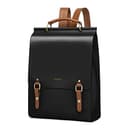
The four things that decide this purchase
1. The stated grade. A backpack is the hardest-working leather good most people own: the straps carry the load, the base takes the abrasion and the top edge gets flexed every time it opens. Which layer of the hide you have decides how that ends. Full-grain keeps the dense outer fiber structure and scuffs into character; a coated split has no grain layer beneath the finish, so it eventually lifts and flakes, usually at the base corners first. The vocabulary is in full-grain vs. top-grain leather, and the reason “genuine leather” is a label rather than a tier is in full-grain vs. genuine leather.
2. The laptop claim against the published size.This is the useful part, and it is unusual — all five of these listings publish dimensions. Those dimensions are external. A laptop has to fit inside them, minus the leather, minus the lining, minus any padding. So read the two numbers together: a bag with a published height under about twelve inches is not a 13-inch-laptop bag whatever the copy says, and the most honest listing on this page is the one that publishes an 11.8-inch height and claims no laptop fit at all. Measure the long edge of your own machine before you buy any bag in this format. If a laptop is the whole reason for the bag, our laptop bag sizing guide sets out how to do that properly.
3. Whether it actually converts.The straps are the format’s reason for existing. Four of the five here convert from a two-strap backpack to a single shoulder or crossbody carry, and that conversion is what makes one bag work for a train, an office and a dinner. It is worth checking how it converts, though: a bag with one long adjustable strap that threads through is slower than a pair of straps that clip, and a strap that only shortens to the length of a shoulder bag will never sit properly as a backpack. If you mainly want one shoulder, our crossbody picks are the better page; if you are deciding between formats, read tote vs. backpack.
4. The empty weight.Every bag here publishes one, and the range runs from two pounds to nearly three. That is a real spread, because it is weight you carry before anything goes in. Leather is heavy — that is the honest cost of buying this material in this format — and if your load is already a laptop, a charger and a water bottle, half a pound of bag is not nothing. The lightest bag here is also the smallest, which is the trade in plain sight.
The five, side by side
Every cell is read from the listing or marked “Not published.” Read the dimensions row and the laptop row together, because that is the pair that tells you whether the bag you are picturing exists.
| | Banuce | S-ZONE | Time Resistance | COOLCY | Cnoles |
|---|
| Grade as stated | Full-grain (Italian) | Full-grain (cattle) | Full-grain (cowhide) | Full-grain in bullets, “Genuine Leather” in title | Genuine leather + microfiber |
|---|
| Tannage as stated | Vegetable-tanned, hand-dyed | Not published | Vegetable-tanned, hand-dyed | Vegetable-tanned | Not published |
|---|
| Laptop as stated | 14 in + 9.7 in tablet | 13 in, padded sleeve | Not published | 13 in MacBook | 13 in maximum |
|---|
| Published size (in) | 12.6 x 3.54 x 15.35 | 8.66-12.6 x 13.8 x 5.12 | 11.8 x 11.8 x 5.9 | 10.5 x 5 x 12.8 | 11.02 x 4.33 x 14.96 |
|---|
| Empty weight | 2.6 lb | 2.45 lb | 2 lb | 2.4 lb | 2.81 lb |
|---|
| Converts to shoulder | Yes - shoulder or sling | Yes - hand, shoulder or back | Yes - shoulder | Not published | Yes - shoulder bag |
|---|
| Hardware / lining | Not published | Not published | YKK zippers, tear-resistant lining | Gunmetal finish, material not named | Gold-tone hardware, soft lining |
|---|
| Country of manufacture | Not published | Not published | Italy (handmade) | Not published | Not published |
|---|
| Warranty stated | 1 year | Not published | Not published | 2-year replacement | Not published |
|---|
Three things stand out. The first is that this is the best-documented group of bags we have assembled on this site: all five publish dimensions and a weight, four publish a laptop figure, three state full-grain and three state a convertible carry. Compare that with the hardware row, which is nearly empty — only one listing names its zipper brand, and a zipper is the single most likely component to fail on a bag whose leather outlives everything else.
The second is the geometry problem. COOLCY claims a 13-inch MacBook in a body published at 12.8 inches tall; that is external, so the fit is tight at best and you should measure your machine first. Time Resistance publishes 11.8 inches and claims no laptop at all, which is the same honest fact stated in the opposite direction. Banuce claims the largest laptop here at 14 inches and publishes only 3.54 inches of depth, so a 14-inch laptop plus a lunch and a water bottle is not what that number buys you.
The third is that the dearest bag on the page is not the most capable one — it is the one with the best-documented provenance. That is a legitimate thing to pay for, and it is not the same purchase as a commute bag. Our guide to what a leather bag costs sets out which price band buys which of those two things.
Full-grain, veg-tan and “microfiber leather”
Three of these listings state a vegetable tannage as well as a grade, which is rare enough on Amazon to be worth stopping on: tannage and grade are independent axes, and most listings state neither. Vegetable-tanned leather is tanned with plant tannins rather than chromium salts; it is firmer at first, it develops patina rather than staying put, and it is the tannage this site is named for. Two of the three also hand-dye, which is why those two listings warn that each bag varies.
“Italian” needs the same care here as everywhere else. Two listings use the word and only one of them states a country of manufacture — Time Resistance says handmade in Italy, which is a claim about a workshop; Banuce and COOLCY say the hide is Italian, which is a claim about a tannery. Both are real claims and they are not the same claim. Our Italian leather explainer sets out the four different jobs that word does on a listing.
The Cnoles listing deserves credit for something most bags at its price do not do: it states that the bag is “genuine leather and microfiber leather.” Microfiber leather is a synthetic — a non-woven fiber base with a polyurethane surface, closer to the materials in our synthetic leather taxonomy than to hide. It will not patina; it wears flat and eventually abrades through. What the listing does not say is which panels are which, so you are buying a composite bag without a map of it. We would still rather feature a listing that discloses the mix than one that quietly makes the same compromise and calls the whole bag leather, and the test for telling them apart is in how to tell real leather from fake.
Living with a leather backpack
Two straps are easier on your body than one, which is the main practical argument for this format over a tote or a single-shoulder bag: the load is halved per shoulder and the wear moves to the base corners, which are cheap to live with, instead of to the handle anchors, which are not. That logic is the same one that ranks our teacher bag picks and our college bag picks, and it is set out at length in leather backpack vs. messenger bag.
The honest costs are weight and weather. Two to three pounds empty is the entry fee for this material, and a leather bag worn on your back in rain gets wet across the exact panel you cannot see. Leather is not waterproof — the full argument is in is leather waterproof— and the sensible habit is a non-darkening protectant on the base and back panel before the first wet week, from our protector spray picks, where two of five state in writing that they will not darken the hide. If it does get soaked, do not put it near heat: follow how to dry a wet leather bag.
Store it stuffed and upright rather than hanging by one strap — a loaded bag hung on a hook for years stretches at the anchor points — and condition it once or twice a year, no more. The frequency argument is in how often to condition leather, the storage detail is in how to store leather bags, and the realistic lifespan of a bag like these is in how long a leather bag lasts.
Which one for you
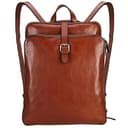
A commute with a laptop: Banuce. It states the largest laptop size here, converts three ways, has the luggage strap for travel and is the only pick with both a stated grade and a stated warranty. Accept the weight and the shallow depth.
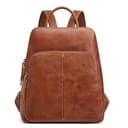
A smaller bag that still takes a 13-inch machine:S-ZONE. The padded sleeve with its own access zip is a genuine feature rather than a bare compartment, and the RFID pocket is on the back panel, where a card actually faces a stranger. Ignore the “military-grade” language; shielding blocks a scanner, not a pickpocket, as we argue in are RFID wallets worth it.
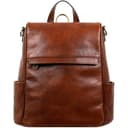
A bag bought for the hide and the hardware: Time Resistance. It is the only pick here that states where it was made as well as what it is made of, and the only one that names its zipper brand. It is also the smallest and takes no laptop, and it is priced well above everything else here.
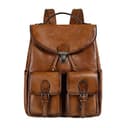
The most detail for the money: COOLCY, with the grade contradiction on the record. Published size, weight, strap length, a full pocket inventory and a two-year replacement promise is more than most listings in this hub manage, and the pocket inventory is the part you will actually use.
The lowest price: Cnoles. Part synthetic, stated honestly, with a published hard limit on laptop size. Treat it as a few years of use rather than a keeper, and read is full-grain leather worth it before you decide that is the wrong trade — sometimes it is exactly the right one.
If you are downsizing the bag, the wallet is usually next: a smaller bag with a shallow main compartment is the most common reason people move to a card holder. And if the bag is for an office rather than a campus or a train, compare these against our women’s work bag picks and the general leather backpack roundup, which ranks unisex and men’s packs on the same specs and shares no picks with this page.
One closing note on method: no bag here was carried, loaded or owned by us. This page compares what five listings publish, flags what they do not, and says plainly where a claim and a dimension disagree. The standing rules are on our methodology page.