Veg Tan Club

Alternatives to Hanks Belts

Hanks built its name on a belt that publishes four commitments at once: full-grain, 1.5 inches, made in the USA and a 100-year warranty. Here is exactly what that covers, the one spec it leaves out, and six belts that match a piece of it for less.

By Stephen V.Last updated How we pick

The verdict: if what you want from Hanks is the commitment— an American-made strap backed for as long as you will own it — the Relentless Tactical steel-core belt is the closest alternative we track, with stated US manufacture, a stated lifetime replacement warranty and a spring-steel spine Hanks does not offer. If what you want is rigidity you can verify, the 1791 GUNLEATHER 14 oz beltpublishes a thickness in ounces, which the Hanks listing never does — and thickness, not branding, is what stops a belt rolling under load. The budget pick is the Buffway full-grain one-piece belt: stated full-grain and stated solid one-piece construction for a fraction of the money.

Start with what the original is known for, because the alternatives only make sense against it. The Hanks Gunner states four things at once, and that is the achievement:full-grain leather, a 1.5-inch width, US manufacture, and a published 100-year warranty, with a stainless steel buckle. Read across the belts on this site and almost nothing else publishes more than two of those in the same listing. A century-long warranty is also not a marketing line in the ordinary sense — it is a statement about what the company expects the strap to do, and it is the strongest published commitment on our gun belt roundup, where the Gunner is the top pick. It is a good belt and this page is not here to argue otherwise.

It is also worth knowing exactly where the disclosure stops. The Hanks listing never publishes a thickness in ounces, and on a belt that is the spec that predicts stiffness more reliably than the grade name does. It states no tannage. And it sits at the top of the price range for a leather belt on Amazon. Those three facts are the whole opening for an alternative, and each pick below answers at least one of them. We have not worn, loaded or flexed any of these belts; every figure is read from a live listing on the date printed on its card, and where a listing publishes nothing we write “Not published” rather than fill the gap.

How this is funded: we earn a commission if you buy through our links, at no extra cost to you. It never changes which product we recommend, and we’ll tell you when we’d skip one. Full disclosure.

Quick picks

Ranked on leather grade, construction and buyer fit. Select a row to jump to the full write-up. We have not handled these items ourselves — here is exactly what we do instead.

#ProductBest forPrice
1
Relentless Tactical Ultimate Steel Core Gun Belt

Relentless Tactical Ultimate Steel Core Gun Belt

Adds a spring steel core through the strap, which is a different answer to the same problem: instead of relying on hide thickness alone to stop the belt rolling under a holster, it puts a steel spine inside it. The most rigid option here, and the one to reach for if a heavier setup keeps folding your current belt over. It is handmade in the USA and backed for life — and it never states a leather grade, which on this page is the spec that matters most.

Closest on the commitment
$89.99 · View on Amazon

Price as of November 12, 2026. #ad How we’re funded

2
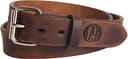
1791 GUNLEATHER Heavy Duty 14 oz Gun Holster Belt

1791 GUNLEATHER Heavy Duty 14 oz Gun Holster Belt

The one listing on this page that publishes a number instead of an adjective: 14 oz, roughly 5.6 mm of hide. That is the single most useful spec on a carry belt, because rigidity comes from thickness far more than from branding. It states American steerhide and IWB/OWB holster support — but never names a grade.

Only published thickness
$68.99 · View on Amazon

Price as of November 12, 2026. #ad How we’re funded

3
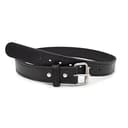
WOLFANT Italian Solid Full-Grain Leather Belt (1.5")

WOLFANT Italian Solid Full-Grain Leather Belt (1.5")

Stated full-grain from Italian leather in a 1.5" width — the dressier-but-tough option. A single solid strap (not glued plies) is exactly what you want in a belt that should outlast the buckle.

Best everyday full-grain
$39.98 · View on Amazon

Price as of November 12, 2026. #ad How we’re funded

4
PBF Heavy Duty Full-Grain Work Belt (1.75", 58"-60")

PBF Heavy Duty Full-Grain Work Belt (1.75", 58"-60")

States full-grain at a 58"-60" length, which is rare, and pairs it with the two features that make sense on a long strap: a 1.75" width to spread the load, and a double-prong buckle so the pull is shared across two holes instead of tearing out one. The buckle is removable, so the strap can outlive the hardware.

Widest strap, longest sizes
$34.99 · View on Amazon

Price as of November 12, 2026. #ad How we’re funded

5
Kmioc Concealed Carry CCW Gun Belt (1.5")

Kmioc Concealed Carry CCW Gun Belt (1.5")

States 100% full-grain at a price closer to a mall belt than a carry belt, which makes it the sensible way to find out whether a proper gun belt fixes your sagging problem before spending three times as much. The grade claim is the reason it is here at all.

Cheapest stated full-grain
$32.99 · View on Amazon

Price as of November 12, 2026. #ad How we’re funded

6
Buffway Full-Grain One-Piece Belt (1.5", 54")

Buffway Full-Grain One-Piece Belt (1.5", 54")

The only listing on this page that states both the grade and the construction at a big-and-tall length: full-grain, solid one piece, 1.5" wide, listed at 54". Above about 50 inches a strap is where a maker is most tempted to splice shorter offcuts together, so "solid one-piece" is the phrase worth paying for here.

Budget pick
$39.99 · View on Amazon

Price as of November 12, 2026. #ad How we’re funded

The picks in full

#1Closest on the commitment

Relentless Tactical Ultimate Steel Core Gun Belt

Adds a spring steel core through the strap, which is a different answer to the same problem: instead of relying on hide thickness alone to stop the belt rolling under a holster, it puts a steel spine inside it. The most rigid option here, and the one to reach for if a heavier setup keeps folding your current belt over. It is handmade in the USA and backed for life — and it never states a leather grade, which on this page is the spec that matters most.

Strengths

  • Spring steel core resists the roll-over that happens under a loaded holster
  • Handmade in the USA, with a stated lifetime replacement warranty
  • Offered in 1.25" and 1.5" widths, so it can be matched to the holster's belt slot

Trade-offs

  • No leather grade stated — the listing calls it only "US Leather"
  • A steel core cannot be shortened at home — you cannot trim it like a plain strap
  • Thickness in ounces is not published
Leather gradeNot published
TannageNot published
ThicknessNot published
HardwareSpring steel core
Made inUSA
WarrantyLifetime

Spec note. The listing is precise about the core — spring steel — and vague about the leather, which it calls only "US Leather". The rigidity spec is published; the hide spec is not.

Specs read from the product listing, on October 2, 2026. “Not published” means the listing does not state that spec.

#2Only published thickness

1791 GUNLEATHER Heavy Duty 14 oz Gun Holster Belt

The one listing on this page that publishes a number instead of an adjective: 14 oz, roughly 5.6 mm of hide. That is the single most useful spec on a carry belt, because rigidity comes from thickness far more than from branding. It states American steerhide and IWB/OWB holster support — but never names a grade.

Strengths

  • Publishes an actual thickness — 14 oz — which almost no belt listing does
  • States American steerhide and support for both IWB and OWB holsters
  • Costs less than the stated-full-grain belts above it

Trade-offs

  • Leather grade is not published — steerhide names the animal, not the layer
  • Width, hardware and country are not stated on the listing
  • 14 oz is genuinely stiff; it will not double as a dress belt
Leather gradeNot published
TannageNot published
Thickness14 oz
HardwareNot published
Made inNot published
WarrantyNot published

Spec note. The listing states "14 oz" and "American steerhide" but no grade. Steerhide is a hide type, not a layer of it — a 14 oz strap can still be a split.

Specs read from the product listing, on August 30, 2026. “Not published” means the listing does not state that spec.

#3Best everyday full-grain

WOLFANT Italian Solid Full-Grain Leather Belt (1.5")

Stated full-grain from Italian leather in a 1.5" width — the dressier-but-tough option. A single solid strap (not glued plies) is exactly what you want in a belt that should outlast the buckle.

Strengths

  • Listing states full-grain Italian leather
  • 1.5" solid single-strap width
  • Thickened for durability

Trade-offs

  • Solid full-grain is stiff at first
  • Costs more than a bonded belt
Leather gradeFull-grain
TannageNot published
ThicknessNot published
HardwareNot published
Made inNot published
WarrantyNot published

Specs read from the product listing, on July 18, 2026. “Not published” means the listing does not state that spec.

#4Widest strap, longest sizes

PBF Heavy Duty Full-Grain Work Belt (1.75", 58"-60")

States full-grain at a 58"-60" length, which is rare, and pairs it with the two features that make sense on a long strap: a 1.75" width to spread the load, and a double-prong buckle so the pull is shared across two holes instead of tearing out one. The buckle is removable, so the strap can outlive the hardware.

Strengths

  • Listing states full-grain leather at a length where almost nothing states a grade
  • 1.75" width — a wider strap resists rolling under load better than a narrow one
  • Double-prong buckle spreads the pull over two holes; the buckle is removable and nickel-free

Trade-offs

  • 1.75" is too wide for most dress-trouser loops — this is a jeans and work-pants belt
  • Thickness, country and warranty are all unpublished
  • The listing covers a two-inch size band rather than one exact length, so check the fit before ordering
Leather gradeFull-grain
TannageNot published
ThicknessNot published
HardwareRemovable double-prong buckle, nickel-free
Made inNot published
WarrantyNot published

Spec note. A double prong is not styling. Two prongs share the tension across two holes, and hole tear-out at the fastening point is one of the ways a long belt actually fails.

Specs read from the product listing, on August 31, 2026. “Not published” means the listing does not state that spec.

#5Cheapest stated full-grain

Kmioc Concealed Carry CCW Gun Belt (1.5")

States 100% full-grain at a price closer to a mall belt than a carry belt, which makes it the sensible way to find out whether a proper gun belt fixes your sagging problem before spending three times as much. The grade claim is the reason it is here at all.

Strengths

  • Listing states 100% full-grain leather
  • 1.5" width, sized for standard holster slots
  • By far the cheapest stated-full-grain option here

Trade-offs

  • Thickness, hardware, country and warranty are all unpublished
  • No stated backing or core, so rigidity depends entirely on a thickness you cannot check
  • Nothing behind the grade claim — no warranty, no published construction detail
Leather gradeFull-grain
TannageNot published
ThicknessNot published
HardwareNot published
Made inNot published
WarrantyNot published

Specs read from the product listing, on August 30, 2026. “Not published” means the listing does not state that spec.

#6Budget pick

Buffway Full-Grain One-Piece Belt (1.5", 54")

The only listing on this page that states both the grade and the construction at a big-and-tall length: full-grain, solid one piece, 1.5" wide, listed at 54". Above about 50 inches a strap is where a maker is most tempted to splice shorter offcuts together, so "solid one-piece" is the phrase worth paying for here.

Strengths

  • Listing states full-grain — the layer that holds tension rather than stretching
  • States solid one-piece leather, so there is no splice or bond line down the strap
  • 1.5" width threads jean and casual loops and reads correctly with business casual

Trade-offs

  • Thickness in ounces is not published, so you cannot compare its stiffness on paper
  • Sold as fixed lengths rather than an adjustable range — you have to order the right size
  • Mid-tier price: cheaper big-and-tall belts exist, but none we cover states one-piece construction
Leather gradeFull-grain
TannageNot published
ThicknessNot published
HardwareNot published
Made inNot published
WarrantyNot published

Spec note. "Solid one-piece leather" is the claim to look for above 50 inches. A long strap is the easiest place to hide a splice or a laminate, and neither survives the fold as long as one cut of hide.

Specs read from the product listing, on August 31, 2026. “Not published” means the listing does not state that spec.

The four things people are usually replacing

Search traffic for Hanks alternatives splits into four fairly distinct wants, and knowing which one is yours decides the pick in about a minute.

1. The warranty and the country, for less.This is the hardest one to match and the reason Hanks has the reputation it has. Across every belt we track, exactly one other listing states both US manufacture and a lifetime term: the Relentless Tactical steel-core belt. It is the first pick below for that reason alone. The honest catch is that it never names a leather grade — its own listing calls the hide only “US Leather,” which names a country, not a layer. You are trading a published grade for a published core and a published warranty. If US manufacture across categories is what you are shopping for, our American-made leather goods page sets out the hard rule we apply: a stated country of manufacture only, because a US brand name and “US leather” are different claims.

2. Stiffness you can check on the spec line.This is where an alternative genuinely beats the original on disclosure. A carry belt’s job is to not roll over under a holster, and rigidity comes overwhelmingly from how thick the strap is. Hanks says full-grain and says nothing about thickness; 1791 GUNLEATHER says 14 oz — roughly 5.6 mm of hide — and says nothing about the grade. Those are mirror-image disclosures, and which one you want depends on whether you are buying for longevity or for stiffness today. Our guide to leather weight and thickness explains the ounce scale, which is the single most useful number on any belt listing and the one that appears least often.

3. The grade, much cheaper.Stated full-grain is not rare in a belt, and this is the good news. A belt is one long strip cut from the strongest part of a hide, so a maker can state the grade on an inexpensive strap in a way it cannot on a large bag. Four of the six picks below state full-grain, two of them for a small fraction of the Gunner’s price. What you lose at the cheap end is everything around the grade: no warranty term, no country, no thickness. The full-grain belt roundup ranks the format properly, and full-grain vs. top-grain explains why that line on a belt listing matters more than it does almost anywhere else.

4. A different size or width.The Gunner is a 1.5-inch strap, which is the standard holster slot size and a good general width. If you need something wider for load spreading, or a length at the top of the range, that is a different search — and two picks below are built for it. Our belt width guide covers what each width is actually for, and best big-and-tall leather belts ranks the long sizes on their own terms.

What a 100-year warranty does and does not buy

Worth being precise about this, because it is the headline on the original and it is easy to read too much or too little into it. A century-long warranty is a real signal: it says the maker expects a solid strap of full-grain hide to outlive its owner, and that expectation is not unreasonable for a one-piece belt kept out of a washing machine. It is also a statement a company can only make if it controls its own production, which is why it tends to travel with stated US manufacture.

What it is not is a prediction about the buckle, the stitching at the keeper, or the holes. Belts fail in three places, in a predictable order, and none of them is the middle of the strap: the hole you actually use tears out or ovals; the stitching at the folded-over buckle end works loose; and the buckle’s own hinge or prong wears. A belt whose buckle is removable — the PBF pick below — lets the strap outlive the hardware, which is a more useful kind of longevity than most warranty language. Our guide to belt buckle types covers which attachment styles can be swapped and which cannot, and how long a leather belt lasts walks through the failure order in detail.

The practical reading: treat a long warranty as evidence about the hide and the construction, and judge the hardware separately on what the listing says about it. Hanks states a stainless buckle, which is a good answer. Two of the six picks below state their hardware; four do not.

How the six compare on the four Hanks claims

Every cell is read from the listing or marked “Not published.” The original is the first column so you can see what you are giving up and what you are gaining. Read it row by row rather than looking for a winner — no belt here matches all four, which is the finding.

 Hanks (original)Relentless1791WOLFANTPBFKmiocBuffway
Grade statedFull-grainNot publishedNot publishedFull-grainFull-grainFull-grainFull-grain
Thickness statedNot publishedNot published14 ozNot publishedNot publishedNot publishedNot published
Country statedUSAUSANot publishedNot publishedNot publishedNot publishedNot published
Warranty stated100 yearsLifetimeNot publishedNot publishedNot publishedNot publishedNot published
Width stated1.5 in1.25 and 1.5 inNot published1.5 in1.75 in1.5 in1.5 in
Hardware namedStainless steel buckleSpring steel coreNot publishedNot publishedRemovable double-prong, nickel-freeNot publishedNot published
Construction statedNot publishedSteel-cored strapAmerican steerhideSolid single strapNot publishedNot publishedSolid one piece

Three things fall out of that table. First, the two belts that match Hanks on recourse are the two that will not name a grade, and the four that match it on grade publish no recourse at all. That inverse is consistent across the whole belts hub and it is the most useful thing to know before you shop: a company that stands behind a strap for decades tends to describe the promise, and a company competing on price tends to describe the material.

Second, the thickness row is almost empty. One listing out of seven publishes an ounce figure. That is the industry norm and it is the reason a buyer cannot compare stiffness on paper, which in turn is why “full-grain” gets treated as a proxy for rigidity when it is really a claim about longevity. A thin full-grain strap is still a floppy belt.

Third, width is better disclosed than anything else here— six of seven state it. That makes width the one spec you can actually shop on, and it is worth using: 1.5 inches fits holster slots and most jeans loops, 1.25 inches is the dress width, and 1.75 inches spreads load on work wear but will not pass through dress trousers.

If the real reason is the price

Plenty of people searching for an alternative to a premium American belt are not looking for a philosophical match — they want most of the belt for much less money. That is a reasonable ask in this category, and more achievable than in bags, because of the hide-area argument: a belt needs one long strip rather than large clean panels, so the grade claim survives at low prices.

Two of the picks below state 100% or solid full-grain at a fraction of the Gunner’s price, and the one honest warning is this: a cheap stated-full-grain belt gives you the material and nothing around it. No thickness, so you cannot predict stiffness. No warranty, so a failure is your problem. No country, so you have no idea what oversight produced it. If that trade is acceptable — and for a belt that mostly holds trousers up, it usually is — our belts under $25 page goes further down the price ladder and documents what survives at the bottom of it.

What we would not do is buy a bonded belt to save money. Bonded leather is ground hide fiber reconstituted with adhesive and rolled flat; it is the one material in this category that fails outright rather than wearing in, and it fails in one to two years of daily folding. The difference is set out in full-grain vs. genuine leather in a belt, and what bonded leather is explains the manufacturing. Between a stated-full-grain budget belt and an unstated mid-price belt, take the stated one.

Fit, break-in and the thing most people get wrong

One practical note that applies to every belt on this page, including the original. A solid full-grain strap of real thickness is stiff when it arrives, and the most common mistake is reading that as the wrong belt. It is not: a belt that feels supple out of the box is usually thin, split or heavily finished. A rigid strap takes a few weeks of wear to take the curve of your waist, and then it stays there, which is the point. Our guide to breaking in a leather belt has the method, and the short version is wear it rather than treat it.

Size is the other avoidable return. A belt size is not your trouser waist, and it is not where the tape lands either — it is measured through the loops of the trousers you will actually wear it with, buckle pin to the hole you use. Get it from how to measure belt size before you order, especially for the two long-size picks here, which are sold as fixed lengths or narrow bands rather than adjustable ranges. A steel-cored belt is also the one kind you cannot shorten at home, so size it right the first time.

And once it fits: condition it sparingly. A belt lives against a body, absorbs sweat at the inside face and dries slowly, which is the mechanism behind almost every cracked belt. How to care for a leather belt covers the routine, and the interval in how often to condition leather applies: less, and less often, than most people assume.

Which one for you

If the warranty and the country are the point: Relentless Tactical. US manufacture, a stated lifetime replacement, two widths and a spring steel core that resists roll-over more directly than hide thickness alone. Accept that it names no grade and cannot be trimmed.

If you want stiffness you can verify: the 1791 GUNLEATHER 14 oz belt. The only published thickness in this comparison, from American steerhide, for less than the stated-full-grain premium belts. It will not double as a dress belt and it names no grade.

If you want full-grain for every day rather than for carry: WOLFANT. Stated full-grain Italian hide, a solid single strap and a 1.5-inch width, at a price that reads as sensible rather than aspirational. Stiff at first, like everything honest in this category.

If you need a wider strap or a longer one: PBF. Stated full-grain at 58 to 60 inches, a 1.75-inch width to spread the load, and a removable double-prong buckle so the pull is shared over two holes and the strap can outlive the hardware. Too wide for dress loops.

If you want to try a real carry belt cheaply:Kmioc. States 100% full-grain at a 1.5-inch width for close to mall-belt money. Nothing behind the claim — no thickness, hardware, country or warranty — but the claim itself is the reason it is here.

If price is the whole brief: Buffway. Stated full-grain and stated solid one-piece construction, which above 50 inches is the phrase worth paying for, because a long strap is the easiest place to hide a splice. Sold as fixed lengths, so measure first.

And if the original is still the right buy— which it may well be, if you want four published commitments in one belt and are willing to pay for them — the Gunner is ranked, priced and linked on our concealed-carry belt roundup, alongside three of the alternatives above.

One closing note on method. We do not own these belts, we have not worn or flexed any of them, and we do not review brands — a brand review implies handling the product. Everything above is read from a live listing on the date shown on each card, every price renders from the live price layer rather than from a figure typed into this page, and nothing a listing does not state is asserted. The full rules are on our methodology page.
Frequently asked questions

What are Hanks belts known for?

Publishing four commitments in one listing, which almost nothing else in the category does: full-grain leather, a 1.5-inch width, US manufacture and a 100-year warranty, with a stainless steel buckle. Read across the belts we track and most publish at most two of those. The one thing the listing does not publish is a thickness in ounces, which on a belt is the spec that predicts stiffness more reliably than the grade name.

Is there a cheaper belt as thick as a Hanks Gunner?

Nobody can answer that from the listings, and that is the honest reply - the Hanks listing does not publish a thickness, so there is no number to match. What you can do is buy a belt that publishes one: the 1791 GUNLEATHER belt states 14 oz, roughly 5.6 mm of hide, for less money. That makes it the only belt in this comparison whose rigidity you can assess before it arrives, though it states no leather grade in return.

Which belt matches the Hanks warranty?

Of every belt we track, one other states both US manufacture and a lifetime term: the Relentless Tactical steel-core belt, which publishes a stated lifetime replacement warranty and is described as handmade in the USA. The trade is that it never names a leather grade - its listing calls the hide only US Leather, which is a country rather than a layer - and a steel-cored strap cannot be trimmed to length at home.

Can you get a stated full-grain belt for much less?

Yes, and far more easily than in a bag. A belt is one long strip cut from the strongest part of a hide, so the grade claim survives at low prices in a way it does not on a tote or a briefcase. Four of the six picks on this page state full-grain, two of them for a small fraction of the original's price. What you give up is everything around the grade: no thickness, no warranty term and no country of manufacture on any of them.

Does a 100-year warranty mean the belt will last 100 years?

It means the maker expects the strap to, and that is a reasonable expectation for one solid piece of full-grain hide. It is not a prediction about the parts that actually fail first. Belts fail in a predictable order: the hole you use tears out or ovals, the stitching at the folded buckle end works loose, then the buckle's hinge or prong wears. A removable buckle is often more useful longevity than warranty language, because it lets the strap outlive the hardware.

What width should I get instead of 1.5 inches?

Stay at 1.5 inches unless you have a specific reason. It fits standard holster slots, threads jeans and casual loops, and reads correctly with business casual. Go to 1.25 inches for dress trousers, and to 1.75 inches only for work wear where you want the load spread - at that width the belt will not pass through most dress loops. Width is the best-disclosed spec in this category: six of the seven listings compared here state it.

Why does a new full-grain belt feel so stiff?

Because it is a solid piece of the densest layer of the hide, and that is what you paid for. A belt that is supple straight out of the box is usually thin, split or heavily finished. A rigid strap takes a few weeks of ordinary wear to take the curve of your waist and then holds it, which is the whole argument for the material. Wear it rather than treating it - conditioning a new belt to soften it faster mostly just darkens it.

Sources

Keep reading