Is Leather Waterproof?
No - and no product you can buy will make it so. Leather absorbs water because of what it is. The useful questions are how much damage that actually does, and what genuinely reduces it.
How this is funded: we earn a commission if you buy through our links, at no extra cost to you. It never changes which product we recommend, and we’ll tell you when we’d skip one. Full disclosure.
Leather is not waterproof. It is not water-resistant either, in its natural state. It is a porous protein structure, and water goes into it the way water goes into any porous material. No wax, oil, cream or spray changes that fact — the best of them slow the water down at the surface for a while.
That sounds discouraging and it should not be. Millions of leather bags, boots and coats survive decades of weather. The point of this page is that they survive it through two things that have nothing to do with buying a waterproofing product: knowing what water actually does, and knowing what to do in the hour after a soaking.
Why leather absorbs water at all
A hide is a dense network of collagen fibres. Tanning stabilises that network so it will not rot and stays flexible when dry, but it does not fill it in — the structure keeps its pores, which is exactly why leather breathes, why it moulds to what it carries, and why it takes dye. The same openness is why it takes water.
You can close that surface up. A heavy pigmented finish puts an opaque coating over the grain; a heavily waxed hide fills the outer layer with wax so water beads instead of soaking. Both genuinely reduce absorption. Both also move the leather away from the properties people buy leather for: a sealed surface cannot darken into a patina, and heavy wax changes how the hide looks and feels. That trade is the whole story, and it is why the most water-tolerant leather is rarely the most attractive leather. Where the finish comes from is covered in how leather is made.
What the words on a listing actually mean
Three terms get used loosely and only one of them means anything precise on a leather product.
| Claim | What it can honestly mean | How to read it |
|---|---|---|
| “Waterproof leather” | Nothing, on an untreated hide. Occasionally it refers to a laminated or heavily coated material rather than the leather itself | Treat as marketing. Ask what is laminated and where |
| “Water-resistant” | The surface sheds light rain for a period before absorbing. Real, time-limited, and it wears off | Credible. Assume it needs renewing |
| “Water-resistant lining” | The LINING resists water from the inside - a burst bottle, a damp towel. Says nothing about the outside | Useful and commonly misread |
| No water claim at all | The honest default for most leather goods | Normal. Not a defect |
That third row is worth dwelling on, because it is where the most confusion sits in our own registry. A travel kit with a “padded water-resistant lining” is telling you about toothpaste and shampoo, not about rain. One of the listings we cover says so explicitly in its own copy — water-resistant, not waterproof, and a burst bottle will still find the leather. That is the most honest sentence in the category.
What water actually does, in order
- It swells the fibres. Wet collagen expands. If it then dries quickly or under tension, it sets stiffer and in whatever shape it was holding — which is why a soaked bag left slumped dries slumped.
- It moves colour. Water carries dye and residual tannins outward as it evaporates, concentrating them at the edge of the wet area. That is a tide-line, and it is the classic water stain. It shows most on open-surfaced leather — vegetable-tanned hides and aniline and pull-up finishes — and least on pigmented leather.
- It leaves with the oils. Fast drying, and especially drying near heat, pulls out the lubricating oils the tannery put in. This is the stage that causes real, permanent damage: a hide dried hard becomes brittle, and brittle leather cracks at every flex point.
- It lets mould start. Damp trapped inside a closed bag in a cupboard is ideal for mould growth. Conservation guidance on storing leather is consistent on keeping humidity moderate and air moving for exactly this reason.
Notice that only one of those four is caused by the water being there. Three are caused by how it leaves. That is why drying a wet leather bag correctly is the single highest-value habit in this whole topic, and why no product you buy beforehand substitutes for it.
Why conditioner is not waterproofing — and why wax muddies it
Conditioner replaces the oils that keep fibres supple. That is a different job from repelling water, even though the two overlap, because some conditioners contain waxes and wax does repel water.
You can see the distinction in the makers’ own words. One widely sold conditioner states on its product page that it is completely wax-free — a clear signal that water-shedding is not what it is for, and also why it is the one that will not darken leather. Another states that a single treatment protects for six months or more, which is a protection claim rather than a waterproofing claim and is worded carefully. Read those two side by side and the category makes sense: conditioners are for suppleness, and any water benefit is a side effect of whatever wax is in the formula. The three-way comparison is in Leather Honey vs. Bick 4 vs. Lexol.
If shedding is genuinely what you want, use a product sold for that and accept it as a renewable treatment, not a permanent state. Our guide to waterproofing a leather bag goes through what each product class can do, and the honest ceiling is “this bag now survives a twenty-minute walk in the rain” rather than “this bag is now waterproof.”
The realistic plan
- Keep it conditioned, modestly. Supple leather tolerates a wetting far better than dry leather does. How often to condition has the frequencies; the common error is doing it too often, not too rarely.
- Protect the contents, not just the bag. A laptop belongs in its own sleeve inside a leather bag regardless of the weather. Leather holds water against whatever it touches.
- Dry it open, slowly, away from heat. Room temperature, stuffed lightly to hold its shape, never on a radiator.
- Condition after it is fully dry, not while damp. Sealing oil over trapped moisture is how you get mould.
- Choose the material for the weather you have. If you commute on foot in a wet climate every day, that is an argument for canvas or nylon as the daily bag and leather as the one you carry on better days. No treatment beats picking the right material.
What to actually have on the shelf
Not waterproofing products - there are no honest ones for leather. These are the two bottles that do the work that matters, plus the listing that models how a water claim should be worded.
- The one bottle to own
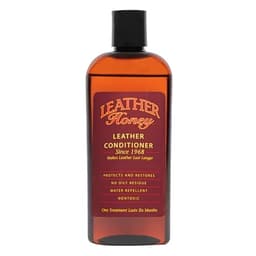
Leather Honey Leather Conditioner (8 oz)
Type: Conditioner
The maker's own page states it is free of silicone, solvents and fragrances, that a quarter-size drop in a thin layer is the dose, and that one treatment protects for six months or more. Note the word protects rather than waterproofs - that precision is the reason to trust the rest of the page.
- For after a soaking
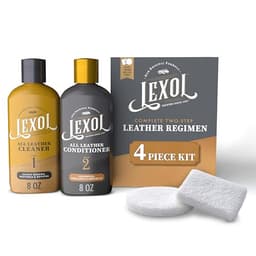
Lexol Leather Cleaner & Conditioner Kit
Type: Cleaner + conditioner kit
A soaked bag needs cleaning before conditioning, because water moves dirt around as it dries and sealing that in is how tide-lines become permanent. A clean-then-condition pair is the correct two-step, and buying it as a kit is the cheap way to have both.
$17.08 · View on AmazonPrice as of October 20, 2026. #ad How we’re funded
- How a water claim should read
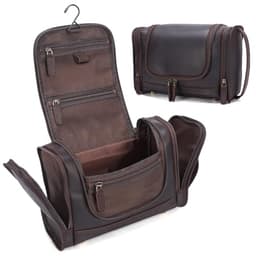
Polare Full-Grain Leather Toiletry Bag with Hanging Hook
Leather grade: Full-grain
Its listing states a padded water-resistant lining and then says plainly that water-RESISTANT is not waterproof and a burst bottle will still reach the leather. That is a seller declining to overstate its own feature, which is rarer than it should be.
$95.99 · View on AmazonPrice as of October 20, 2026. #ad How we’re funded
Bottom line
Leather absorbs water, every treatment is temporary, and the damage is done on the way out rather than on the way in. So stop shopping for waterproofing and start budgeting for drying: keep the hide conditioned, keep electronics in a sleeve, and when it does get soaked, dry it slowly and away from heat. A bag treated that way will outlast three bags that were sprayed and then dried on a radiator. And if you want the leather that shrugs off weather best, you are looking for a pigmented or heavily waxed finish — which is also the leather that will never develop the patina you probably wanted in the first place.
How we know this. Veg Tan Club is written by an enthusiast, not a master leatherworker or a test lab. We compile each product’s published specs — grade, tannage, hardware — and reason from there. We say plainly when a listing doesn’t state a grade, and we haven’t physically handled every item we compare.
Frequently asked questions
Is leather waterproof?
No. Leather is a porous protein structure made from animal hide, and it absorbs water. A heavily waxed or coated finish can make a hide shed light rain for a while, which is water-resistance, not waterproofing. Any product marketed as a waterproof leather bag is overstating what the material can do - treat the claim as water-resistant and plan accordingly.
Will rain ruin a leather bag?
A shower will not. A soaking can leave lasting marks, and how you dry it matters more than how wet it got. Blot the surface, empty the bag, and let it dry at room temperature away from radiators, hair dryers and direct sun. Heat is what turns a wet bag into a stiff, cracked one, because it drives out the moisture the leather needs along with the water it does not.
Does leather conditioner waterproof leather?
It does not, and the better makers do not claim it does. Conditioning replaces oils so the fibres stay flexible, and a wax-containing product will make water bead up for a while. One conditioner we cite states that it is completely wax-free, which tells you plainly that water-shedding is not what it is for. Condition leather to keep it supple; use a dedicated water-repellent treatment if shedding is the goal, and reapply it.
What does water actually do to leather?
Three things. It swells the fibres, so the hide can dry stiffer and misshapen. It can move dye and tannins around, which is what leaves tide-line water stains - especially visible on vegetable-tanned and aniline-finished leather. And trapped damp in a closed bag is what lets mould start. None of those is caused by the water being present; all of them are caused by how it leaves.
Is vegetable-tanned leather worse in the rain?
It marks more readily, yes. Vegetable tannage and an aniline finish both leave the hide's surface open rather than sealed under pigment, which is exactly why that leather can darken into a patina - and the same openness is why a splash shows. It is not damage in the structural sense, and many of those marks blend into the overall colour with time. A pigmented chrome-tanned bag will show less and also never patina.
How do you protect a leather bag from water?
Accept that you are reducing damage rather than preventing contact. Keep it conditioned so the fibres are supple, use a dedicated water-repellent product if you want shedding and reapply it as the maker directs, carry anything electronic in its own sleeve, and dry the bag properly on the occasions it does get soaked. The last one is the habit that actually saves bags.
Sources
- Wikipedia — Leather — Overview of leather, grain layers and the full-grain / top-grain / split hierarchy (accessed July 18, 2026)
- Canadian Conservation Institute — Caring for leather, skin and fur — CCI preventive-conservation guidance on cleaning, dressing and storing leather (accessed July 18, 2026)
- U.S. National Park Service — Curatorial Care of Objects Made From Leather and Skin — NPS museum-handbook guidance on cleaning, handling and storing leather; humidity below ~65% (accessed July 18, 2026)
- Wikipedia — Conservation and restoration of leather objects — How the field cleans and stabilizes leather; why oils oxidize and can harden leather over time (accessed July 18, 2026)
- Leather Honey — Leather Conditioner (maker's product page) — Maker's claims: free of silicone, solvents, fragrances and animal-derived ingredients; for every leather color, not for suede, faux leather or vinyl; apply a quarter-size drop in a thin layer; dry at least two hours, preferably overnight; one treatment protects six months or more; made in the USA since 1968 (accessed September 18, 2026)
- Bickmore — Bick 4 Leather Conditioner (maker's product page) — Maker's claims: will NOT darken leather; completely wax-free; for smooth finished leather; not for suede, rough-out, distressed or napped leathers; always check colorfastness in a hidden area first; made in the USA (accessed September 18, 2026)
Keep reading
Best leather protector sprays
What you can actually buy to make a hide water resistant, and the claims worth reading on the bottle.
See the picksCan you wash leather?
What a washing machine does that rain does not, and why the dryer is the worse half of the mistake.
Read the guideHow to waterproof a leather bag
The practical version of this page - what to apply, how often, and what each product class can realistically do.
Read the how-toHow to dry a wet leather bag
The step that decides whether a soaking leaves a mark or ruins a bag. Do this one properly.
Read the how-toHow to remove stains from leather
Including water tide-lines, which behave differently from oil and ink stains.
Read the how-toHow to remove mold from leather
What happens when damp gets trapped in a closed bag, and how to deal with it before it spreads.
Read the how-toBest leather conditioners
The product class that keeps a hide supple - which is the real defense, even though it is not waterproofing.
See the picksLeather vs. canvas bags
If wet weather is your main consideration, this is the comparison that matters more than any treatment.
Compare the materials