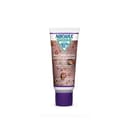
A protectant is not a conditioner, and it is not a substitute for one
These two products get shelved together and do opposite jobs. A conditionerreplaces the oils and fats inside the hide so the fiber bundles stay flexible — it works in the leather. A protectant leaves a thin repellent layer onthe leather so water beads and a spill sits on the surface long enough to be blotted. Neither does the other’s job. A conditioned bag with no protectant still water-spots; a protected bag that never gets conditioned still dries out, stiffens and eventually cracks at the folds.
The order matters too. Clean first, condition second, protect last — the reasoning is in cleaner vs. conditioner, and it holds here for an extra reason: a repellent film applied over dirt locks the dirt in, and a repellent film applied before conditioner blocks the conditioner you apply next. Protectant is the last step in the routine, not the first.
One honest caveat before you buy anything on this page: leather is not waterproof and none of these products makes it waterproof. They make it water resistant for a while. The full version of that argument, including what actually happens when a hide gets soaked, is in is leather waterproof.
The four claims that decide which bottle you want
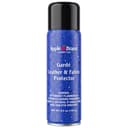
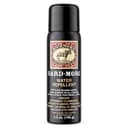
1. Does the maker say it will not darken?This is the first question and the one most listings answer by changing the subject. There are three grades of answer. The strongest is an explicit appearance claim: Apple Brand states Garde “won’t darken or alter the texture, color, or finish,” and Bickmore puts “Won’t darken” in the product title. A weaker answer is a damage claim dressed as an appearance claim — “safe to use on all colors” means it will not harm them, not that it will leave them looking the same. The weakest answer is no color claim at all. Both waxes here fall into the bottom two categories, which is the correct and honest position for a beeswax dressing: wax deepens color and raises sheen. That is a feature on a brown boot and a disaster on a natural veg-tan tote.
2. Which materials is it rated for?Smooth leather, suede and nubuck are not interchangeable surfaces. Suede and nubuck are napped — the difference between them is in nubuck vs. suede— and anything that dries to a film or needs rubbing in will flatten that nap permanently. Three of the five here state suede and nubuck in writing. The two waxes do not, and should not: a wax is for smooth leather, full stop.
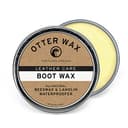
3. What chemistry does it publish?Two of the five state what they are. Otter Wax names beeswax and lanolin and rules out silicone, petroleum, dyes and PFAS. Nikwax states water-based, PFAS-free, no optical brighteners, no added scent. The other three publish no chemistry statement at all — which does not mean they contain anything in particular, only that you are buying on the brand rather than the formula. PFAS are, in the EPA’s own words, “widely used, long lasting chemicals, components of which break down very slowly over time,” and the agency notes “their persistence in the environment.” When a maker volunteers that its product is free of them, that is a disclosure worth reading; when nobody mentions the subject, you have learned nothing either way, and we are not going to guess on their behalf.
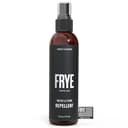
4. Spray, pump or wax?An aerosol gives the thinnest, most even coat and is the right form for suede, where you must not touch the surface. A non-aerosol pump gives you more control and no propellant, at the cost of a coarser mist. A wax gives the heaviest protection and the most physical work — you are rubbing a paste into every seam by hand, which takes real time on a bag and is messy. The one thing to avoid is any form applied heavily in a single pass. Light, and twice, beats wet, once, on every surface and in every form.
The five, side by side
Every cell below is read from the listing or marked “Not published.” Read the first two rows together: a product that will not say whether it darkens and will not say which materials it suits is a product you are applying blind.
| | Apple Garde | Bickmore | Frye | Otter Wax | Nikwax |
|---|
| Won't darken (stated) | Yes - won't darken or alter texture, color or finish | Yes - stated in the title | No discoloration or residue; safe on all colors | Not claimed (only: safe on all colors) | Not claimed |
|---|
| Suede / nubuck rated | Yes, plus canvas and fabric | Yes, plus fabric and felt | Yes | No - smooth leather only | No - smooth leather only |
|---|
| Chemistry published | Not published | Not silicone-based (no PFAS statement) | Not published | Beeswax + lanolin; PFAS-, silicone-, petroleum- and dye-free | Water-based, PFAS-free, no brighteners or scent |
|---|
| Form | Pump spray | Spray | Non-aerosol pump | Wax paste, rubbed on | Creme, sponge applicator |
|---|
| Stated volume | 5.5 oz | 5.5 fl oz | 6 oz | 5 oz | 3.4 fl oz |
|---|
| Breathability claim | No sticky residue stated | Yes - explicitly not a pore-sealing film | Yes - allows leather to breathe | Not published | Yes - revives breathability |
|---|
| Reapply interval | Not published | Not published | Not published | Not published | Not published |
|---|
| Written for | Handbags and accessories | Boots, hats, outerwear, tack | Footwear and accessories | Boots, hats, rain gear | Footwear, gloves, membranes |
|---|
The reapply row is blank all the way across, and it is the most useful missing number on the page. Every one of these products wears off — that is what a surface film does — and not one maker will say after how long or how many wet days. Use the only honest test available: put a little water on an out-of-sight patch. If it beads and rolls, the film is intact. If it sinks in and darkens the spot, the film has gone and it is time to reapply. In practice that tends to mean before each wet season for a bag that lives indoors, and considerably more often for anything carried in rain.
The other row worth a second look is written for. Four of these five listings are aimed at footwear. That is not a disqualification — the chemistry does not know what shape the leather is — but it explains why only one of them talks about vachetta trim, handbag hardware or the handles that take hand oils. If the thing you are protecting is a bag, that difference in emphasis is the reason our top pick is the one it is.
What a protectant will not do
It will not make leather waterproof. It will not reverse damage: a hide that is already water-stained, stiff or cracked needs restoration or repair, and spraying a repellent over a crack simply waterproofs the crack. It will not stop mold: mold needs humidity below roughly 65% to stay away, and a sealed film in a humid closet can make that worse rather than better — see removing mold from leather. And it will not keep a bag’s color even if you apply it unevenly, which is the most common self-inflicted injury in this category.
It also will not help a coated or finished hide very much, because that hide already has a factory film on it. Patent leather, heavily pigmented chrome-tanned bags and most bonded or PU goods are already sealed — a protectant on top of them is mostly wasted. The products on this page earn their money on absorbent surfaces: vegetable-tanned leather, pull-up leather, suede, nubuck, and the untreated trim that luxury bags use precisely because it patinas.
How to apply one without ruining anything
Spot-test first, every time, on a surface that does not show: the underside of a base, inside a strap loop, behind a buckle. Wait for it to dry fully before you judge the color, because every one of these looks darker wet. Then work in a ventilated space, hold a spray roughly 6 to 8 inches away so you are coating rather than soaking, and do two light passes with drying time between them instead of one heavy one. Do not spray hardware, do not spray the lining, and do not put the bag back in a closet while it still smells of the product.
For a wax, warm the surface slightly with your hands first, take less product than you think you need, and work it in small circles — then buff. The failure mode with wax is not using too little; it is leaving a thick, tacky, uneven layer that picks up dust and sets. If you want the dark, dressed look on purpose, that is a legitimate choice; just make it on purpose, and read how patina works first so you know what you are trading away.
Veg-tan is the special case and the reason this site exists. Untreated vegetable-tanned leather takes on marks from everything, which is the point of it, and almost any product will shade it. If that is what you own, use the non-darkening spray, use it sparingly, and read how to care for vegetable-tanned leather before you reach for anything heavier.
Which one for what you own
A bag, a wallet, a briefcase, anything pale: the Apple Brand spray, because the non-darkening claim is explicit and the copy is written for exactly these items. If you are protecting a new leather tote or a handbagyou are nervous about, start here. A backpack is the awkward case in this category, because the panel that gets rained on is the one against your back and you never see it drying — treat the base and back panel of a leather backpack before the first wet week rather than after it.
A household with suede boots, a felt hat and a leather bag: Bickmore, on breadth. It states the widest material list and it is explicit about not being a pore-sealing silicone film.
A dark, rugged bag or a work boot that lives outdoors: Otter Wax, and accept that it will deepen the color. A wax is the only form here that gives real standing-water protection, and it is the right answer for a work belt or a weathered weekender, not for a dress bag.
Smooth-leather boots and gloves on a budget: Nikwax. The chemistry is published, the price is the lowest here, and its own listing tells you the limit of its remit.
One last note on method, because it is the whole basis of this page: we read the listing, we record what it says, and we flag what it does not. No product here was tested, sprayed, soaked or owned by us, and no figure above was estimated. Our standing rules are on the methodology page.