What Is Buffalo Leather?
A thicker, more coarsely grained hide than cowhide — and one of the few hide types budget listings actually bother to name.
How this is funded: we earn a commission if you buy through our links, at no extra cost to you. It never changes which product we recommend, and we’ll tell you when we’d skip one. Full disclosure.
Buffalo leather is hide from buffalo rather than cattle — in practice usually the domesticated water buffalo. It is typically thicker, heavier and more coarsely pebbled than cowhide, which is why it shows up on rugged bags, satchels and duffels rather than on slim wallets. Buffalo is one of the handful of animals that supply most of the world’s leather, alongside cattle, sheep, goats, pigs and equines.
Which buffalo?
The label covers two different animals. The Asian water buffalo is farmed widely across South and Southeast Asia, and it is the source of most leather sold as buffalo. North American bison — commonly called buffalo in everyday speech — is a separate animal producing a different, generally softer hide, and goods made from it are usually branded as bison precisely to distinguish them.
Listings blur the two constantly. In our reading of Amazon listings, a bag described as “buffalo leather” at a mid price is almost always water buffalo; bison, being scarcer and dearer, tends to be named as bison and priced accordingly. If a listing calls something buffalo and prices it like bison, that is a question worth asking the seller.
What the hide is actually like
- Thicker. Buffalo hides run heavier than cattle hides, so a panel cut from one tends to be substantial without being split down. That thickness is most of buffalo’s reputation for toughness. See weight and thickness for what the numbers mean.
- Coarser grain. The natural pebbling is larger and less regular than cowhide’s, with visible pores and wrinkle lines. Some people read that as characterful; some read it as rough.
- Stiffer at first. A thick buffalo panel starts firm and softens with use, which is a feature on a duffel and an annoyance on anything you want floppy from day one.
- Scuff-tolerant. A textured surface hides marks that would show instantly on a smooth, fine-grained hide. Practical on a bag that lives in a car boot.
Why it turns up on budget full-grain listings
There is a straightforward economic reason buffalo appears so often on affordable bags that still claim full-grain: water buffalo hide is produced at scale in regions where leather goods are also manufactured, and it is thick enough that a maker can sell full-grain panels without paying cowhide prices. That combination — genuine full-grain, unfussy grain, low cost — is unusual, and it is why the cheapest stated-full-grain bags on a marketplace are so often buffalo.
It is also why buffalo is worth knowing about if you are shopping the honest end of the budget tier. On most cheap listings the grade is simply absent. On buffalo listings it is frequently stated, because the maker has something to state.
Buffalo vs. cowhide: which to buy
| Feature | Buffalo | Cowhide |
|---|---|---|
| Typical thickness | Thicker for the same use | Thinner, more consistent |
| Grain | Large, irregular pebbling | Finer, more even |
| Best on | Duffels, satchels, work bags, belts | Wallets, briefcases, dress goods |
| Hides scuffs | Well — texture disguises marks | Less well on smooth finishes |
| Folds down small | Poorly | Readily |
The honest summary is that species is a second-order decision. A stated full-grain buffalo bag and a stated full-grain cowhide bag will both serve you for years; a coated split will not, whichever animal it came off. Choose the hide for the character and the format you want, and choose the grade because it decides the lifespan.
What “buffalo leather” doesn’t tell you
Naming the animal is not the same as naming the grade. “Buffalo leather” on its own is compatible with a full-grain panel, a sanded top-grain, or a coated split off the bottom of a buffalo hide. The FTC’s leather guides are concerned with composition deception — imitation sold as leather, undisclosed backing material, misleading hide-shaped tags — not with whether a seller grades what it sells. So the same rule applies here as everywhere: find the grade, then read the rest.
Caring for buffalo leather
Nothing exotic is required. Treat full-grain buffalo like any other full-grain hide: wipe it down, condition it occasionally, keep it out of prolonged damp and away from direct heat while drying. Because the grain is deeper, conditioner can pool in the low points if you apply it heavily — work a thin coat in and buff it back rather than laying it on. Our conditioning routine applies unchanged, and how often to do it is the same question here as for cowhide.
Buffalo listings that actually state what they are
The reason to know this term is that buffalo listings tend to disclose more than their price tier usually does. Both of these name the hide and the grade.
- Best buffalo weekender
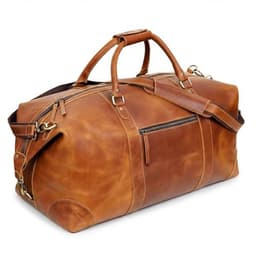
Cuero Full Grain Buffalo Leather Duffle (28")
Leather grade: Full-grain
States full-grain, names buffalo, and names the zipper brand — three disclosures most duffel listings skip entirely. Thick hide on a bag that gets thrown around is buffalo doing what it is good at.
- Cheapest stated full-grain
moonster Handmade Full Grain Buffalo Leather Crossbody
Leather grade: Full-grain
The point of this page in a single listing: buffalo is how a small crossbody can state full-grain at this price. Dimensions and hardware are not published, so buy it for the leather, not the fittings.
Bottom line
Buffalo leather is a thicker, coarser-grained hide that suits bags built to be used hard, and it is one of the few ways an affordable listing can honestly say full-grain. It is not automatically stronger than cowhide — grade decides that — and the word “buffalo” on its own covers two different animals and every grade in the ladder. Use it as useful context once you have found the grade, and skip it for anything you need to be slim and soft. For the wider picture, start with types of leather.
How we know this. Veg Tan Club is written by an enthusiast, not a master leatherworker or a test lab. We compile each product’s published specs — grade, tannage, hardware — and reason from there. We say plainly when a listing doesn’t state a grade, and we haven’t physically handled every item we compare.
Frequently asked questions
What animal is buffalo leather from?
Usually the domesticated Asian water buffalo, which is farmed at scale across South and Southeast Asia. Listings also use 'buffalo' for North American bison, which is a different animal with a different hide. Most listings do not say which they mean, so if it matters to you, treat 'buffalo' as a question rather than an answer.
Is buffalo leather stronger than cowhide?
Buffalo hide is generally thicker and coarser-fiberd than cowhide, which in practice means a sturdier, more rugged panel at a given price. But grade still decides more than species does: a full-grain cowhide bag will outlast a coated buffalo split every time. Compare grade first, hide second.
How can you tell buffalo leather from cowhide?
The grain is the giveaway. Buffalo has a larger, more irregular pebbled texture with visible pores and creases, where cowhide is finer and more even. Buffalo also tends to feel heavier in the hand for the same panel size. Neither test is conclusive on an embossed, coated surface — that is the point of embossing.
Is buffalo leather good for bags?
It suits bags that take abuse — duffels, satchels, work bags — because the extra thickness resists scuffing and holds structure. It is a poorer fit where you want a slim, soft, drapey panel, such as a minimalist wallet or a dressy clutch, because it simply does not fold down that small gracefully.
Does buffalo leather patina?
Full-grain buffalo does, the same way full-grain cowhide does — it darkens and gains sheen where hands and sunlight reach it. The pebbled surface makes the effect look different: highlights catch on the raised grain, so it reads as more textured than the smooth darkening of a fine-grained hide.
Sources
- Wikipedia — Leather — Overview of leather, grain layers and the full-grain / top-grain / split hierarchy (accessed July 18, 2026)
- Encyclopaedia Britannica — Hide (animal skin) — Britannica on hides and skins as the raw material for leather (accessed July 18, 2026)
- Encyclopaedia Britannica — Leather — Britannica on leather as chemically treated animal hide and its uses (accessed July 18, 2026)
- 16 CFR Part 24 — FTC Guides for Select Leather and Imitation Leather Products — The FTC guides on leather labeling: unqualified 'leather' claims, imitation-leather disclosure, backing material and misuse of trade names (accessed August 19, 2026)
Keep reading
Best buffalo leather bags
Four listings that state full-grain and name buffalo as the hide, compared on hardware and published size.
See the picksTypes of leather, explained
Where hide types sit alongside grades, tannages and finishes on one map.
See the full guideWhat is crazy horse leather?
Another term that names a finish rather than a grade — and turns up on the same rugged bags.
Read the explainerLeather weight & thickness, explained
What ounces and millimeters mean — the spec that buffalo's reputation actually rests on.
Understand thicknessBest leather bags for travel
Weekenders and duffels where a thicker hide earns its keep.
See the picks