What a vegetable tannage actually commits a maker to
Tanning is the step that turns a raw hide into leather, and the tanning agent decides almost everything about how the finished piece behaves. Vegetable tanning uses tannins drawn from bark, wood and leaves, takes weeks rather than hours, and leaves a firmer, thirstier leather with an open surface. Chrome tanning uses chromium salts, takes a day, and produces a softer, more water-tolerant, more color-stable leather. Neither is a fake; they are different materials for different jobs, and the full comparison is in vegetable-tanned vs. chrome-tanned leather.
What that means in your hands: a vegetable-tanned piece will darken and develop a patina, will mark with water far more readily, and will feel stiff for the first weeks before it softens to your use. If you want a bag that looks exactly the same in three years, this is the wrong page and a pigmented chrome-tanned finish is the right buy. If the aging is the reason you want leather, there is no substitute — which is the argument in leather patina.
The second thing it commits them to is slower and costlier production, and that is why a stated tannage correlates so strongly with the restof the disclosure on a listing. A seller who is close enough to the tannery to know the tanning agent usually also knows the hide layer, the lining fiber and the zipper brand — and tends to say so. Five of the seven items below name a lining, a hardware brand or both. That is a far higher rate than the registry average, and it is the practical reason to use tannage as a shopping filter even if you do not care about patina.
The seven, side by side
Every cell is read from the listing or marked “Not published.” Current prices are on the Check price button in each row of the table above; no figure is typed into this page.
| | Time Resistance | Banuce | Berliner Bags | COOLCY | Crazy Horse Craft | Wanderings | Belts.com |
|---|
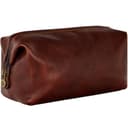
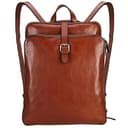
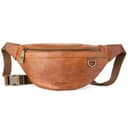
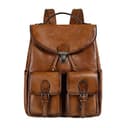
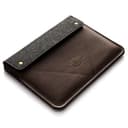
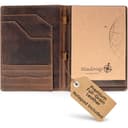
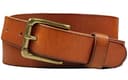
| What it is | Dopp kit | Convertible backpack | Belt bag | Backpack purse | 14 in laptop sleeve | 10 x 13 in padfolio | 30 mm belt |
|---|
| Grade as stated | Full-grain | Full-grain | Full-grain | Full-grain in bullets, “Genuine” in the title | Not published | Genuine leather | Full-grain, one piece |
|---|
| Tannage as stated | Vegetable-tanned, hand-dyed | Vegetable-tanned, hand-dyed | Vegetable-tanned | Vegetable-tanned (Italian hide) | Vegetable-tanned (Italian hide) | Vegetable-tanned | Vegetable-tanned |
|---|
| Thickness published | Not published | Not published | Not published | Not published | Not published | Not published | 8-9 oz (4 mm) |
|---|
| Hardware or lining named | YKK zippers; tear-resistant lining | Not published | YKK metal zippers; cotton lining | “Gunmetal gray”, no material | 100% wool felt lining; magnetic closure | Not published | Solid brass roller buckle, on snaps |
|---|
| Country of manufacture | Italy | Not published (hide is Italian) | Not published (designed in Berlin) | Not published (hide is Italian) | Not published (“European studio”) | Not published | Not published |
|---|
| Warranty stated | 12 months | 1 year | 1 year + 100-day returns | 2-year replacement | 2 years | Not published | Not published |
|---|
The striking row is country of manufacture: one “Italy” and six blanks, four of which are blanks dressed as answers. “Italian leather,” “designed in Berlin” and “a small European studio” are hide-origin and design claims, not manufacturing claims, and we file them as such every time. That is not nitpicking: a hide tanned in Tuscany and assembled somewhere else is a completely normal and perfectly good product, and the only dishonest version is the one that lets you assume otherwise. The label-reading is in what “Italian leather” actually means.
The second is thickness: six blanks and one belt. Thickness in ounces is the number that predicts stiffness and how slowly a strap or a fold gives up, and the only item here that publishes it is the cheapest one on the page — from a company that sells nothing but straps. Disclosure tracks specialism far more closely than it tracks price, which is a pattern worth carrying into every other category. How to read the figure is in leather weight and thickness.
Two listings we are keeping and correcting
Berliner Bags states a vegetable tannage and then calls the process “natural, chemical-free.” Vegetable tanning works by means of tannins, and tannins are chemicals; the phrase is marketing rather than chemistry. We keep the grade and tannage claims, which are specific and checkable, and print the chemical-free line as a con rather than quietly dropping it.
COOLCY’s title says “Genuine Leather” and two of its bullets say vegetable-tanned full-grain imported from Italy.Both claims live in the same listing, on the one spec that matters most. We record the contradiction instead of picking the flattering half, and the bag keeps its slot because the rest of its disclosure — a full pocket inventory, a published size and weight, a stated strap length, a two-year replacement promise — is better than anything near its price. A maker that cannot state its grade the same way twice is telling you how much weight the claim carries, and we would rather you heard it from us first.
The third note is not a contradiction but an absence worth naming. The Crazy Horse Craft sleeve is the most-disclosed hide on the page and the only one with no grade claim at all— a vegetable tannage, an Italian hide, a 100% wool felt lining, a two-year warranty and a proof-of-authenticity card, and never a word about which layer of the hide you are buying. At the top of this page’s price range, that is the omission to weigh.
Living with vegetable-tanned leather
Three habits decide whether a veg-tan piece ages well or just looks battered. First, let it mark early and stop worrying: the first scratches and water spots are the start of the patina, not damage, and trying to buff them out of an unfinished hide usually makes a bigger, paler patch. Second, dry it slowly and never with heat— a radiator or a hot car drives the oils out of a veg-tan hide and that is the one kind of damage no conditioner reverses. Third, condition sparingly and spot-test first: veg-tan drinks product and darkens dramatically, so a pale natural piece can go several shades browner from one generous application. The routine we recommend is in how to care for vegetable-tanned leather, the products that state what is in them are in best leather conditioners, and the frequency question is answered in how often to condition leather.
One more expectation to set: a veg-tan piece will smell of leather for months, which people love, and will transfer a little color onto a pale shirt or trouser in its first weeks, which people do not expect. Both are normal for an unfinished hide and both fade. Why they happen is in why leather smells.
Which one for you
If you want the best-disclosed veg-tan item we have found:Time Resistance. Grade, tannage and country of manufacture together, YKK zippers, a named lining and a stated 12-month warranty. It is a single undivided compartment with no hanging hook, it is the dearest item here, and an unfinished hide is a slightly odd choice for a bathroom bag — which is exactly why the listing’s honesty matters.
If you want a bag that carries a laptop: Banuce. Stated full-grain Italian hide, vegetable-tanned and hand-dyed, a stated 14-inch laptop compartment, a published footprint and weight, a rear luggage strap and a one-year warranty. It is 2.6 lb before you load it and only 3.54 in deep, so a laptop plus lunch is optimistic.
If you want the smallest thing you will use every day: Berliner Bags Turin. Full-grain and vegetable-tanned with YKK metal zippers and a named cotton lining, at a published 2.36 in depth that sits close to the body. Two zipped pockets only, and the chemical-free claim should be ignored.
If you want the most published facts for the money:COOLCY. A full pocket inventory, a published size, weight and strap length, a stated 13-inch MacBook fit and a two-year replacement promise — with a title and a bullet set that disagree about the grade, and a 12.8 in height that is tight for the laptop it claims.
If it is for a laptop and nothing else:Crazy Horse Craft. A stated vegetable tannage, an Italian hide, a wool felt lining and the longest warranty here, in a model-specific fit. No grade claim at the highest price on the page, and a magnetic closure rather than a sealed one. The format’s own ranking is best leather laptop sleeves.
If you carry documents to meetings:Wanderings padfolio. The only stated vegetable-tanned folio we have found, with an A4 pad included and a third-party Sedex SMETA audit named rather than a vague ethical claim. It says only “genuine leather” for the grade and has no closure of any kind. The rest of the field is on best leather portfolios.
If you want in cheaply: Belts.com. One-piece full-grain cowhide, vegetable-tanned, a published 8-9 oz thickness and a solid brass roller buckle on snaps so it can be swapped. At 4 mm in a 30 mm width it is a stiff, plain, casual strap with no styling, and it is sized by measuring a belt you already own. Every rule behind these picks is on our methodology page.