Why Does Leather Smell?
Leather has three distinct smells and they mean three different things. One is the tannage and it is a feature. One is mold and it is a problem. One is a processing residue and it is mostly a waiting game.
How this is funded: we earn a commission if you buy through our links, at no extra cost to you. It never changes which product we recommend, and we’ll tell you when we’d skip one. Full disclosure.
There are three leather smells and the useful first step is deciding which one you have. A warm, woody, faintly sweet smell is the tannage, and it is the one people mean when they say leather smells good — nothing is wrong. A damp, cellar-like mustiness is mold, and the smell is a living organism rather than the hide. A sharp fishy or ammonia-like smell is residue from processing, and on a new item it usually fades.
Only the first one is a feature. The second is a problem you have to fix properly. The third is mostly a waiting game with one exception worth returning an item over. Here is how to tell them apart and what each one needs.
The good smell: you are smelling the tannage
What people recognize as “the leather smell” is not the hide. A raw hide smells of nothing you would want in a bag. The smell comes from what was done to it: the tanning agents that converted the hide into leather, plus the oils and waxes worked in during finishing.
Vegetable tanning uses plant tannins, traditionally extracted from bark and wood, and those compounds are woody and slightly sweet — which is exactly the note people describe. Chrome tanning uses chromium salts instead, which do not smell that way at all, and heavy pigmented finishing seals most of what remains behind a polymer layer. That is the whole explanation for why a vegetable-tanned wallet smells wonderful and a cheap coated handbag smells faintly of plastic: not quality in the abstract, just chemistry. The two tannages are compared in full in vegetable-tanned vs. chrome-tanned leather, and the process itself is in how leather is made.
Two practical consequences. First, smell is a rough tannage indicator, which is useful because tannage is almost never published on a listing — of the hundred-odd products in our registry, only a handful state one. Second, the good smell fades as the volatile compounds leave, more slowly on veg-tan than anything else, and no product restores it. Conditioners that advertise a leather scent are adding fragrance, not returning tannin.
The musty smell: it is mold, and it is alive
A basement, damp-cloth, old-book smell is mold or mildew, and the distinction from the other two smells matters because this one is not an odor sitting on the surface. Leather is an organic, moisture-holding material: put it away slightly damp, seal it in a plastic bag, or store it somewhere with still air and humidity above roughly 65 percent, and you have built an incubator. Conservation guidance from both the Canadian Conservation Institute and the US National Park Service is consistent on the humidity point, and it is the single most actionable number in leather storage.
You cannot deodorize this. Spraying scent on a musty bag leaves you with a scented musty bag and a growth that continues to eat the finish and, eventually, the hide. The order that works is: get the growth off the surface mechanically and with a leather cleaner, get the item properly dry in moving air, and then fix the storage conditions that caused it. The detailed procedure, including what not to use, is in how to remove mold from leather.
Three things that cause this more than anything else: a bag put away after rain without drying — see how to dry a wet leather bag — a dust bag made of plastic rather than cotton, and long-term storage in a basement or an unheated garage. Breathable cover, moving air, stable room: that is the entire preventative, and it is covered in how to store leather bags.
The fishy smell: residue, not fakery
This is the one that generates the most alarm and the most misinformation. A new, often inexpensive leather item that smells distinctly of fish, or of ammonia, is not evidence that the item is synthetic. It is residue from the stage of tanning that keeps leather supple: fats and oils are worked into the hide after tanning, and marine-derived oils have been used for that purpose for a very long time. Some finishing compounds also carry an amine note that the nose reads as fish.
On most items this fades substantially within two to six weeks of real airing. Real airing means open, unstuffed, out of direct sun, in a room with moving air — not shut in its dust bag in a wardrobe, which is where most people put a new bag they do not like the smell of, and which is why they conclude it never improved.
Two cases where it is not just a waiting game. If the smell gets noticeably stronger when the leather warms up — in a car, in sunlight — or if it is still strong after a couple of months of proper airing, the item was finished badly and no amount of patience fixes that. Return it. And if the smell is solvent-sharp rather than fishy, with a plastic edge, consider whether you are actually holding coated synthetic material; the reliable tests are structural rather than olfactory, and they are in how to tell real leather from fake and PU vs. vegan vs. genuine leather.
What to do, by smell
Woody and sweet: nothing. Enjoy it, and know that it will fade over years and that no product brings it back.
Fishy or chemical on a new item:air it properly for two to six weeks before judging it. Open, unstuffed, shaded, moving air. Do not condition it during this period — adding oils to a surface you are trying to let off-gas is working against yourself.
Musty:treat it as mold. Clean the surface, dry it slowly in moving air, then change the storage. Do not condition until it is completely dry and clean, because conditioning over a damp, contaminated surface seals the problem in — the order of operations is the argument of leather cleaner vs. conditioner.
Smoke, food or perfume:absorbed odor rather than any of the three above. Airing is most of the answer, with a gentle surface clean. The thing not to do is pack the item with baking soda in direct contact with the leather, which draws moisture out of the hide unevenly and can leave it stiff and patchy — put the absorbent in a separate open container nearby instead, and read how to soften stiff leather if you have already done it.
What the musty case actually needs
Two of these are for the clean-then-dry sequence that a mold smell requires; the third is the conditioning step that comes afterwards, once the hide is dry and clean. We have not handled any of them - every claim is read from the live listing.
- Best first step
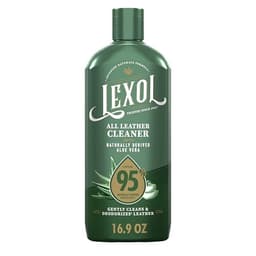
Lexol All Leather Cleaner (with Aloe)
Type: Cleaner
A mold smell needs the growth taken off the surface before anything else happens, and that is a cleaning job, not a conditioning one. This is a naturally derived aloe-based cleaner for lifting dirt and body oils without harsh solvents. The listing states it is not for suede or nubuck, which matters here because napped leather cannot be wiped the same way.
$14.99 · View on AmazonPrice as of October 20, 2026. #ad How we’re funded
- Best for doing both steps
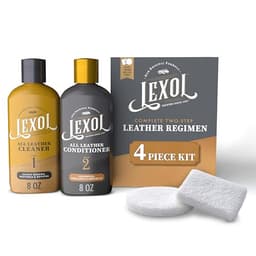
Lexol Leather Cleaner & Conditioner Kit
Type: Cleaner + conditioner kit
The two-bottle version, so you clean first and feed second in the correct order. Worth it if you are dealing with a musty item rather than a fresh one, because you will need the conditioning step a few days later once the hide is properly dry - and buying both at once stops you skipping the first.
$17.08 · View on AmazonPrice as of October 20, 2026. #ad How we’re funded
- Best for the drying aftermath
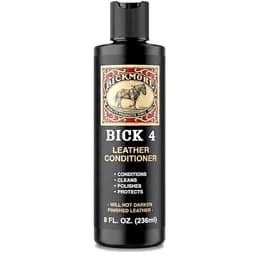
Bickmore Bick 4 Leather Conditioner & Cleaner (8 oz)
Type: Cleaner + conditioner
Mold removal and days of airing both pull moisture out of a hide, so the item will want conditioning afterwards. This is the pick when the leather is pale or vegetable-tanned, because its maker states it will not darken leather and that it is wax-free - a musty bag that comes back two shades darker is not much of a rescue.
A note on using smell as a quality test
Smell is genuinely informative and genuinely unreliable, in that order. It tells you something real about tannage and finishing, which is useful precisely because tannage is almost never on a listing. But it cannot tell you a grade, which is the spec that actually predicts how a piece ages — a split hide and a full-grain hide from the same tannery smell the same. For that you need the listing to say so, and our standing position is that a grade is only ever asserted when the listing states it. The reasoning is on our methodology page, and the grade vocabulary is in types of leather.
How we know this. Veg Tan Club is written by an enthusiast, not a master leatherworker or a test lab. We compile each product’s published specs — grade, tannage, hardware — and reason from there. We say plainly when a listing doesn’t state a grade, and we haven’t physically handled every item we compare.
Frequently asked questions
Why does leather smell so good?
Because you are smelling the tanning agents, not the hide. Vegetable-tanned leather is cured with plant tannins - traditionally bark and wood extracts - and what people recognize as 'the leather smell' is largely those woody, slightly sweet tannin compounds plus the oils and waxes used in finishing. It is strongest on vegetable-tanned and oil-finished leather and much fainter on chrome-tanned, heavily pigmented leather, which is why a cheap coated bag often smells of almost nothing at all.
Why does my leather bag smell musty?
Almost certainly mold or mildew, which means it was stored damp or in still air. Leather is an organic material and holds moisture, so a bag put away slightly wet, sealed in a plastic bag, or kept in a basement will grow mold on and inside the hide. The smell is the organism, not the leather. You have to kill and remove the growth and then dry the item slowly in moving air - masking the smell leaves the mold alive.
Why does my leather smell like fish?
It is a residue from processing rather than a sign of fake leather. Fish oils and other marine-derived oils have long been used in the fatliquoring stage that keeps leather supple, and some cheaper finishing compounds carry a strong amine note that reads as fish or ammonia. On an inexpensive new item it usually fades over several weeks of airing. If it does not fade, or it gets stronger when the leather warms up, that is a quality signal worth returning the item over.
How do you get a smell out of leather?
Air it first, and for longer than you think - open, unstuffed, out of the sun, in moving air, for days rather than hours. If it is musty, clean the surface with a leather cleaner before you air it, because you are removing an organism rather than an odor. Do not spray perfume or fabric deodorizer on leather, do not seal it in a bag with baking soda touching the hide, and never try to bake the smell out with heat.
Does real leather smell different from fake leather?
Usually, but smell is not a reliable test on its own. Real vegetable-tanned leather smells woody and faintly sweet; synthetic leather tends to smell chemical or of nothing much, because it is a polymer coating on a fabric backing. The complication is that real leather can also smell chemical if it was chrome-tanned and heavily finished, and some synthetics are scented deliberately to smell like leather. Use the structural tests instead - cut edge, pores, flex behavior.
Will the new leather smell go away?
The good one fades slowly and never entirely on vegetable-tanned leather - it is coming from the tannins in the hide itself. A sharp chemical or fishy new-item smell is different: that is residual processing compounds on the surface and in the finish, and on most items it drops off noticeably within two to six weeks of airing in a ventilated room. Keeping the item shut in a box or a dust bag during that period is what makes people think it never faded.
Sources
- Wikipedia — Tanning (leather) — The tanning process, vegetable vs. chrome tannage, and why ~90% of leather is chrome-tanned (accessed July 18, 2026)
- Encyclopaedia Britannica — Tanning — Britannica on the three main tanning agents: vegetable tannin, chromium salts, and oils (accessed July 18, 2026)
- Wikipedia — Leather — Overview of leather, grain layers and the full-grain / top-grain / split hierarchy (accessed July 18, 2026)
- Wikipedia — Conservation and restoration of leather objects — How the field cleans and stabilizes leather; why oils oxidize and can harden leather over time (accessed July 18, 2026)
- Canadian Conservation Institute — Caring for leather, skin and fur — CCI preventive-conservation guidance on cleaning, dressing and storing leather (accessed July 18, 2026)
- U.S. National Park Service — Curatorial Care of Objects Made From Leather and Skin — NPS museum-handbook guidance on cleaning, handling and storing leather; humidity below ~65% (accessed July 18, 2026)
Keep reading
How to remove mold from leather
The step-by-step for the musty case, which is the one with an organism behind it.
Read the how-toVegetable-tanned vs. chrome-tanned leather
Why the two tannages smell completely different, and what else follows from the choice.
Read the comparisonHow to dry a wet leather bag
Getting this wrong is how a damp bag becomes a musty one. Slowly, in moving air.
Read the how-toHow to tell real leather from fake
The structural tests that work, for when smell has told you something ambiguous.
Read the guideHow to clean a leather bag
The cleaning step that has to come before any airing routine on a musty item.
Read the how-toHow to store leather bags
Storage is where mustiness is created. Breathable covers, moving air, never plastic.
Read the guide