Vegetable-Tanned vs. Full-Grain Leather
These two terms get compared as if you have to pick one. You don't — one describes how the hide was tanned, the other describes which layer you got.
How this is funded: we earn a commission if you buy through our links, at no extra cost to you. It never changes which product we recommend, and we’ll tell you when we’d skip one. Full disclosure.
Vegetable-tanned and full-grain are not two options to choose between. Vegetable tanning is a process — preserving a hide with plant tannins instead of chromium salts. Full-grain is a grade — keeping the hide’s intact outer layer instead of sanding or splitting it. A single piece of leather can be both, one, or neither. The reason the comparison feels like a versus question is that both words are used as shorthand for “the good stuff,” and they are shouted at you from the same listings.
Two different questions about the same hide
Every finished piece of leather has been through two separate decisions, and each term answers only one of them.
| Vegetable-tanned | Full-grain | |
|---|---|---|
| What it describes | How the hide was preserved | Which layer of the hide you got |
| The decision it reflects | Tannery chemistry | How the hide was cut and finished |
| What it predicts | Feel, smell, stiffness, how it patinas | Strength and how long it survives use |
| The alternative | Chrome-tanned (the industry default) | Top-grain, split, 'genuine', bonded |
| Can it be the other too? | Yes — veg-tan splits exist | Yes — most full-grain is chrome-tanned |
Read that table once and the versus framing dissolves. Asking whether vegetable-tanned is better than full-grain is like asking whether oak is better than quarter-sawn: one names the material, the other names how it was cut, and a good board is usually both.
What “vegetable-tanned” actually promises
Tanning is what stops a raw hide from rotting, and there are two dominant ways to do it. Vegetable tanning uses tannins drawn from bark, wood and leaves, worked into the hide slowly — historically over weeks in a series of pits. Chrome tanning uses chromium salts and takes about a day. The overwhelming majority of the world’s leather is chrome-tanned, for exactly that reason.
The practical differences you can feel:
- Firmness. Veg-tan comes off the tannery stiffer and denser. It holds a shape, takes a burnished edge, and is what a belt, holster or tooled piece is usually made from.
- Color change. Veg-tan starts pale and darkens dramatically with light, oils from your hands and use. That deep, uneven darkening is what people mean by patina, and it is much more pronounced in veg-tan than in a pigmented chrome-tanned hide.
- Smell. The warm, sweet, slightly woody smell people associate with “real leather” is largely a vegetable-tanning smell.
- Water sensitivity. The trade-off. Veg-tan spots and stains more readily from water than a finished chrome-tanned hide, and it can stiffen badly if it soaks and dries fast.
What vegetable tanning does not tell you is which part of the hide is in your hands. A thin split from the bottom of a hide can be vegetable-tanned. It will still be a split.
What “full-grain” actually promises
A hide has a structure. The outermost layer — the grain — is where the fibers are tightest, most interwoven and strongest, because that is the part that had to survive being an animal’s exterior. Full-grain means that layer is intact: nothing sanded off to hide scars or even out the surface.
That is why grade, not tannage, is the better predictor of lifespan. Sand the grain away to make the surface uniform and you get top-grain, which is still real and still decent. Slice the hide horizontally and use the fibrous lower layer and you get a split, which is what a great deal of “genuine leather” is. Grind leather scrap and glue it to a backing and you get bonded leather, which fails fastest of all.
What full-grain does not tell you is how the hide was tanned. Most full-grain leather sold today is chrome-tanned: strong, supple, water-tolerant, and perfectly good. It just will not develop the same dramatic patina a veg-tan piece does.
The four combinations, and who buys each
- Vegetable-tanned full-grain. The combination the buy-it-for-life crowd is chasing: the strongest layer, tanned so it firms up and darkens for years. Expensive to produce, common in small-workshop belts, wallets and satchels, rare in mass-market listings.
- Chrome-tanned full-grain. The workhorse. Nearly all serious full-grain bags and briefcases sold at scale are here. Tough, softer from day one, more forgiving of rain, and it patinas subtly rather than dramatically.
- Vegetable-tanned split or “genuine.” Real leather, real tannage, wrong layer. Often sold on the strength of the words “vegetable-tanned” alone. It will still thin and crease like any split.
- Chrome-tanned split, coated. The bulk of cheap leather goods. Neither term applies, which is exactly why neither appears on the listing.
Which one to shop on
Here is the practical part, and it is not a tie. Grade is the term you can actually shop on; tannage usually is not. Sellers state full-grain when they have it, because it justifies the price. Almost none state a tannage, because nothing requires it and most buyers do not ask. The FTC’s leather guides are concerned with composition claims — not passing imitation off as leather, disclosing a backing material — not with whether a maker tells you which tanning agent it used.
So the workable rule is: buy on stated grade, and treat a stated tannage as a bonus that tells you how the piece will feel and age. If a listing states full-grain, you know something meaningful about how long it will last. If it also states vegetable-tanned, you additionally know it will start firm, darken hard and want keeping out of the rain. If it states neither, the silence is the answer.
One more caution: “veg-tan” has become a marketing word in its own right. Seeing it on a listing that will not commit to a grade is a warning, not a reassurance — it is the more impressive-sounding term being used to skip the more important one.
What that looks like when you shop
Two pieces that pass the test above — the listing commits to a grade in writing. Neither states a tannage, which is exactly the point of this page: grade is the spec you can hold a seller to.
- Stated full-grain, bag
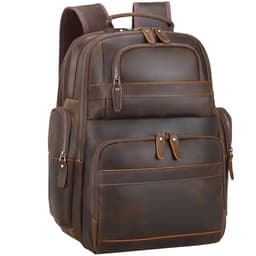
TIDING Full Grain Leather Backpack (15.6")
Leather grade: Full-grain
The listing states full-grain outright, so you know which layer of the hide you are buying. It says nothing about tannage — as almost none do — so expect a subtler patina than a veg-tan piece.
$169.99 · View on AmazonPrice as of October 20, 2026. #ad How we’re funded
- Stated full-grain, wallet
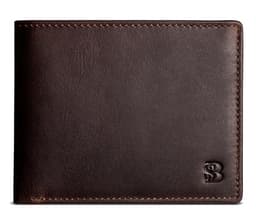
SERMAN BRANDS Full Grain Leather RFID Bifold
Leather grade: Full-grain
A wallet is the cheapest way to find out whether you actually like how full-grain ages in your pocket. Again: grade stated, tannage not published.
$34.95 · View on AmazonPrice as of October 20, 2026. #ad How we’re funded
Bottom line
Vegetable-tanned and full-grain are not rivals. Tannage tells you how a hide was preserved and therefore how it will feel, smell and darken; grade tells you which layer of the hide you got and therefore how long it will survive. The best leather goods are both, most good ones are full-grain and chrome-tanned, and the ones to avoid are the listings that name a tannage precisely so they never have to name a grade. If you only remember one thing: check for the grade first, then see whether the tannage is stated at all. For the full map of grades and where each one sits, start with types of leather.
How we know this. Veg Tan Club is written by an enthusiast, not a master leatherworker or a test lab. We compile each product’s published specs — grade, tannage, hardware — and reason from there. We say plainly when a listing doesn’t state a grade, and we haven’t physically handled every item we compare.
Frequently asked questions
Is vegetable-tanned leather the same as full-grain leather?
No. Vegetable-tanned describes the tanning process — hides preserved with plant tannins rather than chromium salts. Full-grain describes which layer of the hide you got — the intact outer grain, nothing sanded off. A hide can be vegetable-tanned full-grain, chrome-tanned full-grain, vegetable-tanned split, or any other combination.
Which is better, vegetable-tanned or full-grain?
They answer different questions, so the comparison doesn't resolve cleanly. If you want to know how long a piece will survive daily use, grade matters more, and full-grain is the top of that ladder. If you want to know how it will feel, smell and darken over time, tannage matters more, and vegetable tanning is what produces that firm hand and deep patina.
Can leather be both vegetable-tanned and full-grain?
Yes, and that combination is what most 'buy it for life' leather goods are aiming at: the hide's strongest layer, preserved with plant tannins so it firms up and darkens rather than staying soft and static. It is also the most expensive combination to produce, which is why it is far more common in small-workshop goods than in mass-market listings.
Why don't Amazon listings say which tannage they used?
Because there is no rule requiring it and no consumer pressure forcing it. FTC leather labeling guidance covers misrepresenting composition — passing off imitation as leather, hiding a backing material — not disclosing tannage. Most listings state a grade at best, so tannage is usually something you can only find out from makers who volunteer it.
Does vegetable-tanned leather last longer than chrome-tanned?
Not automatically. Vegetable-tanned leather is typically firmer and thicker, which helps in items like belts and holsters, but it is also more sensitive to water and heat. Chrome-tanned leather is softer and more water-tolerant. Longevity tracks the grade and the construction far more reliably than it tracks the tannage.
Sources
- Wikipedia — Leather — Overview of leather, grain layers and the full-grain / top-grain / split hierarchy (accessed July 18, 2026)
- Wikipedia — Tanning (leather) — The tanning process, vegetable vs. chrome tannage, and why ~90% of leather is chrome-tanned (accessed July 18, 2026)
- Encyclopaedia Britannica — Tanning — Britannica on the three main tanning agents: vegetable tannin, chromium salts, and oils (accessed July 18, 2026)
- 16 CFR Part 24 — FTC Guides for Select Leather and Imitation Leather Products — The FTC guides on leather labeling: unqualified 'leather' claims, imitation-leather disclosure, backing material and misuse of trade names (accessed August 19, 2026)
Keep reading
What is vegetable-tanned leather?
The tannage this site is named after — what plant tannins do to a hide and why the result firms up and patinas.
Read the explainerVegetable-tanned vs. chrome-tanned leather
The tannage-versus-tannage comparison — feel, aging, water tolerance and cost.
Compare the tannagesFull-grain vs. top-grain leather
The grade-versus-grade comparison — which layer of the hide you actually got, and how each one ages.
Compare the gradesIs full-grain leather worth it?
The cost-per-year math on paying up for the hide's top layer instead of replacing cheaper leather.
See the math