How to Restore Faded Leather
Before you buy anything to put color back, find out whether the color is actually gone. Most 'faded' bags are dirty, dry or both, and the fix for those is a cleaner and a conditioner.
How this is funded: we earn a commission if you buy through our links, at no extra cost to you. It never changes which product we recommend, and we’ll tell you when we’d skip one. Full disclosure.
To restore faded leather, first work out what “faded” actually is. Most leather that looks faded is dirty or dry rather than missing color, and it comes back with a cleaner and a conditioner. Only when the dye itself has been lost to sunlight or abrasion do you need a recoloring balm — and a worn-through surface coating is a repair, not a restoration. That order matters, because recoloring leather that only needed conditioning is the most common way to make a good bag look painted.
First, work out what kind of “faded” you have
Four quite different problems look the same from across a room: a pale, tired surface that isn’t the color it used to be. Up close, and with a bit of daylight, they are usually easy to tell apart.
| What it probably is | What you see | What fixes it |
|---|---|---|
| Dry leather | Dull, pale and matte all over; feels stiff, rough or papery; hidden areas look much the same | Clean, then condition |
| Dirt and grime | A grayish or muddy cast, worst on handles, corners and the base; a damp white cloth comes away dirty | Clean, then condition |
| Dye lost to sun or wear | Paler on the side that faced the light, or only where it rubs; the hidden parts are still the original color | Clean, condition, then recolor |
| A worn-through coating | Patches where a surface layer is gone and something lighter or fuzzier shows through; edges may lift or flake | A repair, not a recolor |
The single most useful test is to look where the light never reached. Lift a flap, turn over a strap, open a pocket, check the back of a belt. If those hidden areas are the same color as the rest, the color hasn’t gone anywhere: the surface is dry, dirty or both. If they are noticeably darker and richer than the exposed faces, the exposed leather has lost dye.
On natural vegetable-tanned leather the test usually runs the other way: the exposed surfaces are darker than the hidden ones, because light and handling darken the hide. That is patina, not fading, and it needs a different approach, covered below.
Why leather loses color in the first place
The Canadian Conservation Institute (CCI) is plain about the main culprit in its guidance on caring for leather. Dyed and decorative elements are often the most susceptible to fading from light and ultraviolet, and over the long term high light levels, especially UV, can photochemically degrade the collagen the leather itself is made of. Its recommendation is to eliminate UV and protect colored materials from light.
Two things follow from that. First, a bag that has sat in a sunny window or on a car’s back shelf has had its color and its fibers exposed to the same thing, so restoring the color is cosmetic; it does not undo any weakening underneath. Second, how exposed a leather is depends on its finish. Aniline-dyed leathers with little or no topcoat show sun fading more readily than pigmented, coated ones, which is the same trade-off laid out for nappa leather’s finishes.
Wear is the other cause: surface dye rubs thin at corners, edges and handle wraps long before the leather underneath is damaged, so that kind of fading is local and easy to spot.
If it’s dry: clean, condition, and look again
This is the most common case by some distance. Leather loses the oils that keep it supple through age, heat and dry air, and dry leather looks paler, flatter and more matte than it really is. Nothing is missing except moisture.
Clean it first. A cleaner lifts the dirt and body oil that would otherwise be sealed in under conditioner — and on a faded-looking bag, grime is often half the problem. Then let it dry fully and condition the whole piece thinly and evenly, following how to condition leather. Leave it overnight and judge it the next day in daylight. If the depth has come back, you are done.
Which conditioner matters more than usual here. On a dull, dry bag, some darkening is often exactly what you want back; on a tan or cognac piece that you want supple without shifting its shade, a formula marketed as non-darkening is the safer start. The trade-offs between three common choices are in Leather Honey vs. Bick 4 vs. Lexol, and how often to condition leather covers why more is not better.
If it’s dirty: a proper clean comes first
Grime dulls leather gradually, and handles, corners and the base go gray first. A leather cleaner on a soft, barely damp cloth, worked over whole panels rather than single spots, will often do more for a faded-looking bag than any color product. The full method for bags is in how to clean a leather bag, and how to clean a leather wallet covers the smaller job.
Keep water to a minimum. The CCI notes that most leathers are damaged by direct contact with water, so soaking or rinsing a bag to “wash out” the dullness trades a cosmetic problem for a structural one. Household cleaners, detergents and alcohol wipes are out too; they can strip and stain leather. If you don’t already own a leather cleaner, the options are compared in best leather cleaners.
If the dye is actually gone: recolor, carefully
Once a clean and a condition haven’t brought the color back, and the hidden-area test says the exposed faces really are lighter, you are dealing with lost pigment. Conditioner cannot put that back. A recoloring balm can: it lays color back onto the surface across a whole panel, which is a different job from a filler kit that rebuilds missing material.
The rules are the same as any color work. Match the shade as closely as you can, test it somewhere hidden, and judge the test only when it is fully dry. Apply thin coats and feather each one into the surrounding leather, rather than covering the faded area in one heavy pass with a hard edge. For small pale spots at corners and edges, use very little product and blend outward; for scuffs and light scratches that have taken the color with them, how to get scratches out of leather covers what can be worked out before you add color at all.
Be realistic about the result. A recolored panel can look genuinely good, but it is a new layer of color on the surface rather than the original dye returning, and it may not age in exactly the same way as the leather around it.
If it’s a worn-through coating: that’s a repair
On corrected, coated or bonded leather, the color you see lives in a surface layer. When that layer wears through, the lighter patch underneath is not faded color — it is a different material showing. A recoloring balm can tint it, but it cannot fill a flaked edge or rebuild a missing surface, so the patch will still read as damage. That job needs the fill-and-color approach in how to fix peeling leather, and the kits built for it are sorted by damage type in best leather repair kits.
A special case: vegetable-tanned and aniline leather
Natural vegetable-tanned leather doesn’t fade in normal use; it darkens. Light, skin oils and handling deepen the tone over time, which is the patina people buy it for. So a lighter patch on a veg-tan bag is more often a water mark, a scuff, or simply a part that has seen less light and handling than the rest. The fix is usually to even out the panel and let the patina catch up, not to add color.
Veg-tan and aniline leathers also absorb whatever you put on them, because there is little or no finish on top. Water can leave a ring, oil darkens them, and a pigmented balm will change how the surface looks and ages. A veg-tan piece that was dyed a color can still lose some of that dye to strong sun like any dyed leather, and in that case recoloring is an option — but treat it as a last resort, test on the most hidden spot you can find, and use less than you think.
The restoration, step by step
- Clean the whole piece. A leather cleaner on a soft cloth, whole panels at a time, cloth barely damp. You are lifting grime so you can see the real color.
- Let it dry completely. Room temperature, out of the sun, away from heaters. Damp leather usually looks darker than it is, so don’t judge anything yet.
- Condition thinly, then reassess. Even coverage over the whole item, left for several hours or overnight. Look again in daylight. Most restorations end here.
- Spot-test the recolor. Only if color is still missing. Under a flap, on the back of a strap, inside a gusset. Wait for it to dry before you decide.
- Apply thin coats and feather them. A small amount on a soft cloth, worked in and blended outward. Several thin coats beat one heavy one every time.
- Buff and let it cure. A light buff with a clean cloth to lift residue, then leave it unused for as long as the product’s instructions ask.
- Stop it happening again. Out of direct sun, away from heat, in a breathable bag.
What to use, in the order you use it
Most faded leather needs only the first two or three of these. The recoloring balm comes last for a reason.
- Step one: clean
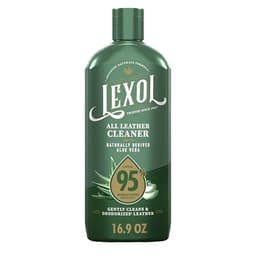
Lexol All Leather Cleaner (with Aloe)
Type: Cleaner
Per the maker, a pH-balanced cleaner free of silicones, alcohols and waxes that leaves leather prepared for conditioning, so you judge the real color rather than the grime. It is a cleaner only, and not for suede or nubuck.
$14.99 · View on AmazonPrice as of September 20, 2026. #ad How we’re funded
- Dry leather, depth wanted
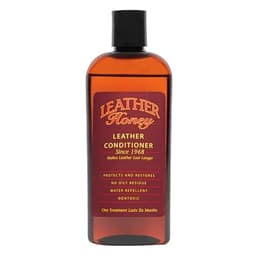
Leather Honey Leather Conditioner (8 oz)
Type: Conditioner
For leather that looks pale because it is thirsty. It can darken very light or untreated leather, which on a dull, dry bag is often the point, but spot-test first. The maker says to apply a thin layer and let it dry at least two hours, preferably overnight.
- Dry leather, keep the shade
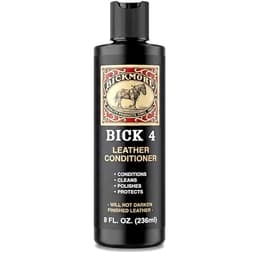
Bickmore Bick 4 Leather Conditioner & Cleaner (8 oz)
Type: Cleaner + conditioner
The maker states it will not darken leather, which makes it the safer choice on tan or light pieces you want supple without a color shift. It is for smooth finished leather, not suede or rough-out, and the maker still says to check colorfastness somewhere hidden first.
- Color actually lost
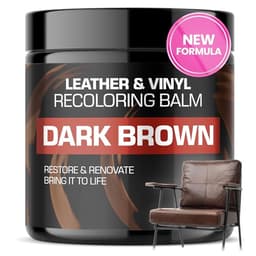
FORTIVO Leather Recoloring Balm
Type: Recoloring balm
Only once cleaning and conditioning haven't brought the color back. A balm that re-pigments a faded panel and conditions as it recolors. It tints rather than fills, and the color range is limited, so check the match on a hidden spot.
$24.89 · View on AmazonPrice as of September 20, 2026. #ad How we’re funded
What not to do
- Don’t recolor first. Color over dirt won’t bond evenly, and color over leather that only needed conditioning leaves it looking coated.
- Don’t reach for kitchen oils. Conservation literature notes that oils can oxidize and harden leather over time, so a heavy dose that darkens a faded bag today can leave it stiffer later. See can you use olive oil on leather.
- Don’t soak it or dry it with heat. Water damages most leathers, and heat or direct sun drives out the oils you are trying to restore.
- Don’t treat one spot on a panel that faded all over. You will get a patch that never blends. Work the whole panel, or leave it alone.
- Don’t use these products on suede or nubuck. The cleaner and both conditioners above are each described as not for suede, and napped leathers need a different routine entirely.
Keeping it from fading again
Prevention is mostly about light. Following the CCI’s advice to protect colored materials from light and UV, keep leather out of direct sun when you aren’t using it: not on a windowsill, not on the back seat of a parked car, not on a shelf that catches the afternoon light. Store bags in a breathable dust bag rather than plastic, and in a room with moderate humidity — the National Park Service’s guidance for leather points to keeping relative humidity below roughly 65 percent. The full routine is in how to store leather bags.
After that, the ordinary habits do the rest: wipe off dirt before it builds up, condition when the leather looks dry rather than on a schedule, and rotate how a bag sits so one face doesn’t take all the light.
Sofas, car seats, jackets and shoes
The diagnosis above applies to any leather item: dirty, dry, genuinely faded, or a coating wearing through. What changes is the product choice and the stakes. Large items like furniture and car interiors often come with their own manufacturer care instructions, and those should come first. This guide is written for bags, wallets, belts and briefcases.
Bottom line
Faded leather is usually dry or dirty leather, and it comes back with a clean, a thin coat of conditioner and a night to absorb. Recolor only when the hidden-area test shows the dye is genuinely gone, and then in thin, tested, feathered coats. If the pale patch is a coating wearing through, it is a repair job, and if the leather is natural veg-tan, the lighter part is probably the one that hasn’t caught up yet. Start with how to condition leather — for most faded bags, that is the whole restoration.
How we know this. Veg Tan Club is written by an enthusiast, not a master leatherworker or a test lab. We compile each product’s published specs — grade, tannage, hardware — and reason from there. We say plainly when a listing doesn’t state a grade, and we haven’t physically handled every item we compare.
Frequently asked questions
Can faded leather be restored?
Usually, yes, but how depends on why it looks faded. Leather that is dry or dirty recovers with cleaning and conditioning alone. Color genuinely lost to sun or abrasion needs a recoloring balm to put pigment back. A worn-through coating on corrected or bonded leather is surface damage, which makes it a repair job rather than a restoration.
How do you restore a faded leather bag at home?
Clean the whole bag with a leather cleaner, let it dry completely, then condition it thinly and look again in daylight the next day. If the color has come back, you are done. If it is still pale in places, spot-test a recoloring balm somewhere hidden and apply it in thin coats, feathered into the surrounding leather.
Does conditioner restore faded leather?
It restores leather that looks faded because it is dry, which is more common than true color loss. Dry leather looks paler and flatter than it really is, and conditioning brings the depth back. Conditioner cannot replace dye that sunlight has broken down, so if the color stays washed out once the conditioner has fully absorbed, the problem is pigment, not moisture.
Why does leather fade in the sun?
Light, and ultraviolet in particular, breaks down the dyes in leather over time; conservation guidance singles out dyed and decorative elements as often the most susceptible. Over the long term, strong light and UV can also degrade the collagen the leather is made of, which is why sun damage is more than a color problem.
Will a recoloring balm work on vegetable-tanned leather?
Test very carefully first. Natural veg-tan normally darkens with light and handling rather than fading, so a lighter patch is more often a scuff, a water mark or uneven patina than lost dye. A pigmented balm sits on the surface and changes how unfinished leather looks and ages, so on veg-tan it is a last resort.
Can I use this method on a faded sofa, car seat or jacket?
The same diagnosis applies to any leather: work out whether it is dirty, dry, genuinely sun-faded or losing a coating before you buy anything. Large items like sofas and car interiors often come with their own manufacturer care instructions, and those come first. This guide is written for bags, wallets, belts and briefcases; the thinking carries over, the product choices may not.
Sources
- Canadian Conservation Institute — Caring for leather, skin and fur — CCI preventive-conservation guidance on cleaning, dressing and storing leather (accessed July 18, 2026)
- U.S. National Park Service — Curatorial Care of Objects Made From Leather and Skin — NPS museum-handbook guidance on cleaning, handling and storing leather; humidity below ~65% (accessed July 18, 2026)
- Wikipedia — Conservation and restoration of leather objects — How the field cleans and stabilizes leather; why oils oxidize and can harden leather over time (accessed July 18, 2026)
- Lexol — All Leather Cleaner (maker's product page) — Maker's claims: pH-balanced formula that matches the natural pH of leather; free of silicones, alcohols and waxes; leaves leather prepared for conditioning (accessed September 18, 2026)
- Leather Honey — Leather Conditioner (maker's product page) — Maker's claims: free of silicone, solvents, fragrances and animal-derived ingredients; for every leather color, not for suede, faux leather or vinyl; apply a quarter-size drop in a thin layer; dry at least two hours, preferably overnight; one treatment protects six months or more; made in the USA since 1968 (accessed September 18, 2026)
- Bickmore — Bick 4 Leather Conditioner (maker's product page) — Maker's claims: will NOT darken leather; completely wax-free; for smooth finished leather; not for suede, rough-out, distressed or napped leathers; always check colorfastness in a hidden area first; made in the USA (accessed September 18, 2026)
Keep reading
How to condition leather
The step that fixes most faded-looking leather on its own, done properly.
Read the routineHow to fix peeling leather
When the pale patch is a coating wearing through, not color fading, this is the guide you need.
Read the guideLeather Honey vs. Bick 4 vs. Lexol
Three conditioners compared on what each maker claims, including which one says it won't darken.
Compare the threeBest leather repair kits
Fillers for tears and holes, a balm for faded color, and how to tell which job you have.
See the kitsHow to store leather bags
Keeping a restored bag out of the light that faded it, and away from the damp that causes worse.
Read the guideHow to clean a leather wallet
The gentle clean that brings a dull wallet back before you reach for anything stronger.
Read the guide