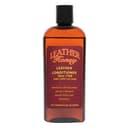
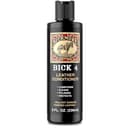
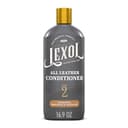
The three, side by side
Every cell below is either something the maker states on its own product page, a spec from the product listing, or “Not stated by the maker.” That last one is a finding, not a gap: it marks the places where you will be relying on your own spot-test instead of the label. It means the product page we read doesn’t say it — the bottle itself may carry more directions, so read those too.
| | Leather Honey | Bick 4 | Lexol |
|---|
| What the maker says about color change | Not stated by the maker (the page says it is for every leather color) | Will not darken leather | Not stated by the maker |
|---|
| Wax | Not stated by the maker | Completely wax-free | Not stated by the maker |
|---|
| Silicone | Free of silicone | Not stated by the maker | No harmful silicones |
|---|
| Other formula claims | Free of solvents, fragrances and animal-derived ingredients | Cleans and conditions in one step (listing) | Liquid that penetrates leather pores; no greasy residue |
|---|
| What the maker says it is for | Every leather color | Smooth finished leather | Auto, footwear, furniture, handbags, sports gear and luggage |
|---|
| Leathers the maker excludes | Suede, faux leather and vinyl | Suede, rough-out, distressed and napped leathers | Not stated by the maker |
|---|
| Spot-test instruction | Not stated by the maker | Always check colorfastness in a hidden area first | Not stated by the maker |
|---|
| How to apply and dry | A quarter-size drop in a thin layer; dry at least two hours, preferably overnight | Not stated by the maker | Not stated by the maker |
|---|
| Stated re-application interval | One treatment protects six months or more | Not stated by the maker | Use every 6 months |
|---|
| Made in | USA, since 1968 | USA | Not stated by the maker |
|---|
| Type (listing) | Conditioner | Cleaner + conditioner | Conditioner |
|---|
| Form and size (listing) | Liquid, 8 oz | Liquid, 8 oz | Liquid; size not published |
|---|
Read the table from the top. The color row decides most purchases, because only one maker makes a color promise at all. The exclusion row decides most of the rest: Bickmore rules out rough-out, distressed and napped leathers as well as suede, Leather Honey rules out faux leather and vinyl, and Lexol’s silence on the subject is not permission. The interval row, by contrast, is too close to choose on.
Choose Leather Honey if…
- You want one bottle for most of what you own. The listing covers bags, boots, furniture and auto leather, and the maker says it is for every leather color. If your shelf holds a work bag, a pair of boots and a belt, this is the one-purchase answer.
- You care what is not in it. Of the three, Leather Honey makes the longest list of exclusions from its own formula: no silicone, no solvents, no fragrances and no animal-derived ingredients, per the maker.
- You are happy to wait. The maker says to let it dry at least two hours and preferably overnight, and our product notes flag that it needs a few hours to absorb. Plan it for an evening, not ten minutes before you leave the house.
- You want to use very little. The maker’s direction is a quarter-size drop in a thin layer, and our product notes put it at a few drops for a whole bag. That restraint is exactly what our conditioning routine recommends anyway.
Skip it if the leather is pale and darkening would be a dealbreaker. The maker’s page does not say whether it changes color, and our product notes flag it as able to darken very light or untreated leather, so a hidden-spot test — judged only once it has fully dried — is the minimum. Skip it on suede, faux leather and vinyl, which the maker excludes. And note that it sits a price tier above the other two, which matters more on a sofa than on a wallet.
Choose Bick 4 if…
- The leather is pale, tan, cognac or natural. This is the reason Bick 4 exists on this page. Bickmore states in writing that it will not darken leather, and neither of the other two makers says anything about color.
- You will still spot-test. The same maker tells you to always check colorfastness in a hidden area first, and our product notes put it plainly: “won’t darken” is not “never darkens.” The claim tells you what the formula is designed to do, not what every dye on every hide will do.
- The surface is smooth and finished. That is the scope the maker gives. On unfinished, pale vegetable-tanned leather — where our veg-tan care guide reaches for a non-darkening formula first — you are working outside that stated scope, so the hidden-area test is not optional.
- You want no wax. Bickmore states it is completely wax-free; it is the only one of the three to make a wax claim either way.
- The job is light maintenance. The listing describes it as cleaning and conditioning in one step, which suits a quick pass on an item that is dusty rather than grimy.
Skip it if the leather is suede, rough-out, distressed or napped — the maker excludes all four. And if a piece has been neglected for years and gone genuinely stiff, our product notes describe it as lighter conditioning than a heavy oil; our conditioner vs. oil comparison covers when that difference matters.
Choose Lexol if…
- The job is big. A sofa, a set of car seats, a closet of boots. Our product notes position it for large surfaces like furniture and auto, and on a job that size, sitting in the budget tier is the whole point.
- You look after a mixed pile of gear. The maker’s own list of uses is the broadest of the three: auto, footwear, furniture, handbags, sports gear and luggage.
- You want a stated schedule. Lexol is the only maker of the three to phrase its interval as a schedule — use every six months. Treat it as the most you should need, not a reminder to reapply to leather that still looks supple.
- You want the matching clean-first step from the same maker. Lexol sells a separate cleaner, covered below, so the two-step routine comes from one brand.
Skip it if you are treating fine, pale handbag leather. The maker’s page does not address color change, and our product notes describe it as basic conditioning rather than a premium formula and not the pick for pale handbag leather. Its page also names no leathers to avoid, so apply the site-wide rule yourself: no liquid conditioner on suede or nubuck.
The three matchups people actually weigh
Leather Honey vs. Bick 4
This one is a color question. If the leather is light and you want a written no-darkening claim, Bick 4 wins outright — Leather Honey’s maker simply doesn’t address it. If the leather is mid-brown or darker, Leather Honey offers more on paper: a longer list of things kept out of the formula, a stated drying time, a stated interval and a listing that covers everything from boots to car interiors. Both are made in the USA, per their makers, and both exclude suede.
Leather Honey vs. Lexol
These two are closer than they look. Neither maker says anything about color change, and their stated intervals are nearly the same. The difference is scope and price: Leather Honey states more about what is and isn’t in the bottle and how to apply it, while Lexol is the budget bottle with the broadest list of stated uses. For a sofa or a car, Lexol. For a small collection of bags, boots and belts you want to treat with one thing, Leather Honey.
Bick 4 vs. Lexol
Both sit in the budget tier, so price rarely decides it. Bick 4 has the color promise, the wax-free statement and the one-step clean-and-condition format. Lexol has the wider stated use list, a six-month cadence and a separate matching cleaner. Pale leather goes to Bick 4; big surfaces go to Lexol.
Clean first — and where the Lexol cleaner fits
None of these three should go onto dirty leather. A conditioner applied over dust and body oil drives that grime into the grain instead of feeding the fibers, which is why conditioning sometimes seems to make leather look worse. Clean it, let it dry fully, then condition.
Lexol makes its own clean-first step. The maker describes its All Leather Cleaner as a pH-balanced formula that matches the natural pH of leather, free of silicones, alcohols and waxes, and says it leaves leather prepared for conditioning. The listing describes it as naturally derived and aloe-based, and our product notes mark it as not for suede or nubuck. That makes the Lexol pair the tidiest two-step routine of the three brands. Bick 4 goes the other way: its listing combines cleaning and conditioning in one step, which suits upkeep but won’t clean as deeply as a dedicated cleaner followed by a conditioner. Our leather cleaner picks cover that trade-off in full. If the item is a wallet rather than a bag, the grime sits in different places — see how to clean a leather wallet.
How much, and how often — whatever the label says
Two of these makers put a number on how long a treatment lasts, and it is tempting to turn that into a calendar. Don’t. Leather dries out according to climate, sun, handling and how often it flexes, so two identical bags in two different homes need feeding at different rates. Read a stated interval as roughly the most often you should need to, and condition when the leather actually looks dull or feels dry — our guide to how often to condition leather covers the signs.
Quantity matters as much as timing. Conservation guidance is cautious about heavy dressings on leather because oils can oxidize over time and leave it tacky or stiff rather than supple — which is why museums avoid them. For everyday goods the practical translation is simple: thin coats, occasionally, buffed off. Leather Honey’s own “quarter-size drop” is a useful picture of how little that is.
What none of them fixes
A conditioner maintains healthy leather. It doesn’t repair damaged leather, and reaching for one of these three is the wrong move in several common situations:
- Peeling or flaking. That is a coating losing its grip, not leather drying out, and conditioner can creep under the lifting edges and speed it up. Leather Honey’s own exclusion of faux leather and vinyl points the same way. See how to fix peeling leather.
- Suede and nubuck. Two of the three makers exclude suede in writing, and the third says nothing. Napped leathers mat and stain under liquid conditioners; they need brushes and their own products. Our nubuck vs. suede guide explains the difference.
- Deep or set-in stains. Ink, grease and old water marks need a stain-specific approach, and conditioning over a stain can seal it in. Start with how to remove stains from leather.
- Faded or sun-bleached color. Conditioner feeds the fibers; it doesn’t put back pigment that light has taken out. That is a recoloring job, covered in how to restore faded leather.
- Cracks, tears and gouges. Cracks in leather don’t heal, and no conditioner closes one. That is a job for a repair kit or a professional.
How this page differs from our conditioner roundup
Our best leather conditioners roundup is the wider view: four bottles, including a premium two-bottle clean-and-condition kit that isn’t on this page. This page exists for the reader who has already narrowed it to these three names and wants the tie-breaker. If none of the three fits — say, you want the cleaner and conditioner in one box with applicator pads for a fine handbag — the roundup is the better starting point.
A note on how we work: we do not handle these products, so nothing above is a performance test. It is a comparison of what each maker states, set against what the leather in front of you needs, which is what our methodology page sets out. Prices are never stored on this site; they render live from the retailer, or the buy button sends you to the listing to check the current one.