How to Fix Peeling Leather
Start with the uncomfortable part: if it's peeling, the surface coming off was never really the leather. Here's what a repair can and can't do about that.
How this is funded: we earn a commission if you buy through our links, at no extra cost to you. It never changes which product we recommend, and we’ll tell you when we’d skip one. Full disclosure.
Grain leather does not peel. It thins, scuffs, creases and darkens, but it has no separate surface layer to come away, because the surface is the material. When something peels, a polymer coating is losing adhesion to what is under it — which means you are looking at bonded leather, a coated split, or a synthetic. That diagnosis matters, because it determines what any repair can realistically achieve.
What peeling actually is
Three common materials peel, and they peel for the same reason.
- Bonded leather. Ground leather fiber and scrap, adhered to a fabric backing, with a polyurethane surface embossed to look like grain. The coating is the only part that looks like leather, and it is bonded to a substrate that flexes at a different rate.
- Coated splits. Real leather — the lower layer of the hide — with a finish sprayed on and grain embossed into it. Often sold as “genuine leather.” The leather underneath is fine; the surface you can see is not leather.
- Synthetics. PU and PVC on a fabric backing. Nothing under the coating is leather at all.
In all three cases the failure is a bond failing under repeated flexing, aided by heat, sunlight, body oils and time. It starts where the item bends most or is handled most — a seat bolster, a bag corner, a jacket elbow, a sofa arm — and it spreads, because the same conditions apply to the rest of the panel.
What a repair can honestly do
A repair kit removes the loose material, fills the void, colors it and seals it. Done patiently, that can look genuinely convincing at conversational distance, and on a large item it is often the sensible call.
What it cannot do is restore adhesion to the coating that is still on the item. The rest of that surface is on the same trajectory. So a good repair buys you appearance and time — sometimes a lot of both — but the honest expectation is that you will be doing it again somewhere else on the same piece.
That is worth weighing before you start, because the arithmetic differs by item. A leather sofa or a car seat is expensive and awkward to replace: repair is usually worth it. A bag, a wallet or a jacket that is peeling is telling you what it is made of, and the money is often better spent on a replacement in a stated grain leather that won’t do this at all.
One check before you buy a kit: make sure the problem really is peeling. Leather that has gone pale, dull or patchy with nothing lifting off it is a different problem with a gentler fix — see how to restore faded leather.
The repair, step by step
- Remove every loose flake. Not most — every one. Anything still attached but lifting will separate under your repair and take the new surface with it. Work around the damage until the edges are firmly bonded.
- Feather the edges. Very fine abrasive, light pressure, working the boundary between intact coating and bare substrate until there is no step to feel. This step is what separates a repair you notice from one you don’t.
- Clean the whole panel and let it dry. Body oils and old conditioner stop filler bonding. Use a leather cleaner rather than a household one, and give it time to dry completely.
- Fill in thin layers. Several thin coats, each dried before the next. A single thick application looks fine until the panel flexes, then cracks straight across.
- Color-match somewhere hidden. Mix, test, and judge only when the test is fully dry — compounds almost always shift shade as they cure. Under a cushion, behind a flap, on the back of a seat.
- Apply color and feather it outward. Blending into the surrounding area matters more than matching perfectly in the center. Then seal, if the kit includes a finish, and let it cure fully before use.
What not to do
- Don’t condition it. There is nothing to feed, and oil can creep under lifting edges and accelerate separation.
- Don’t glue the flakes back down. They are curling because the coating has shrunk and hardened; adhesive holds a stiff, visible ridge in place rather than restoring a surface.
- Don’t use a heat gun to soften anything. Heat is one of the things that broke the bond in the first place.
- Don’t sand aggressively. The substrate under a coating is often thin, and going through it turns a cosmetic problem into a hole.
What to use, by damage type
Fill and color-match are different jobs from recoloring a whole faded panel. Buying the wrong one is the most common reason a repair looks worse than the damage.
- Tears, holes and flaked areas
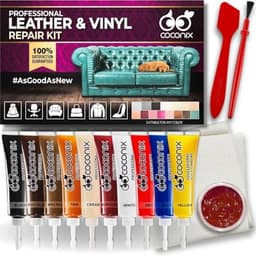
Coconix Leather & Vinyl Repair Kit
Type: Repair kit
A color-mixing system built to fill physical damage rather than just tint it, and it works on vinyl as well as leather — which matters, because a peeling surface is often vinyl.
$19.95 · View on AmazonPrice as of October 20, 2026. #ad How we’re funded
- Faded color, no missing material
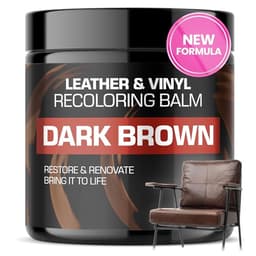
FORTIVO Leather Recoloring Balm
Type: Recoloring balm
If the panel has gone dull and gray rather than lost its surface, a recoloring balm is the right tool. Wrong tool for an actual flake — it tints, it does not fill.
$24.89 · View on AmazonPrice as of October 20, 2026. #ad How we’re funded
- Cheap first attempt
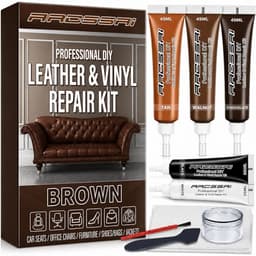
ARCSSAI Leather Repair Kit for Furniture
Type: Repair kit
A low-cost furniture-oriented kit for a small area. Sensible if you want to find out whether repair is worth the afternoon before committing to a pricier system.
Preventing it next time
The only reliable prevention is buying a material that has no coating to lose. That means reading listings for a stated grade — full-grain or top-grain — and treating silence, “genuine leather,” “bonded” and any PU or vinyl description as a peeling risk. FTC leather labeling guidance expects imitation leather and non-leather backings to be disclosed, so the information is often there if you look for it; what isn’t required is a grade, which is why so many listings simply omit one.
Beyond material choice, the ordinary things help: keep coated items out of direct sun and away from heat sources, wipe body oils off contact points, and don’t store them compressed or folded. None of it stops the process; it just slows it.
Bottom line
Peeling is a diagnosis, not just damage: it tells you the surface is a coating and the item is bonded, coated or synthetic. A careful fill-and-color repair can look genuinely good and is usually worth doing on furniture; on a bag or jacket it is often money better spent on a replacement that states its grade. Whatever you decide, don’t reach for conditioner — that is a treatment for leather, and this isn’t the part that’s leather. See how to tell real leather from fake before the next purchase.
How we know this. Veg Tan Club is written by an enthusiast, not a master leatherworker or a test lab. We compile each product’s published specs — grade, tannage, hardware — and reason from there. We say plainly when a listing doesn’t state a grade, and we haven’t physically handled every item we compare.
Frequently asked questions
Why is my leather peeling?
Because what is peeling is a coating, not the hide. Genuine grain leather wears — it thins, scuffs and darkens — but it has no separate surface layer to lift. Peeling means a polymer finish is separating from what is underneath, which points at bonded leather, a coated split, or a synthetic like PU.
Can peeling leather be permanently fixed?
No, not permanently. A repair kit fills, colors and seals the damaged area, which can look genuinely good — but the underlying cause is a coating losing adhesion, and that process continues elsewhere on the item. Treat a repair as buying time and appearance, not as a cure.
Does conditioner stop leather from peeling?
No. Conditioner feeds leather fibers, and a peeling surface is a plastic layer with nothing to feed. On a coated or bonded item, conditioner sits on top and can even work under lifting edges and speed up the separation. Save it for real grain leather that has gone dry.
Is peeling leather worth repairing?
On something large and expensive to replace — a sofa, a car seat — yes, a good repair is often worth the afternoon. On a bag or jacket, weigh the kit and the effort against a replacement that is actually grain leather, because the peeling will return.
How do I tell if my item is bonded leather or real leather?
Look at a cut or worn edge. Bonded and coated materials show a distinct thin surface layer over a different-looking backing; grain leather is the same material through its thickness. Peeling itself is close to diagnostic — grain leather essentially does not do it.
Sources
- Wikipedia — Artificial leather — PU, PVC, faux/vegan/'pleather' — how synthetic leather is built on a fabric backing (accessed July 18, 2026)
- Wikipedia — Conservation and restoration of leather objects — How the field cleans and stabilizes leather; why oils oxidize and can harden leather over time (accessed July 18, 2026)
- Canadian Conservation Institute — Caring for leather, skin and fur — CCI preventive-conservation guidance on cleaning, dressing and storing leather (accessed July 18, 2026)
- 16 CFR Part 24 — FTC Guides for Select Leather and Imitation Leather Products — The FTC guides on leather labeling: unqualified 'leather' claims, imitation-leather disclosure, backing material and misuse of trade names (accessed August 19, 2026)
Keep reading
Why leather cracks
The other failure that looks similar, has a different cause, and needs a different answer.
Read the guideWhat is bonded leather?
The material behind most peeling — ground leather scrap glued to a backing and coated.
Read the explainerTypes of synthetic leather
PU, PVC, TPU and microfiber — the coatings that peel, and how to tell which you have.
Compare the typesHow to get scratches out of leather
The damage that can genuinely be worked out — on real grain leather, at least.
Read the guideHow to tell real leather from fake
The tests to run before you buy the replacement, so this doesn't happen twice.
Learn the testsHow to restore faded leather
Pale and dull, but nothing lifting? Diagnose dry, dirty or dye-lost leather and match the fix.
See the method