Veg Tan Club

Leather Honey vs. Chamberlain's Leather Milk

Two bottles that dominate every leather-care recommendation thread, head to head on what their makers actually state. One question decides it before price does: how pale is the leather you are about to put this on?

By Stephen V.Last updated How we pick

The verdict: buy Leather Honey if you want one bottle that handles every leather thing you own and you are willing to spot-test it. Buy Chamberlain’s Leather Milk Kit No. 1 if your main concern is a fine bag you want cleaned as well as conditioned, and you would rather have a thinner formula that absorbs without leaving a film. Buy Bickmore Bick 4instead of either if the leather is pale, tan or vegetable-tanned — it is the only one of the three whose maker states it will not darken leather, and on light hides that single sentence outweighs everything else on this page.

These two products get recommended interchangeably and they are not interchangeable. Leather Honey is one bottle of conditioner, sold as a universal formula, with a reputation built on how little of it you need. Chamberlain’s Leather Milk No. 1 is sold as a two-bottle kit — a cleaner and a conditioner — and its pitch is the feel of the result rather than the breadth of the application. One is a workhorse; the other is a routine in a box.

Everything below comes from the makers’ own published claims and the live listings, read on the dates stamped on each card and in our sources. We have not run side-by-side wear tests, we do not own these products, and nothing here is a lab result. What we can do honestly is put the two sets of stated claims next to each other and say which claim should decide your purchase. The broader list is our conditioner roundup; the three-way with the two value bottles is Leather Honey vs. Bick 4 vs. Lexol.

How this is funded: we earn a commission if you buy through our links, at no extra cost to you. It never changes which product we recommend, and we’ll tell you when we’d skip one. Full disclosure.

Quick picks

Ranked on leather grade, construction and buyer fit. Select a row to jump to the full write-up. We have not handled these items ourselves — here is exactly what we do instead.

#ProductBest forPrice
1
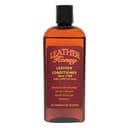
Leather Honey Leather Conditioner (8 oz)

Leather Honey Leather Conditioner (8 oz)

The default all-purpose conditioner and a long-running bestseller: one non-toxic formula for bags, boots, furniture and car interiors. A little goes far, which is why a single bottle lasts most people years.

Best for one-bottle coverage
$19.99 · View on Amazon

$27.9929% off

Price as of October 19, 2026. #ad How we’re funded

2
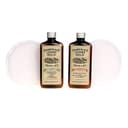
Chamberlain's Leather Milk Conditioner & Cleaner Kit No. 1 (6 oz)

Chamberlain's Leather Milk Conditioner & Cleaner Kit No. 1 (6 oz)

The premium all-natural pick, sold as a two-bottle kit: Straight Cleaner No. 2 to lift dirt, oil spots and denim transfer, then Liniment No. 1 to condition. The listing describes a formula thin enough to absorb without leaving leather greasy or sticky — the choice if you want a gentler feel than a heavy oil.

Best clean-and-condition kit
$36.70 · View on Amazon

Price as of October 19, 2026. #ad How we’re funded

3
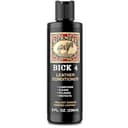
Bickmore Bick 4 Leather Conditioner & Cleaner (8 oz)

Bickmore Bick 4 Leather Conditioner & Cleaner (8 oz)

The won't-darken pick: Bick 4 is explicitly formulated not to darken leather, which makes it the safer choice for tan, cognac and light hides where other conditioners can go muddy.

Best for pale leather
$12.99 · View on Amazon

$14.9913% off

Price as of October 19, 2026. #ad How we’re funded

The picks in full

#1Best for one-bottle coverage

Leather Honey Leather Conditioner (8 oz)

The default all-purpose conditioner and a long-running bestseller: one non-toxic formula for bags, boots, furniture and car interiors. A little goes far, which is why a single bottle lasts most people years.

Strengths

  • Works across bags, boots, furniture and auto leather
  • A few drops treat a whole bag
  • Non-toxic formula, no added solvents in the listing

Trade-offs

  • Can darken very light or untreated leather — spot-test first
  • Needs a few hours to absorb
TypeConditioner
FormLiquid
Size8 oz
Best forOne conditioner for everything you own

Spec note. Always spot-test a conditioner on a hidden area first: any oil-based conditioner can darken pale or veg-tanned leather.

Specs read from the product listing, on July 18, 2026. “Not published” means the listing does not state that spec.

#2Best clean-and-condition kit

Chamberlain's Leather Milk Conditioner & Cleaner Kit No. 1 (6 oz)

The premium all-natural pick, sold as a two-bottle kit: Straight Cleaner No. 2 to lift dirt, oil spots and denim transfer, then Liniment No. 1 to condition. The listing describes a formula thin enough to absorb without leaving leather greasy or sticky — the choice if you want a gentler feel than a heavy oil.

Strengths

  • Both steps in one box — Straight Cleaner No. 2, then Liniment No. 1 conditioner
  • Ships with two reusable cotton terry applicator pads
  • All-natural, non-toxic formulas, made in the USA per the listing
  • Listing states it is the recipe Saddleback Leather conditions its own goods with

Trade-offs

  • Costs more than a single-bottle workhorse conditioner
  • You buy the cleaner too, even if you already own one
  • Still spot-test on pale leather
TypeCleaner + conditioner kit
FormTwo-bottle kit
Size6 oz
Best forCleaning and then conditioning fine bags, in one kit

Specs read from the product listing, on September 1, 2026. “Not published” means the listing does not state that spec.

#3Best for pale leather

Bickmore Bick 4 Leather Conditioner & Cleaner (8 oz)

The won't-darken pick: Bick 4 is explicitly formulated not to darken leather, which makes it the safer choice for tan, cognac and light hides where other conditioners can go muddy.

Strengths

  • Listing states it won't darken leather
  • Cleans and conditions in one step
  • Trusted long-standing boot-care brand

Trade-offs

  • Lighter conditioning than a heavy oil
  • Still spot-test — 'won't darken' is not 'never darkens'
TypeCleaner + conditioner
FormLiquid
Size8 oz
Best forConditioning light or tan leather without darkening it

Spec note. Bick 4 markets a non-darkening formula, which is the reason to reach for it on pale or veg-tanned leather where an oil-heavy conditioner would darken the hide.

Specs read from the product listing, on July 18, 2026. “Not published” means the listing does not state that spec.

What each maker actually claims

Leather Honey’s own product page states a formula free of silicone, solvents, fragrances and animal-derived ingredients; that it is for leather of every color but not for suede, faux leather or vinyl; that the application is a quarter-size drop spread thin; that it should dry at least two hours and preferably overnight; and that one treatment protects for six months or more. It has been made in the USA since 1968. Those are the claims, and they are unusually specific about dose and interval — which is why one bottle lasts most people years.

Chamberlain’s Leather Milk No. 1 is listed as a kit: Straight Cleaner No. 2 to lift dirt, oil spots and denim transfer, then Liniment No. 1 to condition, with two reusable cotton terry applicator pads in the box. The listing describes the formula as thin enough to absorb without leaving leather greasy or sticky, states that both formulas are all-natural and non-toxic and made in the USA, and states that it is the recipe Saddleback Leather conditions its own goods with. Six ounces.

Neither maker states that its product will not darken leather. Bick 4’s maker does: its product page states the formula will not darken leather, that it is completely wax-free, that it is for smooth finished leather and not for suede, rough-out, distressed or napped leathers, and that you should still check colorfastness in a hidden area first. That is the sharpest difference on this page and it is the one we rank on.

The two, side by side

Every cell is read from the maker’s page or the listing, or marked “Not published.” No cell is a test result — we have not conditioned the same hide with both and compared it, and anyone who tells you they did on a web page should be asked for the photographs.

 Leather HoneyChamberlain’s No. 1Bick 4
What is in the boxOne conditioner bottleCleaner + conditioner, 2 terry padsOne cleaner-conditioner bottle
Stated volume8 oz6 oz8 oz
Will-not-darken claimNot made - darkening is possibleNot madeYes, stated by the maker
Excluded surfaces, as statedSuede, faux leather, vinylNot published as a listSuede, rough-out, distressed, napped
Stated doseA quarter-size drop, spread thinNot published as a figureNot published as a figure
Stated drying time2 hours minimum, overnight preferredNot published as a figureNot published as a figure
Stated re-treat interval6 months or more per treatmentNot publishedNot published
Wax contentNot publishedNot publishedStated wax-free
Country, as statedUSAUSAUSA
Price bandMidPremiumBudget

Three rows do the work here. The darkening row decides the purchase on pale leather. The “what is in the box” row explains the price gap — you are comparing one bottle against two, so the premium band is partly just more product. And the dose and interval rows are why Leather Honey wins on cost-in-use despite not being the cheapest bottle: a stated quarter-size drop every six months is a very small amount of product per year.

The question that actually decides it

How pale is the leather? Any oil-based conditioner can darken a light or unfinished hide, and on vegetable-tanned leather it will also pull the color forward years early — which some people want and most people did not ask for. If your item is a natural, tan, cognac or veg-tan piece, the honest recommendation is Bick 4, whose maker makes the non-darkening claim explicitly, and even then you spot-test in a hidden area first. The site’s standing advice on veg-tan specifically is in how to care for vegetable-tanned leather, and what the darkening actually is — not damage — is in leather patina.

On dark brown, black or finished leather, darkening is not a meaningful risk and the decision collapses to what you want to own. One bottle that covers boots, a bag, a sofa and a car interior: Leather Honey. A cleaner and a conditioner in the correct order for a bag you care about: Chamberlain’s. Why that order is not optional is the whole argument of leather cleaner vs. conditioner — conditioning over trapped dirt drives grime into the grain instead of feeding the hide.

What neither of them does

Neither product is a restorer and neither is a sealant. A conditioner replaces oils in a hide that still has its fiber structure intact; it does not re-attach a finish that has started to lift, which is a different problem addressed in how to fix peeling leather, and it does not bring back color that has gone, which is how to restore faded leather. It also does not make leather waterproof — see is leather waterproof for what a conditioner does and does not do about rain.

Neither is for suede or nubuck. Both makers that publish an exclusion list exclude napped leathers, and the reason is physical rather than chemical: a conditioner mats the nap and the surface does not come back. If that is what you own, start at nubuck vs. suede instead.

And neither should be used on a schedule. The most common mistake in leather care is over-conditioning — saturating a hide that did not need it, which softens the fiber structure and leaves it limp. Leather Honey’s own stated interval is six months or more per treatment, which is a long way from the monthly ritual the internet recommends; our take is in how often to condition leather.

One last note on how we work: we do not own these products and have not tested them against each other. Every claim above is attributed to the maker or the listing that made it, every price renders from the live price layer with the date it was read, and the full version is on our methodology page.
Frequently asked questions

Is Leather Honey or Leather Milk better?

They are better at different things. Leather Honey is one bottle with a stated universal application and an unusually specific dose and interval - a quarter-size drop, re-treated every six months or more - which makes it the cheapest per year despite not being the cheapest bottle. Chamberlain's Leather Milk No. 1 is a two-bottle kit that includes the cleaning step, and its stated pitch is a thin formula that absorbs without leaving the leather greasy. If you want coverage, buy the first; if you want a routine for one good bag, buy the second.

Will Leather Honey darken my leather?

It can, and the maker does not claim otherwise. Any oil-based conditioner can darken light or unfinished leather, and on vegetable-tanned hide it will also accelerate the color change that would otherwise take a year or two. On dark brown or black finished leather this is not a practical concern. On pale, tan or veg-tan leather, use Bick 4 - the only one of the three whose maker explicitly states it will not darken - and spot-test in a hidden area even then.

Does Chamberlain's Leather Milk come with a cleaner?

Yes - Kit No. 1 is listed as two bottles: Straight Cleaner No. 2 to lift dirt, oil spots and denim transfer, then Liniment No. 1 to condition, plus two reusable cotton terry applicator pads. That is why it sits in a higher price band than a single-bottle conditioner: you are buying both steps of the routine rather than just the second one.

How often should you use leather conditioner?

Far less often than most advice suggests. Leather Honey's own stated interval is six months or more per treatment, and for a bag or belt in normal use twice a year is a sensible ceiling. Over-conditioning is a real failure mode: saturating a hide that did not need it softens the fiber structure and leaves it limp, and it cannot be undone.

Can you use these on suede or nubuck?

No. Both of the makers that publish an exclusion list exclude napped leathers, and the reason is mechanical rather than chemical - a liquid conditioner mats the nap and the texture does not recover. Suede and nubuck need a brush and a dedicated nap product, not a conditioner.

Which is better value?

Leather Honey, on cost per year, for most people. It is the mid-priced bottle of the three, but it states the smallest dose and the longest interval of any product here, so a single bottle lasts a long time. Bick 4 is the cheapest to buy. Chamberlain's is the most expensive and the comparison is not quite fair, because the box contains a cleaner you would otherwise buy separately.

Sources

Keep reading