Why the list is belts and dressings
Leather goods differ enormously in how much human time they take. A belt is cut from a strip, skived, maybe dyed at the edge, punched, stitched along two edges and riveted to a buckle. A padfolio is a handful of panels. A structured briefcase is dozens of pieces, a frame, a lining, zips, feet and handles, each needing a separate operation and a separate pair of hands. In a country where those hands cost what they cost in the United States, the per-unit labor on a bag lands it at a price almost no marketplace buyer will pay — so the makers who stay are the ones selling low-operation goods, or selling at prices that never reach a listing like this.
Care products are the other survivor, for a different reason: they are manufactured rather than assembled. A wax or a repellent is a batch process with almost no labor per unit, so domestic production is competitive on cost in a way that sewing is not. Both items on this page from that category state US manufacture, and one of them states its actual ingredients, which is rarer than the country claim.
The practical consequence for a buyer: if you want an American-made leather good, buy a belt, and buy it understanding that two of the three here were designed for concealed carry. That is not a coincidence either — a carry belt is sold to people who will pay for rigidity and a warranty, which is exactly the customer who supports domestic production. The format itself is covered on best gun belts, and if you want the general field, best full-grain belts is the page.
The five, side by side
Every cell is read from the listing or marked “Not published.” Current prices sit on the Check price button in each row of the table above.
| | Hanks | Relentless Tactical | Artisana | Frye | Otter Wax |
|---|
| What it is | 1.5 in gun belt | Steel-core gun belt | 1.25 in women's belt | 6 oz pump repellent | 5 oz boot wax |
|---|
| Country of manufacture | USA | USA (handmade) | USA, per the listing | USA, per the listing | USA (Portland), per the listing |
|---|
| Grade as stated | Full-grain | Not published (“US Leather”) | Full-grain | n/a - care product | n/a - care product |
|---|
| Hardware or core | Stainless steel buckle | Spring steel core | Buckle finish contradicted in the listing | Non-aerosol pump | Rub-on wax paste |
|---|
| Ingredients or thickness | Thickness not published | Thickness not published | Thickness not published | Not published (“clean, effective”) | Beeswax and lanolin, stated |
|---|
| Warranty stated | 100 years | Lifetime | Not published | Not published | Not published |
|---|
| Width or volume | 1.5 in | 1.25 in and 1.5 in offered | 1.25 in | 6 oz | 5 oz |
|---|
The row that separates the top of this page from the rest is warranty. Two of the three belts publish a term measured in decades or a lifetime, and neither care product publishes one at all. A hundred-year warranty is partly theatre — nobody is claiming it — but it is also a real commitment to replace a strap that fails, and it is the kind of commitment that only makes sense when the maker controls the cutting. It is the most tangible benefit of domestic manufacture on this page, more than any claim about craftsmanship.
The row that spoils the easy story is grade. The most rigid belt here — the one with a steel spine — never states a leather grade at all; its listing calls the hide only “US Leather,” which is an origin claim. It is precise about the core and vague about the leather, and we record that rather than letting the US claim stand in for a grade claim. The two words are not interchangeable, and full-grain vs. genuine leather sets out why.
And nobody publishes a thickness in ounces, across all three belts. In a carry belt that is the omission that matters most, because ounce weight is the only number that predicts whether a strap stays flat under a loaded holster or rolls over. Two of these three answer that question a different way — one with a stated full-grain hide and one with a steel core — but neither publishes the figure, and we will not estimate it. How to read it is in leather weight and thickness.
What “Made in USA” does and does not tell you
It tells you where the cutting and sewing happened. It does nottell you where the hide was tanned, and on this page at least one listing is explicit that the leather and the assembly are separate facts. A US-made belt from an imported hide is an entirely normal product, and so is an Italian hide sewn in Asia — the dishonest version is only ever the listing that lets you conflate the two. We keep hide origin and country of manufacture in separate fields on every product on this site for exactly that reason, and the same discipline is applied to the Italian claim in what “Italian leather” actually means.
It also does not tell you the grade, the tannage or the thickness, as the table above demonstrates twice. Treat “Made in USA” as a claim about supply chain and recourse — who you can hold responsible, and how long they will stand behind the thing — rather than as a quality grade. On this page it correlates strongly with long warranties and not at all with published specifications.
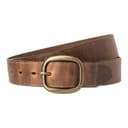
One contradiction to record. The Artisana belt’s title says an antique brass buckle and one of its bullets says antique silver. The full-grain and made-in-USA claims are specific and stand; the buckle finish is a coin toss, and you should know that before ordering rather than after.
What is not on this page, and why
Four products we track make a weaker claim and are deliberately excluded. Hide-origin claims— a hide stated as sourced in the United States, with no word about where the item was cut — are an origin fact, not a manufacturing one. “Designed in” claims name a studio, not a factory. And a recognizable American brand name is not evidence of anything: the large majority of leather goods sold under US brands are assembled abroad, which is unremarkable and is only a problem when a listing implies otherwise.
There is also no American-made bag, briefcase, wallet or card holder on this page, because none of the listings we track states one. If that changes, this page changes; we would rather publish a short honest list than pad it with brands that happen to be headquartered in Oregon. Until then, the closest thing to a US-made leather good with a lifetime claim is a belt, and the three above are the ones that say so.
Which one for you
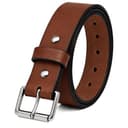
If you want one belt for the rest of your life: Hanks Gunner. Stated full-grain, a 1.5-inch width that matches the slot on most holsters, a stainless buckle, stated US manufacture and a published 100-year warranty. Thickness in ounces is not published, it is the most expensive belt on the page, and a solid full-grain strap this rigid takes real time to break in.
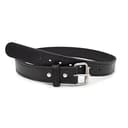
If an ordinary belt keeps folding under your setup: Relentless Tactical. A spring steel core through the strap resists the roll-over that hide thickness alone is meant to prevent, handmade in the USA with a stated lifetime replacement, offered in two widths so it can be matched to a holster slot. It never states a leather grade, a steel core cannot be shortened at home, and the thickness is unpublished.
If you want an everyday US-made belt rather than a carry belt: Artisana. Stated full-grain, handcrafted in the United States, a published 1.25-inch width that threads most dress loops and still reads correctly with jeans, and a brown variant that states a crazy-horse pull-up finish. Thickness, tannage and one-piece construction are unstated, it is sized by lettered waist ranges, and the buckle finish is contradicted inside its own listing. The women’s field in full is on best leather belts for women.
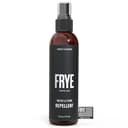
If you want a US-made protectant in the biggest bottle:Frye. A non-aerosol pump — no propellant, easier to control indoors — stated as suitable for all colors and finishes across leather, suede and nubuck, and stated to let the leather breathe. It is the dearest spray we cover, “clean, effective ingredients” is marketing rather than a chemistry disclosure, and PFAS content is not published. The field is on best leather protector sprays.
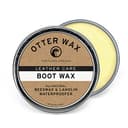
If you want the cheapest American-made thing here:Otter Wax Boot Wax. Made in Portland, and the only product on this page whose ingredients are fully stated — beeswax and lanolin, with silicone, petroleum, dyes and PFAS explicitly ruled out. It is a rub-on dressing, so nothing is airborne and nothing is wasted in overspray. A wax normally deepens color and raises sheen, it is the wrong product for suede or nubuck, and hand application takes real time. Every rule behind these picks is on our methodology page.