Best Leather Goods Brands, and How to Judge One
We can't rank brands we've never handled. What we can do is show you the four things a serious leather brand publishes — and how quickly that test sorts a listing.
How this is funded: we earn a commission if you buy through our links, at no extra cost to you. It never changes which product we recommend, and we’ll tell you when we’d skip one. Full disclosure.
We are not going to hand you a ranked list of leather brands, because ranking brands implies having used them and we have not. What we can give you is the test we run on every listing before it goes into a roundup here — four things a leather brand should publish — and the honest observation that it sorts the market far better than brand recognition does.
The four things a serious leather brand publishes
- The grade. Full-grain, top-grain, split, bonded. This is the spec that predicts lifespan, and a maker who paid for full-grain says so in the title, because it is the most expensive thing about the product. Silence here outweighs every other signal on the page.
- The tannage or the thickness. Vegetable-tanned or chrome-tanned; ounces or millimeters. Either one tells you the maker knows what it bought rather than reselling whatever a factory shipped. Almost nobody publishes these, which is precisely why it counts when someone does.
- The hardware. “Solid brass,” “YKK zippers,” “antique nickel buckle.” Hardware is the second most common failure point after the leather itself, and it is cheap to name. A listing that names its zippers has told you it did not buy the cheapest ones available.
- The warranty or repair policy. A brand that will repair what it sells has priced that in and expects the product to survive long enough for it to matter. A brand with no stated policy has made no commitment at all.
Run those four checks and most listings collapse within seconds — including plenty of well-known ones. That is not a trick; it is the actual state of the market.
Why brand travels badly in leather
In most categories a brand name carries information: a known maker builds to a known standard. Leather is unusually bad at this for three reasons.
First, the same brand sells across grades. A name you associate with quality luggage may sell a full-grain briefcase and a coated-split weekender from the same storefront, without either page saying which is which. The brand is constant; the material is not.
Second, the vocabulary protects the seller. “Genuine leather” reads like an authenticity guarantee to almost every buyer and describes a low grade to the trade. The FTC’s leather guides are aimed at composition deception — selling imitation as leather, hiding a non-leather backing, hide-shaped tags on products that are not substantially leather. They are not a grading standard, so a recognizable brand can be entirely compliant while telling you nothing useful.
Third, marketplace listings flatten everything. On a marketplace page, a century-old maker and a brand created last quarter get the same template, the same photo grid and the same star rating. The one differentiator left is what each chooses to state.
The brand tiers you actually meet
- Legacy luggage and workwear names. Recognizable, often decently built, and frequently silent on grade — because their reputation sells the bag without it. Worth buying when the listing does state a grade; worth skepticism when it doesn’t.
- Direct-to-consumer brands with a marketplace storefront. These usually disclose more, because their own site had to. The catch is that only some of their catalog makes it onto the marketplace, and the disclosure can be uneven between models.
- Marketplace-native leather brands. The largest group and the most variable. Some state full-grain and name the hide; others publish nothing but dimensions. Judged on the four checks above rather than on familiarity, the good ones in this tier beat the silent legacy names.
- Fashion and designer labels. Priced on the logo. If you want the logo, that is a legitimate thing to buy — just do not confuse it with buying leather.
What a brand can point at, if it has one
The strongest brand signals in leather are all forms of traceability. A named tannery. A consortium mark, like the Tuscan vegetable-tanned guarantee trademark. Membership of, or sourcing from, tanneries audited by the Leather Working Group, which rates tanneries against an environmental standard. None of these tells you a bag is well stitched, but each one tells you the brand knows where its leather came from — and a brand that cannot answer that question is a reseller wearing a name.
What the four checks look like in practice
Three listings from our own roundups — two that disclose, and one recognizable name that doesn't. The contrast is the whole point of this page.
- Named brand, grade stated
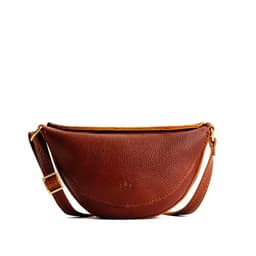
Portland Leather Goods Koala Sling Bag (Medium, Full-Grain)
Leather grade: Full-grain
A direct-to-consumer brand people search for by name, and the listing still commits to full-grain in writing. That combination — recognizable and disclosed — is rarer than it should be.
$118.00 · View on AmazonPrice as of October 20, 2026. #ad How we’re funded
- Unfamiliar brand, grade stated
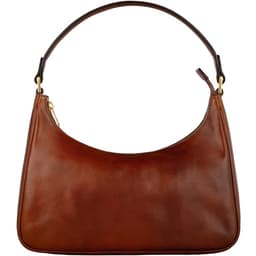
Time Resistance Full-Grain Leather Shoulder Handbag
Leather grade: Full-grain
You may not know the name. The listing states full-grain anyway, which is more than most familiar names on the same search results page manage.
$220.00 · View on AmazonPrice as of October 20, 2026. #ad How we’re funded
- Familiar name, grade not published
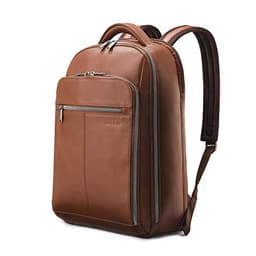
Samsonite Classic Leather Backpack (Cognac)
Leather grade: Not published
A brand almost everyone recognizes, on a bag we still recommend for its build and hardware — but the listing does not state a leather grade, so we print 'Not published' rather than assume one. Buy it for the brand's construction, not for a grade nobody claimed.
How to run the test yourself in 30 seconds
- Search the page for “full grain.” Present in the title: good. Present only in a review: irrelevant. Absent: assume it isn’t.
- Search for “genuine.” If that is the only grade word on the page, you have found a split-tier product, whatever the brand.
- Look for one hardware noun. Brass, YKK, nickel. One is enough to know somebody was paying attention.
- Look for a warranty sentence. Any commitment beats none.
Four checks, one page, no brand knowledge required. It is the same procedure behind every roundup on this site, which is why our tables print “Not published” so often — the blanks are the finding.
Bottom line
The best leather goods brand, for your purposes, is the one that answers the four questions on the product page you are looking at right now. Heritage helps, repair policies help, a named tannery helps most of all — but none of them substitutes for a stated grade, and a familiar logo above a silent spec sheet is the most expensive way to buy a coated split. Start with the grade ladder, then apply the brand.
How we know this. Veg Tan Club is written by an enthusiast, not a master leatherworker or a test lab. We compile each product’s published specs — grade, tannage, hardware — and reason from there. We say plainly when a listing doesn’t state a grade, and we haven’t physically handled every item we compare.
Frequently asked questions
What is the best leather goods brand?
There isn't one, and anybody who names one without having handled the alternatives is guessing. In leather the useful question is not which brand is best but which brand tells you what you are buying — grade, tannage, thickness, hardware, warranty. A brand that publishes all five is telling you it can afford to.
Are heritage leather brands worth the money?
Sometimes, and for a specific reason: long-standing makers tend to publish more, repair what they sell, and buy from tanneries they can name. That is what you are paying for. What you are not necessarily getting is a better hide than a disclosed full-grain listing at a third of the price.
Which leather brands are actually on Amazon?
A mix. Legacy luggage and workwear names, direct-to-consumer brands that opened a marketplace storefront, and a large field of marketplace-native brands you will not have heard of. The last group is not automatically worse — several of them state full-grain plainly while better-known names on the same page do not.
Does a brand name tell you the leather grade?
No. Grade has to be stated separately, and plenty of well-known names sell leather goods without stating it. Treat brand recognition and grade disclosure as two independent checks: a bag needs to pass the second one whether or not it passes the first.
What is the Leather Working Group?
An industry body that audits tanneries against an environmental standard and rates them at medal levels. A brand able to say its leather comes from an audited tannery is telling you it knows its own supply chain — which is a meaningful signal in a market where most sellers cannot name the tannery at all.
Sources
- 16 CFR Part 24 — FTC Guides for Select Leather and Imitation Leather Products — The FTC guides on leather labeling: unqualified 'leather' claims, imitation-leather disclosure, backing material and misuse of trade names (accessed August 19, 2026)
- Wikipedia — Leather — Overview of leather, grain layers and the full-grain / top-grain / split hierarchy (accessed July 18, 2026)
- Leather Working Group — Standards & Certification — The leather industry's environmental audit standard for tanneries (Gold/Silver/Bronze) (accessed July 18, 2026)
Keep reading
Best Italian leather goods
The same disclosure test applied to one word: six picks sorted by what each listing proves.
See the picksFull-grain vs. genuine leather
The single spec that separates a brand worth paying for from a logo on a coated split.
See the differenceIs full-grain leather worth it?
The cost-per-year math behind paying more for a brand that discloses its grade.
See the mathBest leather goods for men
A cross-category shortlist — one wallet, belt, everyday bag, work bag and weekender.
See the picksBest leather goods for women
The same shortlist approach — handbag, tote, backpack, work bag and wallet, chosen on stated grade.
See the picks