Why Leather Cracks (and How to Stop It)
Cracking needs two things: a hide that has lost its lubricating oils, and a fold that keeps bending anyway. Remove either one and it does not happen - which is why this is the most preventable failure in leather.
How this is funded: we earn a commission if you buy through our links, at no extra cost to you. It never changes which product we recommend, and we’ll tell you when we’d skip one. Full disclosure.
Leather cracks for one reason with two halves: the hide has lost the oils that let its fibers slide, and it is still being bent. Either half on its own is harmless. A dry hide that never flexes sits on a museum shelf for a century. A supple hide folds hundreds of thousands of times without a mark. Put the two together and the surface fibers tear at the fold, and the tear is permanent.
That is why cracking is the most preventable failure in leather goods, and also why almost every “fix cracked leather” result you will find is overselling itself. You can prevent a crack easily. You cannot un-crack a hide. Everything below is organized around that line.
What is actually breaking
Leather is the preserved fiber structure of a hide: a dense three-dimensional network of collagen bundles, tightly woven near the outer grain surface and looser in the layers beneath. Tanning stabilizes that network chemically so it will not rot, but it does not glue it rigid — the bundles can still move relative to each other. What lets them move is a combination of bound moisture and the fatty substances added during tanning and finishing, a stage the industry calls fatliquoring.
When those oils and that moisture leave, the fiber bundles lose their lubrication and begin to adhere to one another. A dry hide is not just hard; it has become a sheet of stuck-together fibers rather than a flexible weave. Bend that sheet and the fibers on the outside of the curve cannot slide to accommodate the bend, so they stretch past their limit and break. A crack is torn collagen, which is why no product can undo it.
The anatomy that makes this grade-dependent is in how leather is made: splitting the hide is what creates the grade words, and a full-grain piece retains the tight outer layer where the fiber density is highest. Sand that layer off and what remains is looser fiber with a coating sprayed over it, which is why corrected and split leathers crack years sooner than full-grain does. The vocabulary is in full-grain vs. top-grain leather.
The four things that take the oils out
Heat, by a wide margin.A hot car, a radiator, a sunlit windowsill, a hair dryer aimed at a wet bag. Heat drives moisture out of the fiber structure faster than it can be replaced, and if the leather is wet when it happens the damage includes shrinkage as well — the mechanism is in does leather shrink. This single cause accounts for most of the ruined leather goods we read about.
Wet-dry cycling. Each soaking carries some of the fatty content out of the hide with it as it dries. One rain shower is nothing; a bag that gets soaked and air dried twenty times over five years with no conditioning in between has been quietly stripped. This is also why the advice in how to dry a wet leather bag is about slowness rather than speed.
Ultraviolet light.Sun degrades the surface directly and also bakes out moisture. The visible first symptom is usually color loss rather than cracking — that stage is faded leather— but the two arrive together on a bag that lives on a car parcel shelf.
Plain time, plus dirt.Oils oxidize and migrate out slowly on their own, and ground-in dirt accelerates it by abrading the surface and holding moisture unevenly. The conservation literature is clear that cleaning before dressing is not optional — which is the entire argument of leather cleaner vs. conditioner.
Where it shows up first, and why
Cracking is not random. It appears wherever the hide is both driest and most flexed, in a predictable order by item.
A wallet cracks along the spine.The outer face of the fold stretches every time it closes, and it is also the part handled most and conditioned least. This is why a trifold works its leather harder than a bifold — see bifold vs. trifold— and why the stated grade matters more in the folded formats.
A belt cracks at the buckle fold. Same mechanism, worse geometry: the fold is permanent and under tension whenever worn. It is one of the four stages in how long a leather belt lasts, and it arrives after hole deformation and before edge wear.
A bag cracks at the strap bend and the base corners. The strap bends over a shoulder and at its anchors; the base corners get set down and scuffed. A bag stored stuffed and upright, as in how to store leather bags, mostly avoids the second one.
Car and furniture leather cracks across the seat panel. This is the heat-plus-UV case, and it is usually a finished, coated leather, which means what you are seeing may be the coating failing rather than the hide. Which brings us to the most common misdiagnosis.
Three things that look like cracking and are not
Peeling. If the surface is lifting in flakes or sheets, that is a coating separating from what is underneath, and on bonded or heavily corrected material there is no real grain beneath it to save. Conditioning will not help and may make it worse. The honest version is in how to fix peeling leather, and the material question behind it is in what is bonded leather.
Creasing. Fine lines that follow the natural grain and do not catch a fingernail are the hide taking a set, not tearing. On full-grain this is the beginning of patina and it is what you bought the grade for. A crack catches a nail and shows a lighter color inside; a crease does neither.
Stiffness. A hard, boardy hide that has not cracked yet is the stage immediately before cracking, and it is the last point at which conditioning does real good. If something you own feels like that now, go to how to soften stiff leather today rather than next month.
What prevention and repair actually need
Three products for three different stages: keeping a healthy hide supple, doing it on pale leather without darkening it, and dealing with a field of fine cracking that has already happened. We have not handled any of them - every claim is read from the maker or the live listing.
- Best for prevention
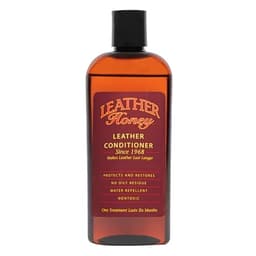
Leather Honey Leather Conditioner (8 oz)
Type: Conditioner
One bottle for every leather item you own, and the maker states both the dose and the interval - a quarter-size drop spread thin, re-treated every six months or more. That stated interval is the single most useful number in leather care, because the real risk for most people is conditioning too often rather than too little.
- Best for pale leather
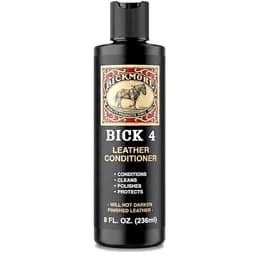
Bickmore Bick 4 Leather Conditioner & Cleaner (8 oz)
Type: Cleaner + conditioner
The only conditioner we cover whose maker explicitly states it will not darken leather, and states that it is wax-free. On a tan, natural or vegetable-tanned piece, where an oil-heavy conditioner would pull the color forward years early, this is the one to reach for - and you still spot-test in a hidden area first.
- Best for cracking that has started
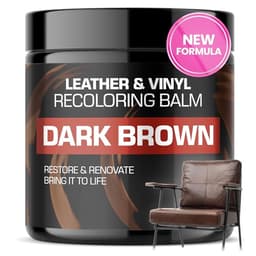
FORTIVO Leather Recoloring Balm
Type: Recoloring balm
Once a surface has gone to a field of fine cracks and lost its color, a conditioner alone makes the cracks more visible rather than less. A recoloring balm re-pigments the whole panel and conditions as it goes, which evens out the appearance. It is cosmetic by nature: it blends the damage, it does not restore the torn fiber.
$24.89 · View on AmazonPrice as of October 20, 2026. #ad How we’re funded
The prevention routine, in full
It is four habits, and none of them is frequent. Keep leather out of direct heat and out of direct sun — not near a radiator, not on a car parcel shelf, not in a sunlit window. Dry it slowly and at room temperature whenever it gets wet. Clean it before you condition it, so that you are feeding the hide rather than grinding dirt into it. And condition two or three times a year, not monthly, with a thin coat rather than a generous one.
That is genuinely the whole program. The step-by-step version with quantities is in how to condition leather; the frequency argument is in how often to condition leather; and if what you own is vegetable-tanned, read how to care for vegetable-tanned leather first, because the darkening risk changes which product you should use.
One honest caveat about buying your way out of this. A stated full-grain hide genuinely resists cracking longer than a corrected or split one, and the case for paying for it is in is full-grain leather worth it. But grade does not protect anything from a hot car, and the cheapest honest full-grain belt cared for properly will outlast an expensive one left on a radiator. The habits matter more than the purchase.
How we know this. Veg Tan Club is written by an enthusiast, not a master leatherworker or a test lab. We compile each product’s published specs — grade, tannage, hardware — and reason from there. We say plainly when a listing doesn’t state a grade, and we haven’t physically handled every item we compare.
Frequently asked questions
Why does leather crack?
Because it dried out and then kept flexing. Tanned leather is a network of collagen fiber bundles held apart by oils and moisture that let them slide past each other. When those oils leave - through heat, time, sun, or repeated wetting and drying - the bundles stick together instead of sliding, and the next time the leather bends at a fold the surface fibers tear rather than move. The crack appears at the fold because that is where the bending happens.
How do you stop leather from cracking?
Keep the oils in and keep the heat out. Condition two or three times a year rather than monthly, clean before you condition so you are not driving dirt in, never dry wet leather with a hair dryer or on a radiator, and do not store leather in a hot car or a sunlit window. That is essentially the whole answer. On items with a fixed fold - a wallet, a belt - rotating how you use it helps, because the damage concentrates at one line.
Can cracked leather be repaired?
It can be filled and disguised, not healed. A crack is torn fiber, and conditioner cannot re-knit torn fiber - which is why conditioning a cracked bag softens the area and makes the crack more obvious rather than less. A filler-and-pigment repair kit will level a crack and color over it, and a recoloring balm will blend a field of fine cracking. Neither restores the original strength at that line, so expect the repair to be cosmetic and expect the fold to remain the weak point.
Does conditioner prevent cracking?
Yes, and it is the main thing that does - but only before the cracking starts and only in moderation. Conditioner replaces the oils that let fiber bundles slide, so a hide that is kept supple does not tear when it bends. What it cannot do is reverse a crack. And over-conditioning is its own failure: saturating a hide that did not need it softens the fiber structure permanently and leaves the item limp.
Is cracking the same as peeling?
No, and the difference decides whether the item is worth saving. A crack goes into the hide: the leather itself has torn at a flex line. Peeling is a surface coating lifting off the material underneath - and if something is peeling in sheets or flakes, that coating is usually sitting on a bonded or heavily corrected substrate rather than on real grain. Peeling cannot be conditioned back; cracking in genuine full-grain can at least be prevented going forward.
Does full-grain leather crack?
It can, but it is the grade that resists it longest. Full-grain keeps the hide's densest fiber layer intact, so there is more structure to flex before anything tears, and no sprayed-on finish to fail independently of the leather. Corrected and split leathers crack sooner because the strong outer layer has been sanded away and replaced with a coating that has nothing beneath it. No grade is immune to a hot car.
Sources
- Wikipedia — Leather — Overview of leather, grain layers and the full-grain / top-grain / split hierarchy (accessed July 18, 2026)
- Wikipedia — Tanning (leather) — The tanning process, vegetable vs. chrome tannage, and why ~90% of leather is chrome-tanned (accessed July 18, 2026)
- Encyclopaedia Britannica — Leather — Britannica on leather as chemically treated animal hide and its uses (accessed July 18, 2026)
- Wikipedia — Conservation and restoration of leather objects — How the field cleans and stabilizes leather; why oils oxidize and can harden leather over time (accessed July 18, 2026)
- Canadian Conservation Institute — Caring for leather, skin and fur — CCI preventive-conservation guidance on cleaning, dressing and storing leather (accessed July 18, 2026)
- U.S. National Park Service — Curatorial Care of Objects Made From Leather and Skin — NPS museum-handbook guidance on cleaning, handling and storing leather; humidity below ~65% (accessed July 18, 2026)
Keep reading
How to condition leather
The method that prevents all of this, in the right order and the right quantity.
Read the how-toHow often to condition leather
Far less often than the internet says, and what over-conditioning does permanently.
Read the guideHow to fix peeling leather
The other failure that looks similar and has a completely different cause.
Read the how-toHow to soften stiff leather
Stiffness is the stage before cracking. Catching it here is the cheap fix.
Read the how-toDoes leather shrink?
The heat-and-fast-drying failure that turns a wet bag into a cracked one.
Read the explainerBest leather conditioners
The full roundup, including the non-darkening pick for pale and veg-tan leather.
See the picks