What Is Pull-Up Leather?
Bend it and the colour lightens along the crease. Let it rest and the colour comes back. That is pull-up - the visible signature of a hide dyed through and stuffed with oils and waxes, and one of the few leather effects you can verify by hand.
How this is funded: we earn a commission if you buy through our links, at no extra cost to you. It never changes which product we recommend, and we’ll tell you when we’d skip one. Full disclosure.
Pull-up is the only leather property on this site you can test in a shop in two seconds. Pinch the leather and bend it sharply. If a pale line appears along the crease and then fades back as you flatten it out, you are holding pull-up leather. If nothing happens, you are not — you are probably holding something with a pigment coating over the grain.
That test is why the term is worth knowing. Most leather vocabulary is a claim you have to take on trust. This one is a claim that demonstrates itself.
What produces the effect
Two decisions at the finishing stage, both made in the tannery.
First, the hide is aniline-dyed: coloured with transparent dye that soaks through the leather rather than an opaque pigment sprayed on top. Nothing sits between you and the grain. That alone is a meaningful signal, because a tannery cannot hide a scar or a brand mark under an aniline finish — the hide has to be good enough to show.
Second, the leather is stuffed with oils and waxes. Those fill the fibre structure and they are mobile: apply pressure or stretch and they migrate out of the stressed zone, leaving less material to scatter light there, so the colour reads lighter. Release the stress, and warmth and handling draw them back. Hence “pull-up” — the colour pulls up and away where the leather works.
You will meet the same mechanism under several names. Bridle leather is the traditional version, described by makers as full-grain vegetable-tanned leather finished by waxing or hot stuffing; crazy horse is a hot-waxed finish tuned for a deliberately dramatic effect. Oil pull-up, waxy pull-up, oily pull-up and aniline pull-up all describe variations on which material was stuffed in and how much.
Oil, wax, and what each one looks like
Listings rarely say which they used, and the difference is visible once you know what to look for.
| Oil pull-up | Wax pull-up | |
|---|---|---|
| Handle | Softer, more supple from new | Firmer, with a slight drag on the surface |
| Colour shift | Gradual, low contrast | Sharp, high contrast along a crease |
| Common names | Oil pull-up, oily pull-up, aniline pull-up | Crazy horse, bridle, waxy pull-up |
| Marks blend back | Readily, with handling | Readily, with a thumb rub or warmth |
| Best suits | Bags and wallets that should look settled | Items you want to look used quickly |
| Shows water marks | Yes - no pigment layer | Yes, though heavy wax slows absorption |
The catch: pull-up is a finish, never a grade
This is the only part of the page that can cost you money. “Premium pull-up leather” is a sentence with no grade in it. Pull-up describes what was done to the surface; grade describes which layer of the hide you are holding, and the two are set at completely different stages of production — see how leather is made.
In practice the finish correlates with a decent hide, for the reason above: aniline dyeing exposes the grain, so a poor hide is a bad candidate. But correlation is not a specification. The FTC’s leather guides constrain what a product may claim about its material; nothing requires a seller to state the grade, and plenty do not. So read a pull-up claim as encouraging and then go looking for the word full-grain or top-grain on its own. If the listing gives you a lovely finish word and no grade word, that silence is the finding.
Who should buy it, and who should not
Buy pull-up if you want an item that visibly records its own use. The effect starts on day one — the first time you fold a wallet or load a bag, the creases lighten — and it compounds into a patina over years. It is also forgiving in the way that matters day to day: light scuffs disappear with a thumb rub, because you are not removing damage, you are redistributing wax.
Do not buy pull-up if you want the item to look the same in two years as it did in the shop. People return crazy-horse wallets as defective because the fold went pale, which is the finish working exactly as designed. And do not buy it for anything that needs to look formal and uniform: the lightening along a fold is character on a bag and a flaw on a dress belt, where a smooth, even surface is the entire point.
One practical caution. The open, unpigmented surface that makes pull-up possible is also the surface that takes water marks most readily — is leather waterproof? covers why, and the short version is that tide-lines show on aniline leather far more than on pigmented leather. Heavy wax content slows absorption, so a crazy-horse or bridle finish copes better than a lightly oiled one, but neither is immune.
Caring for it without flattening the effect
Less is more, and this is a case where the usual conditioning advice needs a small adjustment. Pull-up leather already contains the oils and waxes you would normally be replacing, so conditioning it on a schedule will over-saturate it: the effect dulls because there is no longer any migration to see, and the leather goes limp.
Condition it when it looks and feels dry, not when the calendar says so, and use a fraction of the amount you would use on a plain finished hide — how often to condition leather has the frequencies and how to condition leather has the dose. Note also that a wax-containing product will deepen the pull-up and a wax-free one will not: one conditioner we cite states on its own page that it is completely wax-free, which is why it is the right choice for light leather and the wrong choice if you want to feed a waxed finish.
For everyday marks, do nothing at all. Rub the spot with a thumb or a dry cloth and most of it will go. Scratches that have cut through the grain will not, and no product changes that — getting scratches out of leather explains which marks are redistributable and which are permanent.
Pull-up, in listings we can check
Exactly one listing in our registry uses the words aniline pull-up. Two more use crazy horse, which is the wax version of the same effect. That scarcity is itself worth knowing - most sellers show the look in a photo and never name it.
- Names the finish outright
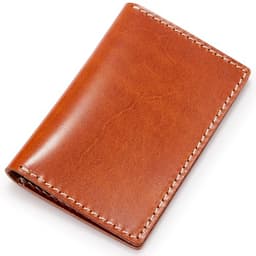
HISCOW Slim Full-Grain Veg-Tanned Card Holder (Cognac)
Leather grade: Full-grain
The only listing we cover that states full-grain, vegetable-tanned AND a 100% aniline pull-up finish - three separate checkable claims about three separate stages. It is also a one-piece shell with raw edges, so there is no edge coating to crack over the pull-up.
$55.00 · View on AmazonPrice as of October 20, 2026. #ad How we’re funded
- The dramatic wax version
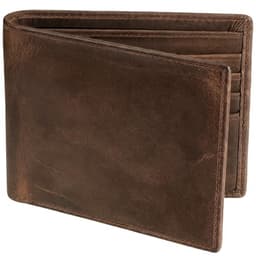
RUNBOX Full Grain Crazy Horse RFID Bifold
Leather grade: Full-grain
Full-grain with a hot-waxed crazy-horse finish, which is pull-up tuned for maximum contrast. A wallet is the best place to see the effect, because the fold is flexed several times a day - expect a pale crease within a week, and expect it to blend.
$39.99 · View on AmazonPrice as of October 20, 2026. #ad How we’re funded
- Pull-up on a belt
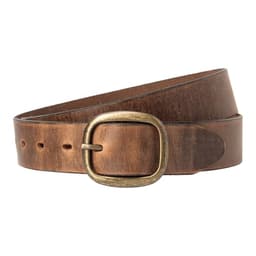
Artisana Leather Made in USA Women's Full-Grain Leather Belt (1.25")
Leather grade: Full-grain
A stated full-grain belt made in the United States whose brown variant states crazy horse leather - a pull-up wax finish that marks and then blends with wear. On a belt, that means the area at your usual buckle hole will lighten first, which reads as character rather than wear.
$49.99 · View on AmazonPrice as of October 20, 2026. #ad How we’re funded
Bottom line
Pull-up is a hide dyed through and loaded with oils and waxes, so it lightens where it works and darkens back as it rests. It is the most self-evidencing term in leather: you can confirm it with a bend of your thumb. Treat it as a good sign about the hide and a decisive sign about the look, then go and find the grade word separately — because a finish that beautiful can sit on any layer of the hide, and only one of those layers is the one you want.
How we know this. Veg Tan Club is written by an enthusiast, not a master leatherworker or a test lab. We compile each product’s published specs — grade, tannage, hardware — and reason from there. We say plainly when a listing doesn’t state a grade, and we haven’t physically handled every item we compare.
Frequently asked questions
What is pull-up leather?
Leather that has been dyed through with transparent aniline dye and then stuffed with oils and waxes. When you bend or stretch it, those oils and waxes migrate away from the stressed area, so the colour there lightens - and as the leather relaxes and warms, they move back and the colour returns. That lightening is the pull-up effect, and it is the whole reason the finish exists.
Is pull-up leather good quality?
The finish implies a decent hide but does not guarantee one. Pull-up requires an aniline dye with no pigment layer, which means the hide has to be good enough to be seen - there is no coating to hide a scar. So it is a positive signal. It is still a finish, not a grade: always look for the words full-grain or top-grain separately, because pull-up tells you nothing about which layer of the hide you have.
What is the difference between oil pull-up and wax pull-up?
What was used to stuff the hide. An oil pull-up tends to be softer with a smoother, more gradual colour shift; a wax pull-up is firmer and gives a sharper, higher-contrast lightening along a crease. Crazy horse leather is the best-known wax pull-up, and bridle leather is the classic hot-stuffed wax-and-tallow version. Listings often just say pull-up and leave you to guess.
Will scratches come out of pull-up leather?
Light surface marks usually do. Rubbing the area with a thumb or a soft cloth, or just the warmth of handling, moves the oils and waxes back and the mark blends in. Deeper cuts that break the grain surface do not come out - they become part of the leather's record. That is the deal with pull-up: it hides small damage well and keeps real damage forever.
Is pull-up leather the same as crazy horse leather?
Crazy horse is one kind of pull-up leather, not another word for it. Crazy horse is a specific hot-waxed finish on full-grain leather with a deliberately dramatic, high-contrast pull-up. Other pull-up leathers - oil-stuffed hides, bridle leather - show the same effect more subtly. If a listing says crazy horse, you know exactly which look you are getting; if it just says pull-up, you do not.
Does pull-up leather develop a patina?
Yes, and it is one of the better finishes for it, because there is no pigment coating in the way. An aniline hide darkens with handling, oils from your hands and light exposure, and the pull-up effect layers on top of that as a record of where the item flexes. The one trade-off is that the same open surface shows water marks more readily than a pigmented finish does.
Sources
- Wikipedia — Leather — Overview of leather, grain layers and the full-grain / top-grain / split hierarchy (accessed July 18, 2026)
- Encyclopaedia Britannica — Leather — Britannica on leather as chemically treated animal hide and its uses (accessed July 18, 2026)
- American Bench Craft — Leather terminology: Bridle leather — Bridle leather: developed for horse tack; full-grain vegetable-tanned leather finished by waxing or hot stuffing; smooth, polished surface that develops a patina (accessed September 18, 2026)
- Buckleguy — What is English Bridle Leather? How it's made and used — English bridle: drum-dyed, hot stuffed with waxes and tallows on grain and flesh; stiff when new, softens with care and break-in time (accessed September 18, 2026)
- Wikipedia — Patina — Patina as the surface change materials develop with age, handling and exposure (accessed July 18, 2026)
- 16 CFR Part 24 — FTC Guides for Select Leather and Imitation Leather Products — The FTC guides on leather labeling: unqualified 'leather' claims, imitation-leather disclosure, backing material and misuse of trade names (accessed August 19, 2026)
Keep reading
What is crazy horse leather?
The best-known wax pull-up, in full - how dramatic the effect is, and who it suits.
Read the explainerWhat is bridle leather?
The traditional hot-stuffed version: full-grain, vegetable-tanned, loaded with waxes and tallow.
Read the explainerHow a leather patina forms
What pull-up layers on top of - handling, oils and light, over years rather than weeks.
Read the guideHow is leather made?
Where finishing sits in the process, and why aniline dyeing is a stage-three decision.
Read the guideWhat is nappa leather?
The other finish word that gets mistaken for a grade - soft and fine-grained, not a layer of hide.
Read the explainerTypes of leather
Every grade, tannage and finish term in one glossary, with the distinctions kept straight.
Read the glossary