How Is Leather Made?
Three stages decide everything you will later read on a listing: the hide is split into layers, it is tanned, and it is finished. Grade comes from the first, tannage from the second, and most marketing words from the third.
How this is funded: we earn a commission if you buy through our links, at no extra cost to you. It never changes which product we recommend, and we’ll tell you when we’d skip one. Full disclosure.
Almost every argument on this site — whether full-grain is worth the money, why vegetable-tanned leather darkens, what “genuine leather” is really telling you — traces back to three moments in a tannery. A hide is split into layers. It is tanned. It is finished. Learn what happens at each stage and the entire vocabulary on a product listing stops being marketing and becomes a set of checkable claims.
This is the upstream page the rest of our guides assume. It is deliberately practical: we are not trying to make you a tanner, we are trying to make the next listing you read legible.
Stage 0: from raw hide to something that can be worked
Hides and skins are the raw material for leather — a hide from a large animal like cattle, a skin from a smaller one. A raw hide is mostly water and protein, and left alone it rots. So the first set of operations in any tannery is about preservation and cleaning rather than leather-making: the hide is cured (typically salted or chilled) to stop decay in transit, soaked back to rehydrate, treated in an alkaline lime solution to loosen the hair, dehaired, and fleshed to remove fat and tissue from the underside.
At the end of all that you have a wet, pale, swollen sheet called a pelt. It is not leather yet. If you dried it at this point it would turn into something closer to rawhide — hard, translucent and unusable as a bag.
Stage 1: splitting, which creates the grade
A cattle hide is far thicker than anything you would want in a wallet, so it gets reduced to working thickness. This is done by splitting the hide horizontally through its thickness and then shaving it to an even gauge. That one mechanical step is where every grade word you will ever read comes from.
- Full-grainis the top layer with its outer grain surface left intact — nothing sanded off the face. It is the densest, strongest part of the hide because that is where the fibres are tightest.
- Top-grain is that same top layer with the surface corrected: buffed or sanded to remove scars and blemishes, then usually given a new artificial grain. More uniform, slightly weaker, and it will not patina the same way.
- Split is the lower layer left behind after the top is taken off. It has no grain surface at all, which is why it is often coated or embossed to look like one. Most leather labelled simply “genuine leather” is cut from here.
So the grade is not a quality rating a brand awards itself. It is a physical fact about which part of the hide you are holding, and full-grain vs. top-grain goes through what that means in use. Thickness is a related fact from the same stage, usually quoted in ounces — see our leather weight guide.
Stage 2: tanning, which decides how the leather behaves
Tanning is the step that makes leather leather. It chemically alters the hide’s protein so it will no longer putrefy and so it stays supple when dry. Britannica describes three main families of tanning agent, and the choice between them is the most consequential decision in the whole process.
- Vegetable tanninguses tannins extracted from bark, wood and leaves. It works slowly — weeks rather than hours — and produces a firm, dense leather that darkens and develops a patina with handling and light. It is also the tannage this site is named after; what vegetable-tanned leather is covers it properly.
- Chrome tanninguses chromium salts and is dramatically faster, which is why the large majority of the world’s leather is chrome-tanned. It produces a softer, more pliable, more colour-stable leather that mostly does not darken with age.
- Oil tanning uses oils and is the traditional route to very soft, water-shedding leathers like chamois.
Two things follow from this that buyers routinely get wrong. First, tannage and grade are independent: a hide can be full-grain and chrome-tanned, or split and vegetable-tanned. We wrote vegetable-tanned vs. full-grain because the two get compared as if they were alternatives. Second, “not chrome-tanned” is not the same as “vegetable-tanned” — there is a whole family of chrome-free tannages in between, which is the subject of what chrome-free leather is.
Stage 3: finishing, which produces most of the marketing
After tanning, the leather is dyed, lubricated (“fatliquored”, which is how a hide is given back the flexibility the process stripped out), dried, softened and finished. Finishing is a broad word covering everything done to the surface, and this is where most of the vocabulary on a listing comes from.
- Aniline means the hide is dyed through with transparent dye and no pigment layer on top, so you are looking at the actual grain. It requires a good enough hide to show.
- Pigmented means an opaque coating is applied over the surface. Uniform, more stain-resistant, and it hides whatever is underneath.
- Embossed means a pattern is pressed into the surface — saffiano is the famous example, and it is a finish, not a grade.
- Stuffed with oils and waxes gives you pull-up and crazy horse effects, where the leather lightens where it flexes.
The single most useful habit you can take from this section: when a listing gives you a finish word, note that it has told you nothing about the grade. A pigmented, embossed split is a perfectly real product and a listing can describe it in genuinely attractive language without ever saying which layer of the hide it came from. The real-versus-fake checks are mostly checks on this stage.
What the process tells you about price
Three of the costs are traceable to the stages above. A thicker cut means fewer usable pieces per hide. A slower tannage means weeks of tank time and inventory rather than hours. An aniline finish means the tannery had to start with a hide good enough to be seen, because there is no pigment to hide a scar. That is why full-grain costs what it costs and why leather bags are priced the way they are. Brand markup sits on top and is not traceable to anything in a tannery.
Where the environmental question actually lives
Tanning is the chemically intensive stage, which is why the industry’s own environmental auditing — the Leather Working Group’s tannery certification, with its Gold, Silver and Bronze ratings — audits tanneries rather than brands or finished goods. That is worth knowing because it tells you where to direct a question. “Is this bag sustainable?” is almost unanswerable; “which tannery made this leather, and is it certified?” is a question with a real answer, and the makers who can answer it tend to publish it unprompted.
How to read a listing once you know the three stages
- Find the grade word. Full-grain, top-grain, split, or nothing. “Premium” and “luxury” are not grades. Under the FTC’s leather guides, how a product may describe its material is regulated — but a seller is free to simply say less.
- Find the tannage word. Most listings have none. The absence is normal and is itself information: it means nobody is promising you the leather will patina.
- Separate the finish words from both. Aniline, pull-up, saffiano, nappa, crazy horse, bridle, Italian. Interesting, often desirable, and none of them a grade.
- Then look for a number. A thickness in ounces, a dimension, a weight. A listing that prints numbers is a listing written by someone who measured.
Here is that read applied to three listings from our own registry. Every cell is the listing’s own words or “Not published” — and the pattern to notice is that the listings willing to talk about stage two are usually willing to talk about stages one and three as well.
| Listing | Stage 1 — grade | Stage 2 — tannage | Stage 3 — finish |
|---|---|---|---|
| ALBEPPE Tuscan bifold | Full-grain | Vegetable-tanned (named tannery, consortium certificate) | Not published |
| Time Resistance dopp kit | Full-grain | Vegetable-tanned | Hand-dyed; handmade in Italy |
| HISCOW card holder | Full-grain | Vegetable-tanned (Italian) | 100% aniline, pull-up effect |
| A typical listing in this category | Not published | Not published | “Premium” / “luxury” |
Three listings that publish their process
Not the three best products on the site - the three whose listings tell you most about the stages above, which is a useful thing to see once rather than read about.
- Names the tannery
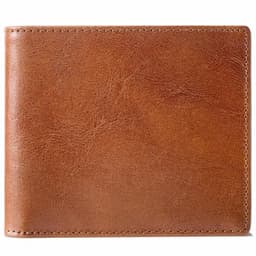
ALBEPPE Tuscan Vegetable-Tanned Leather Bifold Wallet
Leather grade: Full-grain
States full-grain and vegetable-tanned, names the Tuscan tannery, and cites a consortium certificate for the leather. That is a grade claim, a tannage claim and a traceable origin claim in one listing - the combination almost nothing in this price band offers.
$54.95 · View on AmazonPrice as of October 20, 2026. #ad How we’re funded
- Names grade, tannage and country
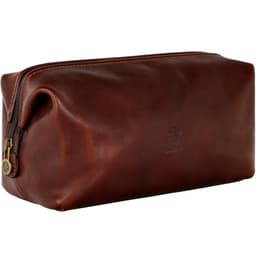
Time Resistance Italian Vegetable-Tanned Leather Dopp Kit
Leather grade: Full-grain
Full-grain cowhide, hand-dyed using vegetable tanning, handmade in Italy. Three separate claims from three different stages of the process, which is why it also happens to be the one item here that will visibly change colour with use.
$125.00 · View on AmazonPrice as of October 20, 2026. #ad How we’re funded
- Names the finish
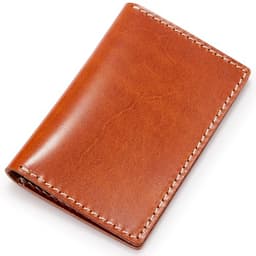
HISCOW Slim Full-Grain Veg-Tanned Card Holder (Cognac)
Leather grade: Full-grain
The clearest example of stage three on the site: full-grain, vegetable-tanned, and a stated 100% aniline pull-up finish. Aniline means dyed through with no pigment layer, which is why this hide can darken rather than scuff pale.
$55.00 · View on AmazonPrice as of October 20, 2026. #ad How we’re funded
Bottom line
Splitting decides the grade, tanning decides the behaviour, finishing decides the look. Almost every disappointing leather purchase is a mismatch between one of those and what the buyer assumed: a split hide bought as a lifetime piece, a chrome-tanned bag bought in the hope of a patina, or a pigmented finish bought expecting the grain to show through. You cannot verify a tannery from a product page, but you can tell which of the three stages a listing is willing to talk about — and that is usually enough.
How we know this. Veg Tan Club is written by an enthusiast, not a master leatherworker or a test lab. We compile each product’s published specs — grade, tannage, hardware — and reason from there. We say plainly when a listing doesn’t state a grade, and we haven’t physically handled every item we compare.
Frequently asked questions
How is leather made, in short?
A raw hide is cleaned and dehaired, split into layers by thickness, tanned so the protein stops rotting, then dyed and finished. Those are the three stages a buyer needs: splitting produces the grade words (full-grain, top-grain, split), tanning produces the tannage words (vegetable-tanned, chrome-tanned), and finishing produces almost every other word on a listing.
What is tanning and why is it necessary?
Tanning chemically alters the protein in a hide so it will not putrefy, and so it stays flexible when it dries instead of turning hard and brittle. Untanned hide is not leather - it is raw skin that will rot. Britannica describes three main families of tanning agent: vegetable tannins, chromium salts, and oils. Which one is used is the single biggest decision in how a hide behaves afterwards.
How long does it take to make leather?
It depends entirely on the tannage. Chrome tanning can be done in hours to a day, which is a large part of why most of the world's leather is chrome-tanned. Vegetable tanning works slowly through pits or drums over weeks. That difference in process time is the honest explanation for a lot of the price gap between otherwise similar-looking hides.
Is leather a by-product of the meat industry?
Hides and skins are the raw material for leather and come from animals raised primarily for other reasons, which is the usual basis for calling leather a by-product. It is fair to note the term is contested: a hide has commercial value, so it is also a co-product rather than waste. We state the mechanism and leave the ethics to you.
Does how leather is made explain the price?
Much of it. A thicker piece means less usable area per hide; a slower tannage means weeks of process time; an aniline finish means the hide has to be good enough to show, because there is no pigment layer to hide flaws. Each of those three decisions costs money in a way you can trace. Brand markup sits on top of all of it and is not traceable at all.
Sources
- Encyclopaedia Britannica — Hide (animal skin) — Britannica on hides and skins as the raw material for leather (accessed July 18, 2026)
- Encyclopaedia Britannica — Tanning — Britannica on the three main tanning agents: vegetable tannin, chromium salts, and oils (accessed July 18, 2026)
- Wikipedia — Tanning (leather) — The tanning process, vegetable vs. chrome tannage, and why ~90% of leather is chrome-tanned (accessed July 18, 2026)
- Wikipedia — Leather — Overview of leather, grain layers and the full-grain / top-grain / split hierarchy (accessed July 18, 2026)
- Leather Working Group — Standards & Certification — The leather industry's environmental audit standard for tanneries (Gold/Silver/Bronze) (accessed July 18, 2026)
- 16 CFR Part 24 — FTC Guides for Select Leather and Imitation Leather Products — The FTC guides on leather labeling: unqualified 'leather' claims, imitation-leather disclosure, backing material and misuse of trade names (accessed August 19, 2026)
Keep reading
Types of leather
The master glossary - every grade, tannage and finish term you will meet on a listing, in one place.
Read the glossaryFull-grain vs. top-grain leather
What the splitting stage actually produces, and why only one of the two keeps the hide's strongest layer.
Compare the gradesVegetable-tanned vs. chrome-tanned leather
The tanning stage in detail - process time, smell, stiffness and how each one ages.
Compare the tannagesWhat is chrome-free leather?
A third answer at the tanning stage, and why it does not mean vegetable-tanned.
Read the explainerWhat is pull-up leather?
What the finishing stage can do - an aniline hide stuffed with oil and wax that lightens as it bends.
Read the explainerHow to tell real leather from fake
The checks that follow from knowing how leather is made - grain, edge, smell and backing.
Learn the tests