What Is Saddle Leather?
One name doing three jobs: a category of firm vegetable-tanned hide built for tack, a loose synonym for a warm tan color, and a styling word on listings that mean neither. Telling them apart is the whole skill.
How this is funded: we earn a commission if you buy through our links, at no extra cost to you. It never changes which product we recommend, and we’ll tell you when we’d skip one. Full disclosure.
Saddle leather, properly used, means firm, full-thickness, vegetable-tanned cowhide of the kind developed for saddlery and tack. It is the family that also contains skirting leather and harness leather: thick hide from the dense parts of the animal, cured slowly with plant tannins, finished to hold a shape under load rather than to fall softly.
It is also, on a great many product listings, a color word and a mood word. That is the complication this page exists to resolve, because “saddle leather” and “saddle tan” are a single keystroke apart and mean entirely different things — and because unlike a grade claim, nobody polices the first one.
What makes it saddle leather
Three properties, and all three have to be present.
A vegetable tannage.Plant tannins, traditionally extracted from bark and wood, in a slow process measured in weeks. This is the property that matters most, because vegetable-tanned leather is firmer than chrome-tanned leather at the same thickness, holds a tooled or stamped impression, and darkens and burnishes with handling instead of staying the color it was dyed. Around nine-tenths of the world’s leather is chrome-tanned, which is why genuinely firm leather is a minority product — the comparison is in vegetable-tanned vs. chrome-tanned leather.
Full thickness, from a dense part of the hide.Saddlery leather is not split down to a drapey weight. It is left thick — the kind of substance measured in the double digits on the ounce scale explained in leather weight and thickness— and it is cut from the back and butt rather than the belly, where the fiber structure is loosest. That is the difference between a strap that holds its line and one that rolls over under load.
A finish that preserves firmness.Saddle leather is finished minimally compared with upholstery or garment leather: dressed with oils and waxes, not sealed under a thick pigmented coating. A heavy coating would both hide the grain and stop the surface developing — and the point of this material is that the surface develops.
Note what is not on that list: a grade. Saddle leather describes a tannage, a thickness and a use-class. Whether the grain layer is intact is a separate question with a separate answer, and the vocabulary for it is in full-grain vs. top-grain leather. In practice good saddle leather is full-grain, because the whole point is a hide strong enough to be structural — but a listing has to say so, and plenty do not.
Saddle, bridle, harness, skirting: the family tree
These four words come from the same tradition and get used loosely. Here is the useful distinction.
Skirting leatheris the thickest of the group — the heavy vegetable-tanned hide used for the parts of a saddle that bear weight. If you have ever handled a holster or a heavy tooled belt, you have handled something in this weight class.
Harness leather is similar hide dressed with more oil and tallow, so it stays flexible under weather and tension. It is the ancestor of a lot of modern work-strap leather.
Bridle leather is the one with a distinct, documented finishing step: full-grain vegetable-tanned hide hot-stuffed with waxes and tallows on both the grain and flesh sides, which produces a smooth polished surface, a notable stiffness when new, and a patina with use. That stiffness is not a defect and it does soften with break-in. Our full explainer is what is bridle leather.
Saddle leather is the umbrella term most people reach for, covering the general class rather than one finish. Which is precisely why it is the one that gets borrowed by marketing.
The three different things a listing can mean
1. The material. A listing that says saddle leather and also states a grade, a vegetable tannage, or a thickness is making a material claim you can at least partly check. This is the minority case and it is the one worth paying for.
2. The color.“Saddle tan,” “saddle brown,” “saddle” as a colorway. This is a shade — the warm mid-brown that vegetable-tanned tack leather ages into — and it appears on chrome-tanned bags, coated splits and fully synthetic material. It is not dishonest; it is a color name, the way “cognac” is.
3. The association.A listing that uses “saddle leather” as an adjective with no grade, no tannage and no thickness anywhere in it. This is the case to be careful about, and it is the same pattern we document elsewhere with the word Italian: a term that does four different jobs and reads identically in a title, which is the whole argument of what is Italian leather.
One thing the regulator does cover: the FTC’s leather guides constrain unqualified use of the word leatheritself and require disclosure where a product is imitation or has a leather-fiber backing. They do not define “saddle leather” as a material standard. So the word leather carries a legal floor; the word saddle in front of it carries none.
How to read a saddle-leather listing in thirty seconds
Look for a grade. If the listing says full-grain or top-grain, you know which layer of hide you are getting. If it says nothing, the grade is unpublished, and that is how we record it in our own registry — never a guess.
Look for a tannage. “Vegetable-tanned” is the single most informative word available here and almost nobody writes it: of the hundred-odd products we cover, a handful state one. If a listing claims saddle leather and names a vegetable tannage, that is a genuine signal.
Look for a thickness. An ounce or millimeter figure is the spec that actually predicts firmness, and it is nearly unobtainable — across our whole belts registry, almost nothing publishes one. Its absence is normal rather than suspicious, but its presence is meaningful.
Then sanity-check the price against the claim. Full-thickness vegetable-tanned hide is a slow, expensive material. A very cheap item making the full set of saddle-leather claims is the one case where the arithmetic should give you pause, and the physical tests in how to tell real leather from fake are the follow-up.
Where this material actually shows up in our registry
Three products whose listings make a claim in this family - one that states full-grain saddle leather by name, one firm full-grain strap built for load, and one that states both a grade and a vegetable tannage with a named tannery. We have not handled any of them; every claim is read from the live listing.
- States saddle leather by name
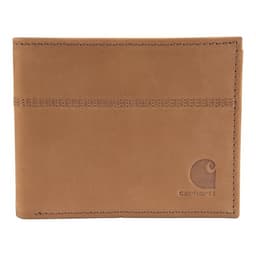
Carhartt Full Grain Saddle Leather RFID Wallet
Leather grade: Full-grain
The one listing in our registry that uses the term and backs it with a grade: it states full-grain saddle leather, from a workwear brand with a durability reputation to protect. It does not state a tannage or a thickness, so those fields stay unpublished - but a grade plus the saddle-leather term is more than this category usually offers.
$42.99 · View on AmazonPrice as of October 19, 2026. #ad How we’re funded
- The load-bearing strap case
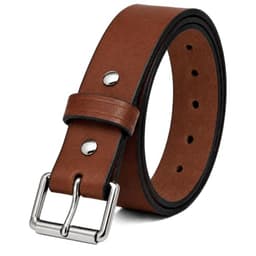
Hanks Gunner Full-Grain Gun Belt (1.5")
Leather grade: Full-grain
A belt is the application saddle-type leather exists for, and this listing publishes more than any other belt we cover: full-grain, a 1.5-inch width, US manufacture, a stainless buckle and a 100-year warranty. It does not publish a thickness in ounces, which is the one spec that would let you compare its firmness on paper.
$89.00 · View on AmazonPrice as of October 19, 2026. #ad How we’re funded
- The documented vegetable tannage
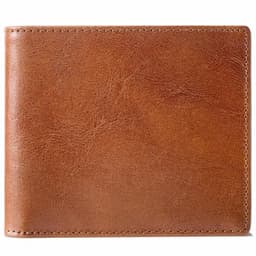
ALBEPPE Tuscan Vegetable-Tanned Leather Bifold Wallet
Leather grade: Full-grain
If what attracts you to saddle leather is the tannage rather than the word, this is the listing to read: it states both full-grain and vegetable-tanned, names the Tuscan tannery, and cites a numbered consortium certificate. That is a checkable supply chain, which is rarer on a mass-market listing than any grade claim.
$54.95 · View on AmazonPrice as of October 19, 2026. #ad How we’re funded
Living with it
Two things to expect. It will be stiff, and it will change color. The stiffness is the point — a firm strap is what holds a load without rolling — and it eases over weeks of use as the fiber network takes a set at your folds. Do not accelerate that with heat or water; both do permanent damage rather than break-in, as set out in does leather shrink. The patient version, for a belt, is how to break in a leather belt.
The color change is the reason this material has admirers. Vegetable-tanned hide darkens and burnishes where it is handled and where light reaches it, which is patina rather than wear. It also means two consequences people are not warned about: a pale piece will not stay pale, and a drop of water can leave a visible ring. The care routine that accounts for both is in how to care for vegetable-tanned leather, and the key point is restraint — an oil-heavy conditioner will pull the color forward years early.
How we know this. Veg Tan Club is written by an enthusiast, not a master leatherworker or a test lab. We compile each product’s published specs — grade, tannage, hardware — and reason from there. We say plainly when a listing doesn’t state a grade, and we haven’t physically handled every item we compare.
Frequently asked questions
What is saddle leather?
In its original and most useful sense, saddle leather is firm, full-thickness, vegetable-tanned cowhide developed for saddlery and tack - the family of leathers that includes skirting and harness leather. It is tanned with plant tannins rather than chromium salts, left relatively thick, and finished to hold a shape under load rather than to drape. Those three properties are what make it the standard material for belts, holsters, straps and heavy small goods.
What is saddle leather made from?
Cowhide, from the thickest and most tightly structured parts of the hide - the back and butt rather than the belly. It is vegetable-tanned, traditionally with tannins extracted from bark and wood, in a slow process that can take weeks rather than the hours a chrome tannage needs. The combination of a dense area of hide, full thickness and a vegetable tannage is what produces the firmness the name implies.
Is saddle leather the same as full-grain leather?
No - they describe different things and a product can be either, both, or neither. Full-grain is a grade: it says the hide's outer grain layer is intact and has not been sanded. Saddle leather describes a tannage and a use-class: vegetable-tanned, firm, full-thickness hide for tack. Good saddle leather is usually full-grain, but 'saddle leather' on a listing is not itself a grade claim, so the grade still has to be stated separately.
Is saddle leather the same as bridle leather?
They are close relatives from the same tradition, and the difference is the finishing. Both start as firm vegetable-tanned hide for tack. Bridle leather is additionally hot-stuffed with waxes and tallows on both the grain and flesh sides, which is what gives it its polished, slightly waxy surface and its characteristic stiffness when new. Saddle leather is the broader family; bridle is a specific finish within it.
What does 'saddle tan' mean?
It is a color, not a material. Saddle tan describes the warm mid-brown that vegetable-tanned tack leather naturally ages into, and it gets used on products made of entirely different leather - and on products made of no leather at all. A listing that says 'saddle tan' is telling you the shade. A listing that says 'saddle leather' may be telling you the material, or may be reaching for the same association. Read on for how to tell.
Is saddle leather good for a wallet or a belt?
For a belt, it is close to ideal: a belt is a load-bearing strap and firm, thick, vegetable-tanned hide is exactly what holds tension without stretching. For a wallet it is a trade - saddle leather is stiff at first and takes real time to break in, and a thick wallet in a front pocket is a different object from a slim one. What you get in exchange is a piece that burnishes and darkens into a patina rather than wearing out.
Sources
- Wikipedia — Leather — Overview of leather, grain layers and the full-grain / top-grain / split hierarchy (accessed July 18, 2026)
- Wikipedia — Tanning (leather) — The tanning process, vegetable vs. chrome tannage, and why ~90% of leather is chrome-tanned (accessed July 18, 2026)
- Encyclopaedia Britannica — Tanning — Britannica on the three main tanning agents: vegetable tannin, chromium salts, and oils (accessed July 18, 2026)
- Encyclopaedia Britannica — Leather — Britannica on leather as chemically treated animal hide and its uses (accessed July 18, 2026)
- American Bench Craft — Leather terminology: Bridle leather — Bridle leather: developed for horse tack; full-grain vegetable-tanned leather finished by waxing or hot stuffing; smooth, polished surface that develops a patina (accessed September 18, 2026)
- Buckleguy — What is English Bridle Leather? How it's made and used — English bridle: drum-dyed, hot stuffed with waxes and tallows on grain and flesh; stiff when new, softens with care and break-in time (accessed September 18, 2026)
- 16 CFR Part 24 — FTC Guides for Select Leather and Imitation Leather Products — The FTC guides on leather labeling: unqualified 'leather' claims, imitation-leather disclosure, backing material and misuse of trade names (accessed August 19, 2026)
Keep reading
What is bridle leather?
The hot-stuffed finish within the same tack tradition, and why it is stiff when new.
Read the explainerWhat is vegetable-tanned leather?
The tannage underneath saddle leather, and the property that makes a patina possible.
Read the explainerLeather weight and thickness
What the ounce scale measures - the spec that firmness actually depends on.
Read the explainerWhat is pull-up leather?
The oil-and-wax finish that is often confused with saddle leather and behaves differently.
Read the explainerBest full-grain leather belts
Where firm vegetable-tanned hide earns its place: a strap under constant tension.
See the picksBest vegetable-tanned wallets
The small-goods version, including the one listing that names its tannery.
See the picks