What Is Chrome-Free Leather?
A negative claim dressed as a positive one. Chrome-free tells you which tanning agent was avoided and nothing about which one was used - so it is the rare leather term you should respond to with a follow-up question.
How this is funded: we earn a commission if you buy through our links, at no extra cost to you. It never changes which product we recommend, and we’ll tell you when we’d skip one. Full disclosure.
“Chrome-free” has become a quality signal in leather marketing, and it is the only major leather term on this site that is defined entirely by absence. It tells you one tanning agent was not used. It does not tell you what was used instead, how long the process took, or how the finished leather will behave — and those are the three things you actually wanted to know.
That is not an argument against chrome-free leather. There are good reasons to want it. It is an argument for treating the phrase as the start of a question rather than the end of one.
What tanning is, in one paragraph
Tanning chemically alters the protein in a raw hide so it stops rotting and stays flexible when it dries. Without it you do not have leather, you have skin that will decay. Britannica describes three main families of tanning agent: vegetable tannins drawn from bark, wood and leaves; chromium salts; and oils. Chrome tanning is overwhelmingly the dominant method worldwide because it is fast — hours to a day, against weeks for vegetable tanning — and because it yields a soft, pliable, colour-stable leather that suits most modern products. The full comparison is in vegetable-tanned vs. chrome-tanned leather.
So what does chrome-free actually commit a seller to?
One thing: no chromium. That is it. Rule chromium out of three families of tanning agent and you are still left with vegetable tannins, oils, and other mineral and synthetic agents the industry uses. A hide tanned by any of those can be sold as chrome-free, and they do not produce the same leather as each other at all.
This is why the term is so often paired with nothing else. “Chrome-free Italian leather” sounds like three facts and contains roughly half of one: “Italian” names a geography rather than a process (see what Italian leather means), and “chrome-free” names an absence. If the hide were vegetable-tanned in a Tuscan tannery, the seller would almost certainly say so, because that is a better claim and it costs nothing to make.
Under the FTC’s leather guides, there are real limits on how a product may describe its material — but nothing obliges a seller to name a tannage at all. Silence is permitted, which means the absence of a tannage claim is normal rather than suspicious. What should prompt a second look is a listing that reaches for the vaguer term when the specific one was available.
Chrome-free vs. vegetable-tanned: the mix-up that matters
All vegetable-tanned leather is chrome-free. Very little chrome-free leather is vegetable-tanned. Those two sentences are the whole distinction, and conflating them is how people end up disappointed with a bag that was supposed to develop a patina and never did.
Patina is a vegetable-tanning property, not a chrome-free one. The firm handle, the slow darkening with handling and light, the way a wallet records the shape of your pocket — those come from the specific chemistry of tannins binding to the hide, and from a slow process. A hide tanned chrome-free by some other route may be perfectly good leather and still stay exactly the colour you bought it.
There is a second independent axis to keep separate as well. Tannage is not grade. A chrome-free hide can be a coated split, and a full-grain hide can be chrome-tanned. We wrote vegetable-tanned vs. full-grain leather entirely because those two get compared as if you had to choose between them.
What the three claims give you, side by side
Every cell below is what the claim itself commits a seller to — not what a particular product is like, but what you can infer from the words alone.
| “Chrome-free” | “Vegetable-tanned” | No tannage stated | |
|---|---|---|---|
| Chromium ruled out? | Yes | Yes | No - assume chrome-tanned |
| Names the tanning agent? | No | Yes | No |
| Predicts a patina? | No | Yes | No |
| Predicts handle (firm vs. soft)? | No | Yes - firm | No |
| Tells you the grade? | No | No | No |
| Verifiable from a photo? | No | No | No |
| Best follow-up question | “Tanned with what, then?” | “Which tannery?” | “What is the grade?” |
The reasons people want chrome-free, taken seriously
Two of them are real and neither is about how the leather performs.
Environmental. Tanning is the chemically intensive stage of leather production, which is why the industry’s own environmental auditing looks at tanneries rather than brands. The Leather Working Group certifies tanneries against an environmental standard with Gold, Silver and Bronze ratings. That is a useful thing to know because it points at a better question than chrome-free: a certified tannery is an auditable claim, and a tanning agent named on a product page is not an audit of anything. If sustainability is your reason for asking, ask about the tannery.
Skin contact. Some people react to chromium, and for items worn directly against skin all day that is a legitimate reason to prefer a hide tanned another way. If that is your reason, you want a named tannage you can rely on rather than a negative claim from an anonymous seller — and if it is a medical question, it is one for a clinician rather than a leather site.
How to shop for it without being sold a word
- Prefer a named tannage over a ruled-out one. “Vegetable-tanned” beats “chrome-free” every time, because it tells you what the hide is rather than what it is not.
- Look for a tannery or a certificate. The strongest listings name the tannery, or cite a consortium certificate — the Italian vegetable-tanned consortium is the best-known example of a body that certifies leather as genuinely veg-tanned by its members.
- Check the grade separately. A tannage claim is not a grade claim, and an unstated grade on a chrome-free listing should carry exactly as much weight as an unstated grade anywhere else. Full-grain vs. top-grain is the vocabulary.
- Assume chrome-tanned where nothing is said. Not as an accusation — as arithmetic. Most leather is chrome-tanned, so an unstated tannage is most likely the common one.
Listings that name a tannage instead of ruling one out
None of these says chrome-free. All three say something stronger - a specific tannage, and in two cases where the leather came from.
- Strongest disclosure
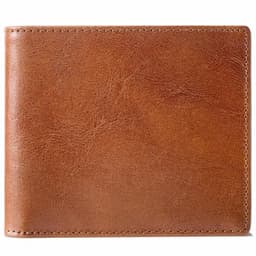
ALBEPPE Tuscan Vegetable-Tanned Leather Bifold Wallet
Leather grade: Full-grain
States full-grain and vegetable-tanned, names the Tuscan tannery and cites a consortium certificate for the leather. This is what a tannage claim looks like when the seller expects to be checked.
$54.95 · View on AmazonPrice as of October 20, 2026. #ad How we’re funded
- Tannage plus a number
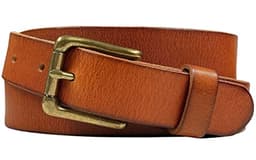
Belts.com Women's Solid Brass Roller Buckle Full-Grain Belt (1-1/8", 30mm)
Leather grade: Full-grain
Vegetable-tanned one-piece full-grain cowhide with a published 8-9 oz (4mm) thickness. The only women's belt we found that states a tannage and an ounce weight, which together predict both how it ages and how stiff it starts.
$28.95 · View on AmazonPrice as of October 20, 2026. #ad How we’re funded
- Tannage plus a country
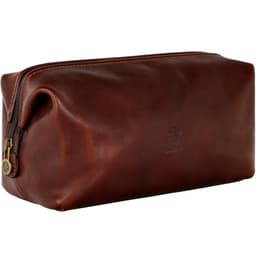
Time Resistance Italian Vegetable-Tanned Leather Dopp Kit
Leather grade: Full-grain
Full-grain, hand-dyed using vegetable tanning, handmade in Italy - grade, tannage and country of manufacture in one listing. It is also the pick most likely to visibly darken with use, which is the behaviour chrome-free alone would never have promised you.
$125.00 · View on AmazonPrice as of October 20, 2026. #ad How we’re funded
Bottom line
Chrome-free is a real property and a weak claim. It rules out one tanning agent out of several, says nothing about the one that was used, and predicts nothing about how the leather will handle, darken or last. If you want the behaviour people associate with the term — firmness, a slow patina, a hide that records use — the word you are actually looking for is vegetable-tanned, ideally with a tannery named next to it. And if your reason is environmental, the question with an auditable answer is about the tannery, not the chemistry printed on the product page.
How we know this. Veg Tan Club is written by an enthusiast, not a master leatherworker or a test lab. We compile each product’s published specs — grade, tannage, hardware — and reason from there. We say plainly when a listing doesn’t state a grade, and we haven’t physically handled every item we compare.
Frequently asked questions
What does chrome-free leather mean?
It means the hide was tanned without chromium salts. That is a statement about what was not used. Britannica describes three main families of tanning agent - vegetable tannins, chromium salts and oils - so ruling out one of them still leaves several possibilities. A listing that says chrome-free and stops has given you a negative claim; the useful follow-up is which tannage it actually used.
Is chrome-free leather the same as vegetable-tanned?
No, and this is the most common mix-up. All vegetable-tanned leather is chrome-free, but not all chrome-free leather is vegetable-tanned. Vegetable tanning is a specific, slow process using tannins from bark, wood and leaves, and it is what gives leather the firm handle and the darkening patina people want. Chrome-free is a broader, vaguer category that includes it.
Is chrome-free leather better?
Not automatically, and that is the honest answer. The reasons people seek it out are environmental and dermatological rather than performance-related. On behaviour, chrome tanning produces a softer, more colour-stable leather, and vegetable tanning produces a firmer leather that patinas. Neither is strictly better; they are different, and chrome-free on its own does not tell you which one you are getting.
Why is most leather chrome-tanned?
Speed, mostly. Chrome tanning can be completed in a fraction of the time vegetable tanning takes, which makes it far cheaper per hide and much easier to run at scale. It also yields a soft, pliable, colour-stable leather that suits most modern products. That is why the great majority of the world's leather is chrome-tanned.
Is chrome-free leather vegan?
No. Chrome-free describes the tanning chemistry, not the material. Chrome-free leather is still leather, made from an animal hide. If you are looking for a non-animal material, the relevant terms are PU, vegan and faux leather, and we cover what each of those actually is separately.
How can I tell if leather is chrome-free?
You cannot, from a photograph or by touch. There is no home test. You are relying entirely on the seller's disclosure, which is why the practical approach is to look for a named tannage rather than a chrome-free claim - vegetable-tanned, with a tannery or a consortium certificate named, is a claim with something behind it. Where a listing is silent, assume chrome-tanned, because that is what most leather is.
Sources
- Encyclopaedia Britannica — Tanning — Britannica on the three main tanning agents: vegetable tannin, chromium salts, and oils (accessed July 18, 2026)
- Wikipedia — Tanning (leather) — The tanning process, vegetable vs. chrome tannage, and why ~90% of leather is chrome-tanned (accessed July 18, 2026)
- Leather Working Group — Standards & Certification — The leather industry's environmental audit standard for tanneries (Gold/Silver/Bronze) (accessed July 18, 2026)
- Wikipedia — Leather — Overview of leather, grain layers and the full-grain / top-grain / split hierarchy (accessed July 18, 2026)
- 16 CFR Part 24 — FTC Guides for Select Leather and Imitation Leather Products — The FTC guides on leather labeling: unqualified 'leather' claims, imitation-leather disclosure, backing material and misuse of trade names (accessed August 19, 2026)
- Consorzio Vera Pelle Italiana Conciata al Vegetale — The Tuscan consortium of vegetable tanneries and its guarantee trademark for Italian vegetable-tanned leather (accessed August 19, 2026)
Keep reading
Vegetable-tanned vs. chrome-tanned leather
The two tannages compared properly - process time, handle, smell and how each one ages.
Compare the tannagesWhat is vegetable-tanned leather?
The specific, nameable tannage that chrome-free only hints at - and the one this site is named after.
Read the explainerHow is leather made?
Where tanning sits in the process, and why it is the stage that decides how a hide behaves.
Read the guideVegetable-tanned vs. full-grain leather
Tannage and grade are independent axes. This is the page that stops you comparing them as alternatives.
Read the explainerBest vegetable-tanned leather wallets
The commercial page for the tannage - six wallets whose listings state it in writing.
See the picksPU vs. vegan vs. genuine leather
If what you actually want is a non-animal material, this is the page that sorts those terms out.
Read the explainer