What Is Saffiano Leather?
A cross-hatch texture pressed into the surface and sealed under a finish. Brilliant at resisting scratches, incapable of developing a patina — and silent on grade.
How this is funded: we earn a commission if you buy through our links, at no extra cost to you. It never changes which product we recommend, and we’ll tell you when we’d skip one. Full disclosure.
Saffiano is a finish, not a grade. A fine cross-hatch pattern is pressed into the surface of the leather under heat and pressure, and a protective coating is applied over it. That combination is why Saffiano bags shrug off the scratches that mark a smooth calfskin — and why they never develop the patina people associate with good leather.
How it’s made
Two steps, in this order:
- Embossing. The leather passes through a heated plate or roller carrying the cross-hatch pattern, which presses that texture permanently into the surface. The texture is not the hide’s own grain; it is a pattern imposed on it.
- Finishing. A coating is applied over the embossed surface, sealing it and giving the characteristic slight sheen. That coating is what does the water and scratch resistance.
Because the texture is imposed rather than natural, the base leather can be almost anything. In the luxury goods it is associated with, it is generally applied to calfskin. Further down the market, the same cross-hatch appears on coated splits and on synthetics, where the texture does exactly the job embossing always does: it makes a lesser surface read as leather.
What it’s genuinely good at
- Hiding scratches. A busy texture breaks up light, so a scuff that would be an obvious line on smooth leather disappears into the pattern. This is the single biggest reason people like it.
- Shrugging off light spills. The sealed finish means water beads rather than soaking in. Compare that with unfinished veg-tan, where a single drop leaves a ring.
- Staying uniform. No color variation, no visible natural marks, and it looks the same across every panel — which is exactly what a structured, formal bag usually wants.
- Holding structure. The finish adds a little stiffness, which helps a boxy bag stay boxy.
What it can’t do
It cannot age. Patina happens at the grain surface, and on Saffiano the grain surface is under a coating. A Saffiano bag looks essentially the same after three years as it did new — which is the appeal for some people and the disappointment for others.
It cannot be repaired the same way. A scratch on full-grain can often be worked out with a thumb and a little conditioner, because the material is leather all the way down. When a Saffiano coating cracks or wears through — usually at corners, along fold lines, or where a strap rubs — the exposed material underneath is a different color and texture, and no conditioner brings the finish back.
It cannot tell you what it’s made of. This is the important one for buyers. Saffiano says nothing about grade, tannage or hide. A listing that leads with “Saffiano leather” and never says full-grain or top-grain has told you about the texture and nothing about the substance.
What the labeling rules actually say
The FTC’s leather guides address this situation directly. They say that when all or part of a product has been embossed, dyed or otherwise processed so as to simulate the appearance of a different kind or type of leather, the kind and type of leather it is actually made from should be disclosed — their own example is that a product made wholly of top grain cowhide processed to imitate pigskin may be represented as being made of Top Grain Cowhide. The same guides require that non-leather material which appears to be leather is disclosed as such.
In other words, the framework expects the underlying material to be named when the surface has been dressed up. In practice, on marketplace listings, it very often isn’t. That gap is the whole reason we print “Not published” in our spec tables rather than inferring a grade from a texture name.
Saffiano, pebbled, and other textures
Texture words get used loosely, and it is worth separating them:
- Saffiano — a fine, regular cross-hatch, always embossed, normally sealed.
- Pebbled — a rounded, bumpy surface. Sometimes the hide’s own character, sometimes an embossed imitation of it. Genuinely pebbled full-grain exists; so does embossed pebble on a split.
- Shrunken grain — a natural pebbling produced by the tanning process rather than by a plate.
- Crazy horse — a waxed finish on full-grain that scratches deliberately and rubs back, which is almost the opposite philosophy to Saffiano.
- Patent — a high-gloss lacquered coating. Same underlying trade as Saffiano, pushed further: more protection, less leather behavior, and cracking as the eventual failure.
Should you buy it?
Buy Saffiano if you want a bag that stays looking new, resists the everyday scuffing a commute inflicts, and wipes clean — and if you are buying from a maker who states what the underlying leather is. It is a genuinely sensible finish for a structured work bag that will be set down on desks and floors constantly.
Skip it if you wanted leather that improves. Everything that makes Saffiano low-maintenance also makes it static, and when the finish eventually goes there is no graceful stage after that. If “it gets better with age” is why you are buying leather at all, a stated full-grain smooth hide is the thing you actually want.
Textured finish, or natural grain?
One bag with a textured finish and a stated grade, one with no texture treatment at all. The point of the pairing is that both listings tell you what the leather is — which is the part Saffiano listings usually skip.
- Textured, grade stated
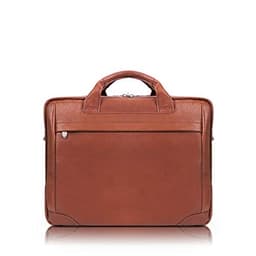
McKlein Montclare Pebble-Grain Calfskin Briefcase (13")
Leather grade: Top-grain
A pebble-grain calfskin briefcase whose listing states top-grain. That is what a textured finish looks like when the maker still tells you the substance underneath it.
- Natural grain instead
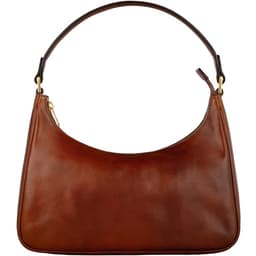
Time Resistance Full-Grain Leather Shoulder Handbag
Leather grade: Full-grain
No embossed texture, stated full-grain. Buy this if you want a bag that changes with use rather than one engineered to stay exactly as it left the factory.
$220.00 · View on AmazonPrice as of October 20, 2026. #ad How we’re funded
Bottom line
Saffiano is a cross-hatch texture pressed into leather and sealed under a finish. It buys scratch resistance, water resistance and uniformity, and it costs you patina, repairability and any information about the hide underneath. Treat the word as a description of the surface only, and go looking for the grade separately — because on the listings where the grade is missing, the texture is doing the work the grade should be doing. For the wider map, see types of leather.
How we know this. Veg Tan Club is written by an enthusiast, not a master leatherworker or a test lab. We compile each product’s published specs — grade, tannage, hardware — and reason from there. We say plainly when a listing doesn’t state a grade, and we haven’t physically handled every item we compare.
Frequently asked questions
Is Saffiano real leather?
Saffiano describes a finish, not a material, so the answer depends on what it was applied to. On a luxury bag it is usually applied to calfskin. On an inexpensive listing the same cross-hatch texture can be embossed onto a split or onto a synthetic. The word alone does not tell you which, which is why the grade has to be stated separately.
Is Saffiano leather durable?
It is unusually good at resisting scratches and light spills, because the surface is a textured, sealed coating rather than bare grain. It is less good at aging: once that coating cracks or wears through — typically at corners and fold lines — there is no repairing it the way you can work a scratch out of full-grain.
Does Saffiano leather patina?
No. Patina is the grain surface changing with light, oils and handling, and Saffiano's surface is a finish sitting over the grain. It will stay looking much as it did when new until the coating starts to fail, at which point it looks damaged rather than aged.
What's the difference between Saffiano and pebbled leather?
Both are textures, and both can be natural or embossed. Saffiano is a fine, regular cross-hatch pressed into the surface and sealed. Pebbled describes a rounded, bumpy grain, which can be the hide's own texture — as on some buffalo and shrunken-grain leathers — or an embossed imitation of it.
How do you care for Saffiano leather?
Wipe it with a soft, barely damp cloth and dry it. That is nearly all of it. Conditioner does very little through a sealed finish and can leave a film in the texture's valleys, so it is one of the few leathers where doing almost nothing is correct.
Sources
- Wikipedia — Leather — Overview of leather, grain layers and the full-grain / top-grain / split hierarchy (accessed July 18, 2026)
- 16 CFR Part 24 — FTC Guides for Select Leather and Imitation Leather Products — The FTC guides on leather labeling: unqualified 'leather' claims, imitation-leather disclosure, backing material and misuse of trade names (accessed August 19, 2026)
- Encyclopaedia Britannica — Leather — Britannica on leather as chemically treated animal hide and its uses (accessed July 18, 2026)
Keep reading
Types of leather, explained
Where finishes sit alongside grades, tannages and hide types on one map.
See the full guideWhat is patent leather?
The other heavily-coated finish — high-gloss, sealed, and prone to cracking for the same reason.
Read the explainerWhat is split leather?
The layer most often hiding under an embossed texture, and how to spot it.
Read the explainerLeather patina: what it is and how it forms
The thing a sealed finish is designed to prevent — worth knowing before you choose one.
Read the explainer