How we picked these
A men’s leather kit gets used hard and daily, so we judged every candidate on durability first and looks second. Four things decided each pick:
- Stated grade, full-grain where it exists. Where a category has a pick whose listing actually states full-grain— the grade that keeps the hide’s strongest layer and ages into a patina — that is the one we chose. Five of the six picks here state full-grain. See full-grain vs. top-grain for what the grades mean, and is full-grain worth it for the cost-per-year math.
- One solid piece, not glued plies.The parts of a man’s kit that fail first — a belt at the buckle fold, a wallet at the card slots, a bag at the corners — fail because they are bonded or coated rather than cut from one continuous hide. We favored construction that has no glue line to split.
- Hardware and stitching that outlast the leather.Zippers, buckles and thread are the cheap parts that end an expensive bag’s life. Solid metal hardware and tight, even stitching are the tells of a piece built to be kept.
- Honest fit and honest cons.Every pick carries its real trade-offs below — full-grain is heavy, ratchet buckles are casual, a weekender is a lot of bag to store. A pick is only right if its downsides suit you, so we spell them out rather than bury them.
The five pieces worth owning — and where to start
You do not buy a leather wardrobe all at once. If you are building one piece at a time, this is a sensible order, cheapest and most-used first:
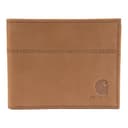
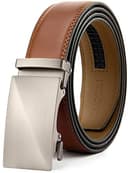
- Wallet, then belt. These are the two cheapest upgrades and the two you touch every single day, so they return the most for the least. A stated full-grain wallet and a full-grain belt together cost less than one mid-range bag and last far longer than the cheap versions they replace. Our wider picks live in best leather wallets for men and best leather belts for men.
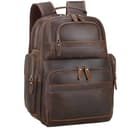
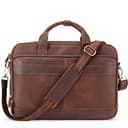
- An everyday bag. Once the small stuff is sorted, a leather backpack or work bag is the piece you will notice most. If you carry a laptop daily to an office, start with the briefcase; if your days are more mixed, the backpack is the more flexible buy.
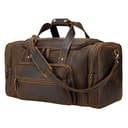
- A weekender, last.A full-grain duffel is the piece you use a handful of times a year, which is exactly why it is the last to buy and the one that ages best — it collects the scuffs of actual trips instead of sitting new. The alternatives are in best leather bags for travel.
Prices in this guide sit in plain brackets on purpose: a full-grain wallet or belt is an inexpensive, everyday-carry upgrade; a leather backpack, briefcase or weekender is a larger, keep-it-for-a-decade purchase. The live, date-stamped price for each pick is on its buy button above, so you are never buying against a stale number we typed in.
How to read a men’s leather listing
The single habit that separates a good leather buy from a bad one is reading the listing for the grade instead of the adjectives. Two quick checks do most of the work:
- Look for the exact word.Full-grain is expensive to make, so a maker who uses it states it prominently. An item sold only as “genuine leather,” “bonded” or just “leather” is almost never full-grain, whatever the photos suggest. Where a listing will not commit to a grade, we print “Not published” on that pick’s spec table rather than guess — the blank is the finding.
- Check the cut edge. On a solid full-grain wallet, belt or strap, the edge is one continuous piece of leather through its whole thickness. A glued, layered or fabric-backed edge is the tell of a bonded or coated item that will delaminate. The full glossary of grades and finishes is in types of leather, explained.
Keep them alive
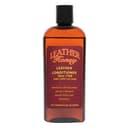
The difference between leather that looks better every year and leather that dries and cracks is a few minutes of care, once or twice a year. That is why the last pick on this list is not a bag or a belt but a bottle of conditioner: a thin coat keeps the fibers supple so a full-grain piece can do the thing you paid for and patina instead of splitting. Clean first, then feed — and always spot-test, because oil-based conditioners can darken pale, veg-tanned leather. Our how to condition leather guide walks the routine, and the wider leather care hub covers cleaners and repair kits for when something needs more than maintenance.
Buying for him rather than for yourself
If this list is for someone else, the same pieces are re-explained for a gifter in best leather gifts for men— why each lands, who it suits, and the one thing to check before ordering, from the belt size to the laptop fit.