Why leather makes a good gift
Three things make leather an unusually safe category to buy for someone else, compared with almost anything else you could wrap:
- Sizing barely matters.A wallet, belt (within a size range), handbag or duffel doesn’t need to fit a body the way clothing does, which removes the single biggest way a gift goes wrong.
- It ages instead of wearing out.A stated full-grain piece develops a patina with use — it looks better in year three than it did on day one. That’s the opposite of most gifts, which peak the moment they’re unwrapped. See full-grain vs. top-grainfor what separates the grade that patinas from the grade that doesn’t.
- It scales across every budget. A full-grain wallet or belt is an inexpensive, low-risk gift; a handbag or weekender duffel is a genuine occasion gift. That range is what makes leather work for a coworker exchange and a milestone anniversary from the same category.
How to choose by recipient and occasion
Rather than shop by product type first, it helps to start from who the gift is for and what the occasion calls for:
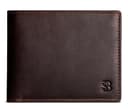
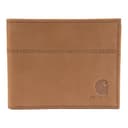
- For someone you don’t know well, or a group exchange.A full-grain wallet or belt is the safest bet — useful to almost everyone, inexpensive enough that a miss isn’t costly, and impressive enough for the price that it doesn’t read as an afterthought.
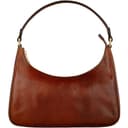
- For her, specifically.A full-grain handbag is the gift-category equivalent of jewelry: it’s seen daily, it signals thought, and stated full-grain is the detail that keeps it from looking tired within a year. The wider field of options is in best leather goods for women.
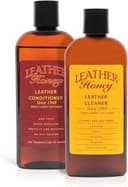
- For someone who already owns good leather.Skip another wallet or belt and buy the thing that keeps the pieces they already love looking new: a cleaner-and-conditioner kit. It’s a gift that reads as thoughtful precisely because it’s not another item competing for space in a closet.
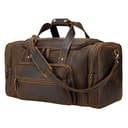
- For a milestone — graduation, a promotion, a big anniversary. A full-grain weekender duffel is the gift that gets used a handful of times a year for decades and collects the scuffs of real trips instead of sitting in a closet unopened. Compare the wider field in best leather bags for travel.
Gifting by budget
Prices in this guide sit in plain, qualitative brackets on purpose — a full-grain wallet or belt is an inexpensive, easy-win gift; a full-grain handbag or weekender duffel is a larger, keep-it-for-a-decade purchase; a care kit sits comfortably in between as a thoughtful add-on. The live, date-stamped price for each pick is on its buy button above, so you’re never shopping against a number we typed in weeks ago. As a rough shape for the range: think stocking-stuffer at the wallet and belt end, a considered but not extravagant gift at the care-kit level, and a genuine splurge at the handbag and duffel end. For a full slate of ideas across more categories, our companion guides to best leather goods for men and best leather goods for women are organized the same way, by category rather than by price.
The one sizing exception: gifting a belt
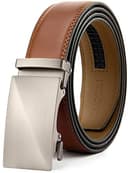
Sizing barely matters across most of this list, but a belt is the one exception worth planning around. Unlike a wallet or a bag, a belt is sold to a waist-size range, and buying the wrong one is an easy way to turn a good pick into an awkward re-gift. A ratchet buckle, like the pick above, narrows that risk considerably: it adjusts in small steps across a range rather than fixing to one hole spacing, so a reasonable guess at size still ends up fitting well. If you genuinely don’t know the recipient’s waist size, a ratchet belt or a trim-to-fit strap is the safer buy over a belt with fixed, pre-punched holes.
Why grade matters more for a gift than for yourself
When you buy leather for yourself, a disappointing grade is your own problem to notice and fix. When you give it, a lower grade becomes a slow-motion reveal: the recipient unwraps something that looks fine, uses it daily, and watches it crack or peel within a year, which reflects on the gift rather than on the manufacturer. That’s why every pick in this guide favors a listing that actually states full-grainover one that only says “genuine leather” or “leather” with no grade named. Two checks are worth applying to any leather gift you’re considering beyond this list:
- The listing states the grade plainly, not just “leather.” Full-grain is the most expensive hide to produce, so a maker who uses it says so up front. If a listing won’t commit to a grade, treat that silence as the answer rather than assuming the best case.
- The edge and stitching look like one solid piece. A glued, split or heavily coated edge is the tell of a bonded item that will delaminate well before a real full-grain piece shows its age. The full glossary of grades is in full-grain vs. top-grain leather.
Add a care kit to any leather gift
One of the simplest ways to upgrade a leather gift — or to round out a gift for someone who already owns great leather — is to pair it with a cleaner and conditioner. A thin coat once or twice a year is what keeps a full-grain wallet, belt or bag supple and heading toward a patina instead of drying out and cracking at the fold lines. It’s an inexpensive add-on that signals you thought about the gift’s whole life, not just the unwrapping. Always spot-test a conditioner on a hidden panel first, since oil-based formulas can darken pale or veg-tanned leather; the wider field of cleaners, conditioners and repair kits is in best leather conditioners.
A note on timing and returns
Leather is one of the few gift categories where buying slightly early is safer than buying late. A full-grain hide can have a faint, natural smell straight out of the box that fades with a week or two of airing out, so a gift that arrives the night before an occasion can seem to smell “off” when it’s simply new — giving it a few days to breathe first avoids that surprise entirely. It’s also worth checking the seller’s return window before you buy, since a structured bag or a belt is one of the few items on this list where fit or style genuinely might not land, and a longer return period gives the recipient room to exchange it without pressure. None of that changes the pick itself — it’s just the difference between a gift that lands well and one that arrives rushed.